
Most visitors know San Pancho (officially San Francisco, Nayarit) for its mellow beach, artsy vibe and big Pacific sunsets. Fewer know that this small beach town north of Puerto Vallarta is also one of the best-known polo destinations on Mexico's Pacific coast. It's home to the club long known as La Patrona Polo & Equestrian Club, which now operates as Tierra Tropical Polo Club — a place where you can catch a match over Sunday brunch, take your first lesson, or time your trip around a tournament.
A 2,000-year-old sport: a short history of polo
Polo is one of the oldest team sports on record. Its ancestor, known as chovgan, was played in Persia and Central Asia centuries before the common era, and court histories say princes of Persia's Sasanian dynasty learned it as children. The word "polo" itself comes from a Himalayan term (in Balti and Tibetan) meaning "ball."
Over the centuries the game spread across Asia to Manipur, in northeast India, which is home to one of the oldest polo grounds in the world. That's where the British discovered it in the mid-1800s:
- 1859: English tea planters founded a club in Silchar, in the Assam region.
- 1862: The Calcutta Polo Club was founded; it's considered the oldest polo club still in existence.
- 1869: A British cavalry regiment, the 10th Hussars, played the first matches in England.
- 1874: The Hurlingham Polo Association drew up the first formal British rules.
- 1875: Argentina held its first formal match — the start of the country's rise to become polo's global powerhouse.
Polo was an Olympic sport in several Games between 1900 and 1936. Argentina won gold in 1924 and again in 1936, and today it has more 10-goal players — the sport's top rating — than any other country.
Polo in Mexico: from the Escandón brothers to an Olympic medal
Polo arrived in Mexico in the late 19th century thanks to the Escandón y Barrón family. According to an account in Amura magazine, Manuel Escandón watched a match in Newport, Rhode Island, and brought the game home; Mexico's first fields were in Tacubaya, in Mexico City, and a first polo club was formed within the Mexican Jockey Club in 1881.
A few milestones worth knowing:
- Paris 1900. Three Escandón brothers played on an international team that won bronze in polo's Olympic debut. Because the team was mixed, the International Olympic Committee doesn't credit the medal to Mexico — but it's a proud chapter of Mexican polo.
- Berlin 1936. A Mexican team that included Antonio Nava and Alberto Ramos won bronze, beating Hungary 16–2. It was one of Mexico's first team medals at an Olympics.
- 1987. At the first World Polo Championship, in Buenos Aires, Mexico finished runner-up to Argentina — its best result ever. It later took third place in 1995 (Switzerland) and in 2008, when Mexico City hosted.
- The Gracida brothers. Guillermo "Memo" and Carlos Gracida are the biggest names in Mexican polo. Carlos, born in Mexico City in 1960, reached a 10-goal handicap in 1985 and won the US Open nine times, Argentina's Palermo Open five times and Britain's Gold Cup ten times — more than any other player. He died in 2014 from injuries suffered during a match in Florida.
Today the sport is governed by the Mexican Polo Federation, which brings together clubs across the country.
La Patrona Polo Club: San Pancho's polo club
The club got its start in the early 2000s and grew into a landmark for polo in the Riviera Nayarit. Its official website now introduces it as Tierra Tropical Polo Club, "formerly La Patrona Polo Club," and the La Patrona name still appears on its logo and social media. Locals use both names, so don't be confused.
There's a fun thread linking the club to Berlin 1936. According to Mexico News Daily, the founders were introduced to polo by Major Hugh Dawnay, a well-known British polo coach who taught at Costa Careyes on the Jalisco coast. Hugh was the son of David Dawnay, who won silver with Great Britain at the 1936 Olympics — and played against Mexico in that very tournament. The same article says Hugh and his son Sebastian, a professional player, have both spent time on San Pancho's fields.
What makes it stand out:
- The setting. The club sits in San Pancho surrounded by tropical greenery, with views of the Sierra Madre and the Pacific just a short distance away. Few polo fields anywhere have a backdrop like this.
- Serious facilities. Press coverage has described more than 220 hectares (over 540 acres) and several fields. The main field, Cancha Jaguar, was designed by the team at Battro Polo Fields, an Argentine specialist in polo grounds. There's also a practice field, stables and a team of professional players on staff.
- Horse care. As of 2018, the club had an equine hospital with a swimming pool for rehab, and in the off-season the horses roamed free on the property.
- Open to everyone. The club's mission is to bring polo and riding to both experienced players and complete beginners. Beyond polo, it offers trail rides, horse boarding and community riding activities.
- More than polo. The same group runs Tierra Tropical Beach Club, a kitchen known for contemporary Mexican cooking, and a private events space.
It's a great fit for couples, groups of friends and families looking for something different on a Riviera Nayarit vacation.
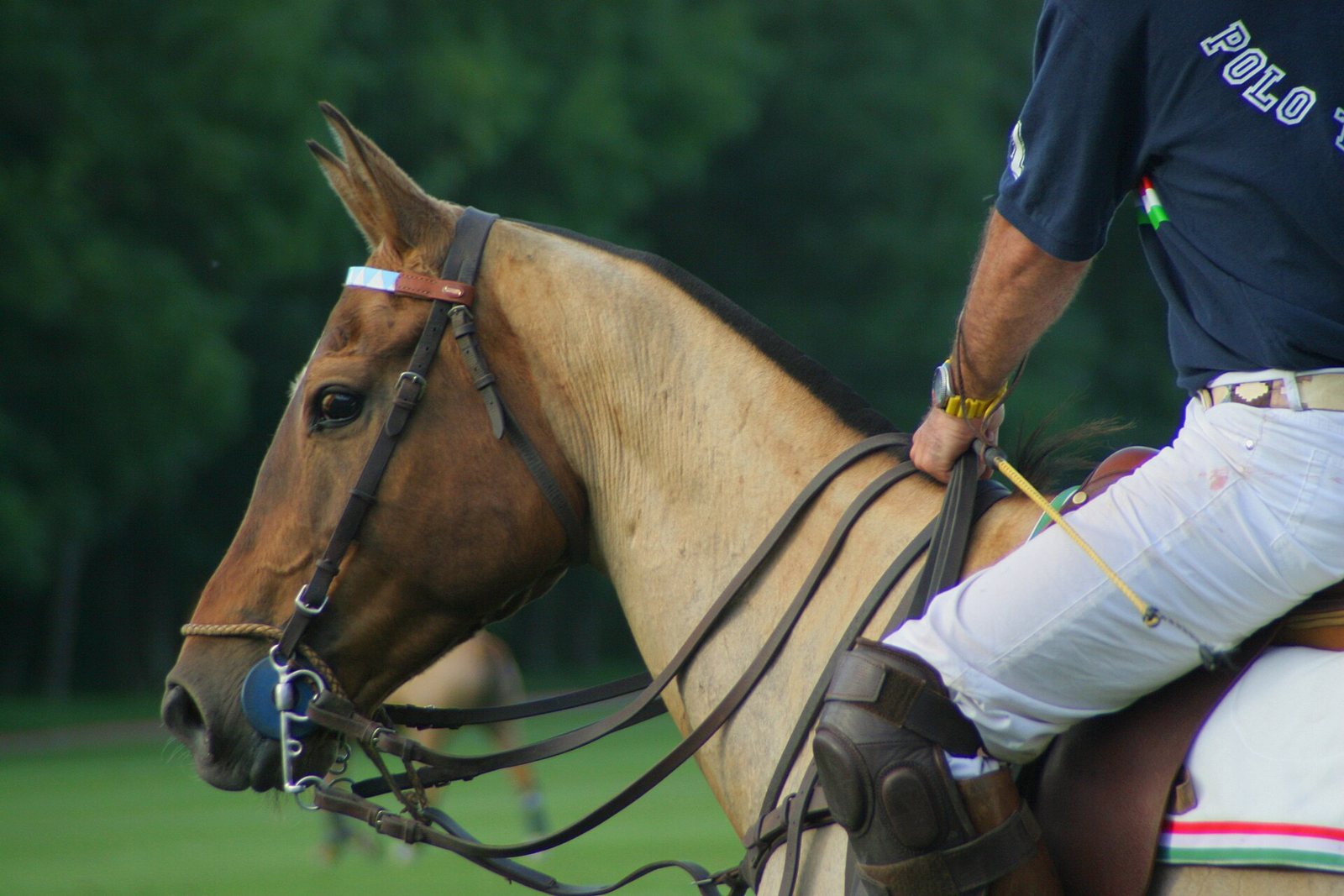 A polo pony ready for play (illustrative photo, not taken in San Pancho).
How polo works: a quick primer for first-timers
You don't need to be an expert, but knowing a few basics makes the match far more fun to watch:
- Two teams of four riders. Each player wears a number. No. 1 is the most attacking; No. 2 works both ends; No. 3 is usually the strongest player and the playmaker; No. 4 is the main defender.
- Chukkers. A match is split into periods of about seven minutes called chukkers (or chukkas). A full match has four to eight, with short breaks in between. Exhibition matches are shorter.
- Lots of horses. The horses run so hard that riders switch mounts between chukkers. They're called "polo ponies," but they're full-size horses, typically 14.2 to 16 hands tall. Players often say the horse accounts for well over half of a player's performance.
- The field. An outdoor field is 300 by 160 yards — about the size of nine soccer fields — with goals at each end.
- Mallet and ball. Players hit a hard plastic ball with a cane mallet with a wooden head. By rule, the mallet is held only in the right hand, even by left-handed players, to prevent head-on collisions.
- The line of the ball. The key rule: the ball's path creates an imaginary line, and the player following it has the right of way. Many fouls are called for crossing that line dangerously.
- Handicaps. Every player is rated in "goals," from -2 (beginner) to 10 (the very best). Teams' combined handicaps are used to keep tournaments balanced.
A tradition visitors love: at halftime of many matches, spectators walk onto the field for divot stomping, pressing back the chunks of turf kicked up by the hooves. If you're invited, join in.
How to watch a polo match in San Pancho
You don't need to be a member — or know anything about horses — to enjoy a match. According to the schedule the club published for the 2025-26 season, there are two main ways to watch:
Sunday Brunch & Polo
This is the club's signature experience. It runs every Sunday from November to May on Cancha Jaguar: arrive late morning, settle in for brunch, and the match gets going around midday. Earlier press coverage describes live music, often by local bands, and a narrated match, so first-timers can follow the action. In 2018 these brunches drew up to about 200 people each Sunday, and plenty of San Pancho locals turn out for the season opener.
Sunset Grill & Polo
If you'd rather go in the evening, the club advertises grill dinners on Fridays and Saturdays from November to July, with a polo exhibition on Fridays that starts roughly an hour before sunset on the practice field.
Both experiences require advance booking through the club's website or contact channels. We recommend confirming hours and availability directly with each venue.
Polo lessons for beginners
If watching makes you want to try it, the club offers polo lessons for beginners and more experienced riders. Its website says anyone can take a lesson, even if they've never been near a horse. For bookings, the club lists adults as 18 and over and accepts minors from age 13.
What's a first lesson like? According to the 2018 report, beginners start by practicing their swing on a wooden practice horse before getting on a real one, and private or group lessons also cover horse care. Check the current format with the club. It's a memorable, very different activity to add to a beach vacation.
The Riviera Nayarit Polo Cup
The Riviera Nayarit Polo Cup is the tournament that put San Pancho on the polo map. Recent editions include:
- 7th edition (December 2018). Held December 6–9 at La Patrona, with players from several countries, Canada as the guest nation, and a program that mixed in art, food, mixology, fashion and music.
- 8th edition (2019). Back in San Pancho with six teams over three days of play; the Monterrey team took the cup.
- 9th edition (May 2024). After a break of several years, the cup returned May 16–18, 2024, at Tierra Tropical Polo Club. A team from Guadalajara won.
- 10th edition (May 2025). The Mexican Polo Federation scheduled it for May 15–17, 2025, at Tierra Tropical.
In May 2026, Riviera Nayarit and Mexico's national polo team announced a partnership on the Tierra Tropical field to promote the sport and the destination.
The club also hosts the Coco Copa, a charity tournament whose 7th edition took place in January 2026, raising funds for children with cleft lip and palate.
Tournament dates change every year, so check the club's official calendar before planning your trip around one.
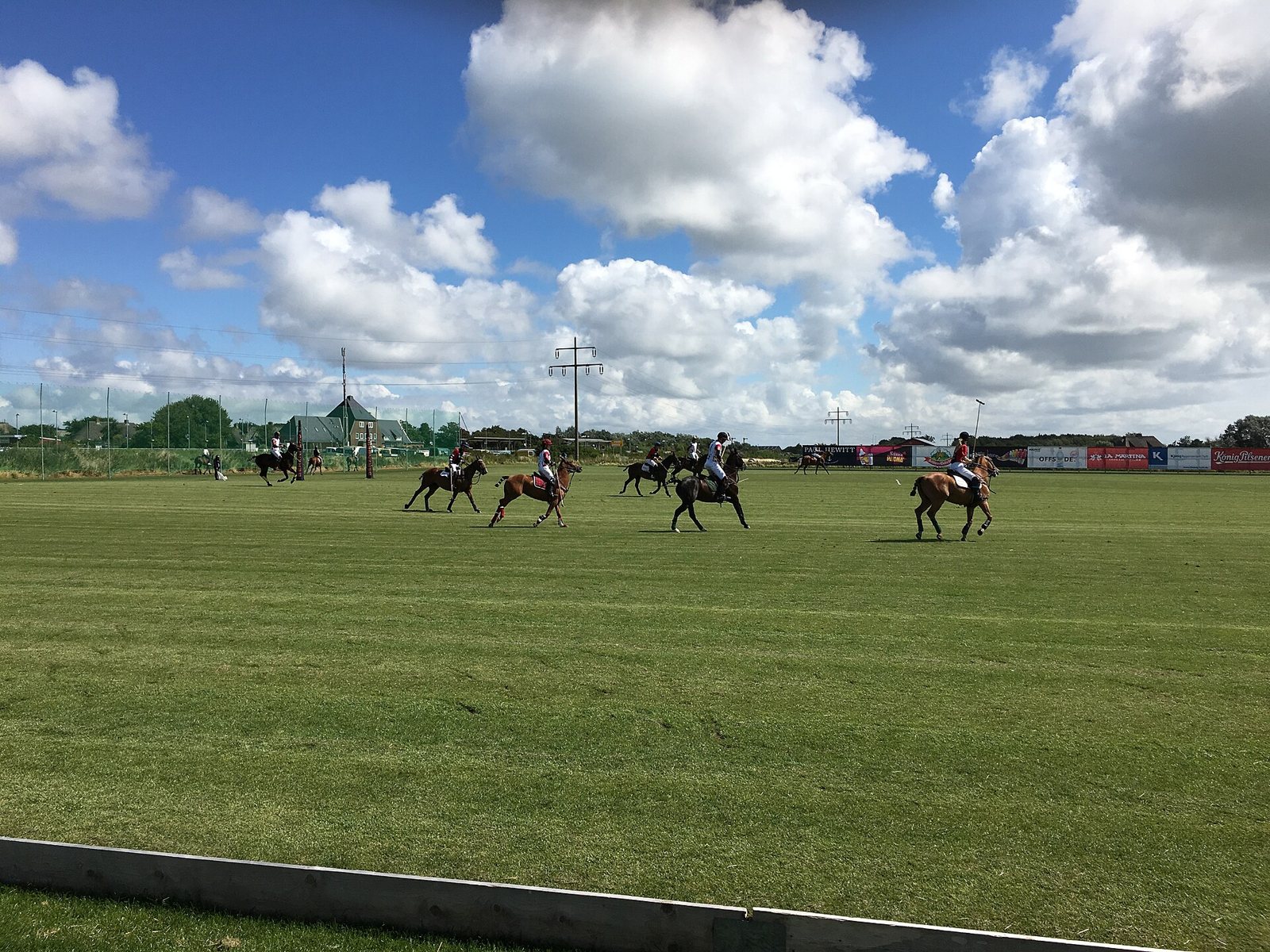 Watching a match from the sideline (illustrative photo, not taken in San Pancho).
Timeline: polo in Mexico and San Pancho
- 1936: Mexico wins Olympic bronze in polo in Berlin.
- 1987: Mexico finishes runner-up at the first World Polo Championship.
- 1989: San Francisco (San Pancho) moves from the municipality of Compostela to the new municipality of Bahía de Banderas.
- 2001–2004: La Patrona polo club is founded (the club says 2001; press coverage says 2004).
- 2024: The Cup returns after several years, now at Tierra Tropical.
- 2026: 7th Coco Copa (January) and a partnership with Mexico's national polo team (May).
San Pancho: the town behind the polo field
The club fits San Pancho because the town has always done things its own way. According to records summarized on its Spanish-language Wikipedia page, in the 1500s the place was called Apazan and was home mainly to Indigenous fishing families; it later became San Francisco de Apazan and was part of the Hacienda de Jaltemba, which produced coconut oil. In the 1970s, under President Luis Echeverría, the town got projects such as a CONASUPO food-processing unit and the so-called "Third World University," which gave the main street, Avenida Tercer Mundo, its name. The town then leaned toward low-key tourism, and the 2020 census counted roughly 1,400 residents.
For more on its creative side, read our story on San Pancho's circus and culture.
Polo season in San Pancho
The main season runs November through May, which lines up with the coast's dry months: around the bay, the rainy season generally runs from mid-June to mid-October, with most rain falling July through September. Winter lows are around 63°F (17°C), summer lows around 77°F (25°C), and summer highs reach about 90°F (32°C). Friday sunset exhibitions extend into July, according to the 2025-26 calendar, but activity slows in the hot, rainy summer.
Sample itinerary: a polo-and-beach day in San Pancho
- Morning: A light breakfast and a beach walk before the sun gets strong.
- From 11 a.m.: Sunday Brunch & Polo at the club (Sundays in season, reservation required); the match starts around noon.
- Afternoon: Head back into town to wander the plaza and the streets around it.
- Sunset: End the day on the beach — one of the best sunset spots on this stretch of coast.
On a Friday, flip it: beach in the morning, Sunset Grill & Polo in the evening.
Pair polo with a day in Sayulita and San Pancho
Want to see the town itself before (or after) your polo afternoon? Our Sayulita & San Pancho tour is an easy way to do it. The tour does not include a visit to the polo club, but it shows you San Pancho and Sayulita with a local guide. It runs Tuesday, Thursday and Saturday, lasts a full day, is offered in English and Spanish, and groups are capped at 17 people. It includes:
- Round-trip transportation
- Certified guide
- Tasting of traditional Mexican sweets
- Visit to San Pancho's plaza and beach
- Guided walk through downtown Sayulita
- Free time in Sayulita
- Bottled water
Optional: surf lessons at an extra cost, with a 50% discount for tour guests. Lunch is not included.
See dates and book the Sayulita & San Pancho tour →
For more on the town, read our San Pancho, Mexico guide, our guide to San Pancho beach and our roundup of Riviera Nayarit beach towns.
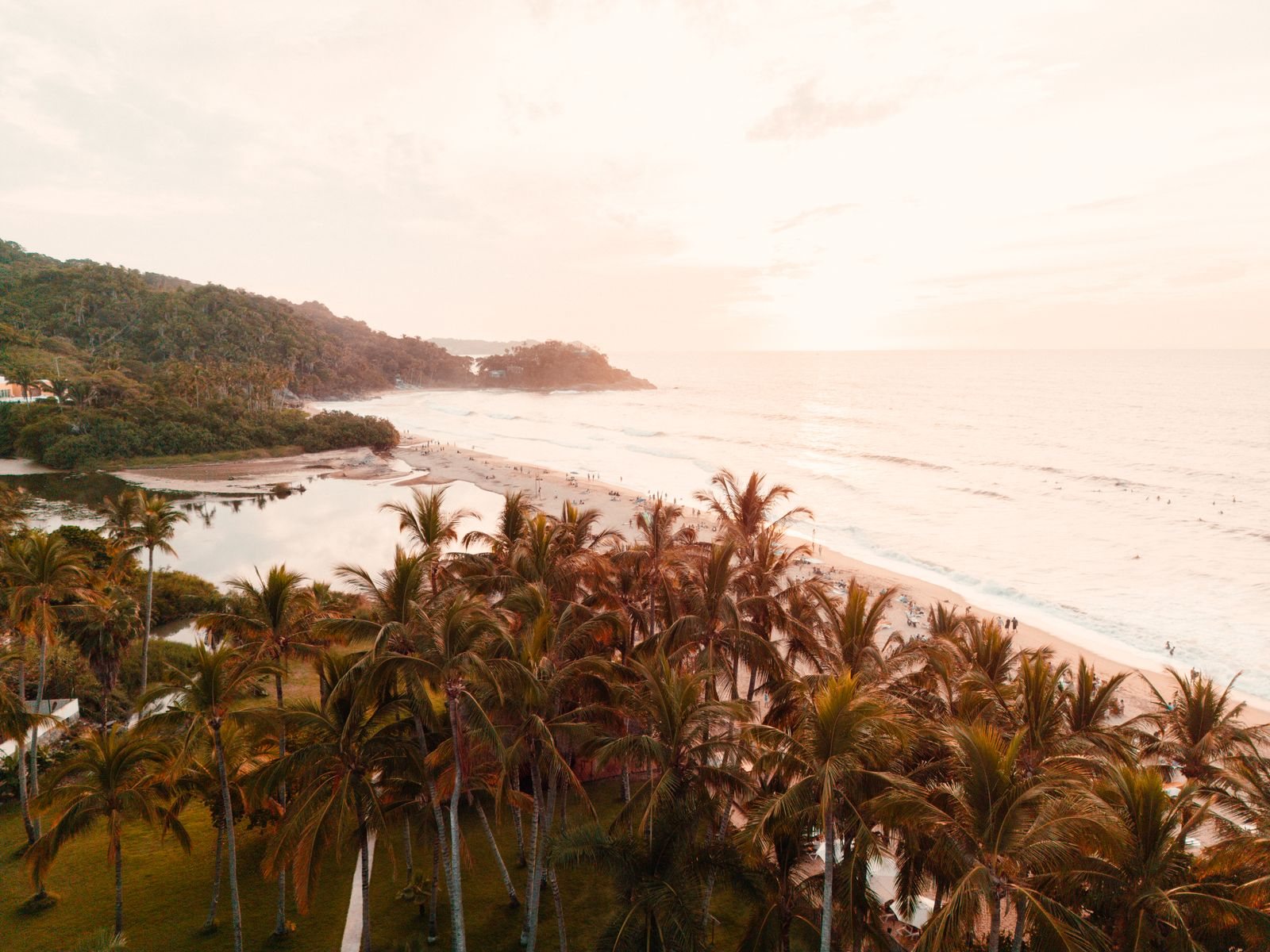 San Pancho beach at sunset.
Tips for your visit
- Book ahead, especially in high season and on tournament weekends.
- Dress cool but put-together. A sun hat and breathable clothes are perfect for an outdoor brunch. If you plan to join the divot stomp, skip stiletto heels.
- Bring sun protection. Matches are played in the open, so pack sunscreen and sunglasses.
- Respect the horses. Don't approach the stables or the edge of the field unless staff invite you, and avoid flash photography or loud noises near the animals.
- Ask what your booking includes (brunch, drinks, seating) so you can budget before you go.
- Mind the clock. San Pancho is in Bahía de Banderas, which runs on the same time as Puerto Vallarta.
FAQ
Where can I watch polo near Puerto Vallarta? At Tierra Tropical Polo Club, long known as La Patrona Polo & Equestrian Club, in San Pancho (San Francisco), Nayarit, north of Puerto Vallarta.
When is polo season in the Riviera Nayarit? The main season runs from November to May, when the club hosts its Sunday polo brunch. Check the current calendar with the club.
Can I take a polo lesson with no riding experience? Yes. The club offers beginner lessons, even for people who have never ridden a horse.
How old do you have to be for a polo lesson? According to the club's website, minors can book a lesson from age 13. Confirm requirements when you book.
How long does a polo match last? A formal match has four to eight chukkers of about seven minutes each, plus breaks, so it usually runs 1.5 to 2 hours. Exhibition matches are shorter.
Does Mexico have a polo tradition? Yes. Mexico won Olympic bronze in Berlin in 1936, finished runner-up at the first World Polo Championship in 1987, and produced Carlos Gracida, one of the greatest players of all time.
Does the Sayulita & San Pancho tour stop at the polo club? No. The tour visits San Pancho's plaza and beach and downtown Sayulita; the polo club is a separate visit you book directly.
Photos: Vince pahkala / CC BY-SA 3.0 via Wikimedia Commons · Dee.lite / CC0 via Wikimedia Commons · Kresspahl / CC BY-SA 4.0 via Wikimedia Commons · Vladimir Miranda / Pexels License via Pexels




