
Drive up into the Sierra Madre behind Puerto Vallarta and you'll find a different Jalisco: farm valleys, stone churches, cool mornings and small towns that run on church bells. Mascota and its neighbor Talpa de Allende are two of the best examples. Both are official Pueblos Mágicos ("Magical Towns"), they sit about half an hour apart, and each has its own personality: Mascota is a quiet valley town of old mansions and fresh cheese, while Talpa is home to one of the most visited pilgrimage shrines in western Mexico. Here's their history, their festivals, their nature and how to visit from Puerto Vallarta.
Mascota, Jalisco and Talpa: Two "Magical Towns" in the Sierra Madre
Mascota and Talpa de Allende were both named Pueblos Mágicos in 2015, the designation Mexico's tourism ministry gives to towns with special history, culture or natural beauty. Together with San Sebastián del Oeste, they form a mountain circuit in the Sierra Madre Occidental. Both towns sit at roughly 4,000 feet (about 1,200 m) above sea level. Expect crisp mornings, pleasant afternoons and a green summer rainy season.
These mountains and the coast share a surprising history. In the late 1800s, the little beach settlement of Las Peñas (today's Puerto Vallarta) was governed from the mountains: in 1886 it became a district (comisaría) of the municipality of Talpa, and two years later it was moved under San Sebastián. We tell that story in our Puerto Vallarta history.
Mascota's History: From "Place of Deer" to the Emerald of the Sierra
Mascota's name comes from Nahuatl and is usually translated as "place of deer and snakes." Before the Spanish arrived, it was the seat of a native chiefdom whose influence reached Talpa, El Tuito and Chacala. Artifacts from the El Pantano archaeological site, now in the town museum, show the valley was settled many centuries ago; some finds are dated to around 800 BC.
In 1525, Francisco Cortés de San Buenaventura, sent by Hernán Cortés to explore the lands north of Colima, reached Mascota; the region's old name, Valle de Banderas, dates from that expedition. In 1535, people from Mascota and nearby villages rose up against the Spanish encomenderos who controlled their land and labor. Silver and other ore deposits drew Spanish settlers. According to local history, the first town stood at the El Atajo hacienda, about 12 miles (20 km) from today's site, before residents moved across the valley in the mid-1700s. The parish was established in 1722 and its church blessed in 1755.
In the 1800s, Mascota was the political capital of the sierra. It became a villa in 1824, and in 1870 the seat of Jalisco's Tenth Canton, a district that included San Sebastián del Oeste. According to the town's history, in December 1860, during Mexico's War of Reform, troops under Antonio Rojas set the town on fire. On April 10, 1885, Mascota was made a city, an anniversary still celebrated today. Locals call it "the Emerald of the Sierra" for its green mountains.
Its most revered native son is Saint José María Robles Hurtado, a priest born in Mascota on May 3, 1888. He founded a congregation of nuns in 1918, was hanged in 1927 during the Cristero War (a violent conflict between the Mexican government and Catholic rebels), and was canonized by Pope John Paul II in 2000. The town honors him in early May.
Things to Do in Mascota, Jalisco
Mascota spreads across a wide valley surrounded by hills, with cobblestone streets, adobe homes and red tile roofs. It's still a farming and ranching town, with fields of corn, oats and sorghum, known around the region for its cheeses and homemade sweets.
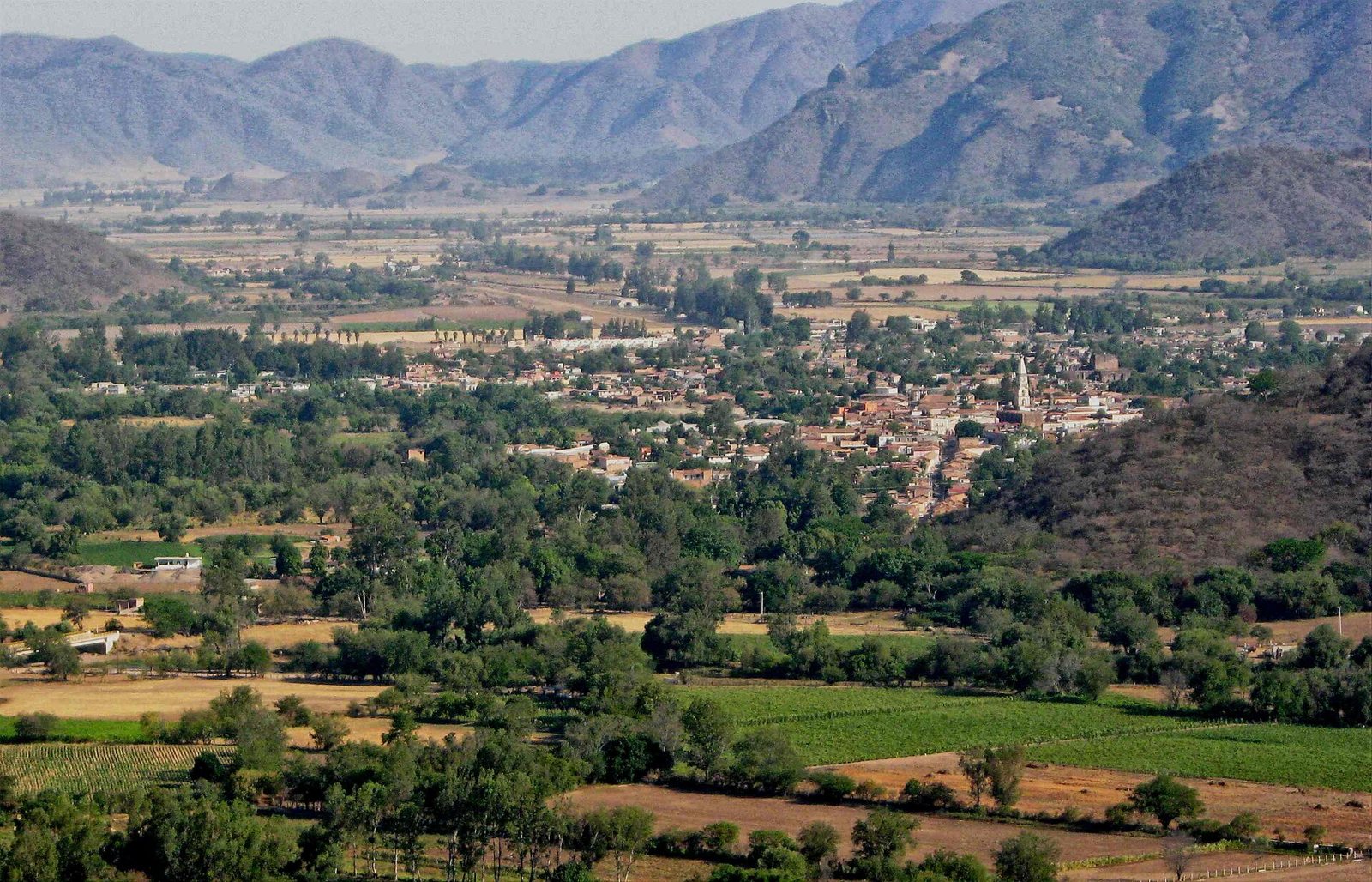 The Mascota valley, surrounded by the Sierra Madre Occidental.
Highlights:
- Parish of Our Lady of Sorrows (Nuestra Señora de los Dolores). Its tall white bell tower rises over the main square and can be seen from across the valley. The baroque church is built on a cross-shaped plan and has a clock in its bell tower; the image of the Virgin of Sorrows, the town's patroness, was crowned in 1961.
- The Unfinished Temple of the Precious Blood (Templo Inconcluso de la Preciosa Sangre). Mascota's most photographed landmark. Construction began in the late 1800s and stopped during the upheavals of the early 20th century; it was never completed. Today its roofless stone walls enclose a garden used for cultural events and weddings, with a small chapel on one side.
- Archaeology museum. Four rooms with about 600 pieces of pottery, stone and bone from regional sites such as El Pantano, plus photos of local petroglyphs.
- Sunday serenade. On Sunday evenings there's live music in the main square, a classic small-town Mexican tradition.
- Corrinchis Reservoir (Presa Corrinchis). Just outside town, this is where local families go for green space, waterbirds and mountain views. Some guides mention kayaking and fishing; ask locally what's available when you visit.
- Lakes and villages. The Juanacatlán and Yerbabuena lagoons and the surrounding villages are popular for hiking and mountain biking.
What to Eat and Bring Home from Mascota
Mascota's food is ranch and dairy country cooking: fresh panela cheese, cream and jocoque (a tangy cultured cream), wood-oven bread, fruit cajetas and preserves made with apple, peach, tejocote (Mexican hawthorn) and perón, and warm fruit punch.
Mascota is also raicilla country. Mexico's draft official standard for this agave spirit places its birth in the mining areas of the sierra, including San Sebastián, Mascota and Talpa, and the Mexican Raicilla Promotion Council, which secured the drink's denomination of origin, was founded in Mascota in 2000. Read the full story in our guide to raicilla, the Mexican agave spirit.
Talpa de Allende and the Virgin of Talpa
Talpa's name comes from the Nahuatl Tlallipan, "on top of the land." Around 1532, scouts sent by conquistador Nuño de Guzmán arrived, and in 1599, when the Aranjuez mines opened, Spanish families settled and founded Santiago de Talpa. It received the name "de Allende" in 1885, when it was made a villa in honor of independence hero Ignacio Allende.
But Talpa is famous throughout western Mexico for the Virgin of the Rosary of Talpa, a small image locals affectionately call la Chaparrita ("the little short one"). According to tradition, it was shaped by Purépecha (Tarascan) artisans from Michoacán out of corn-cane paste and reached Talpa in the second half of the 1500s.
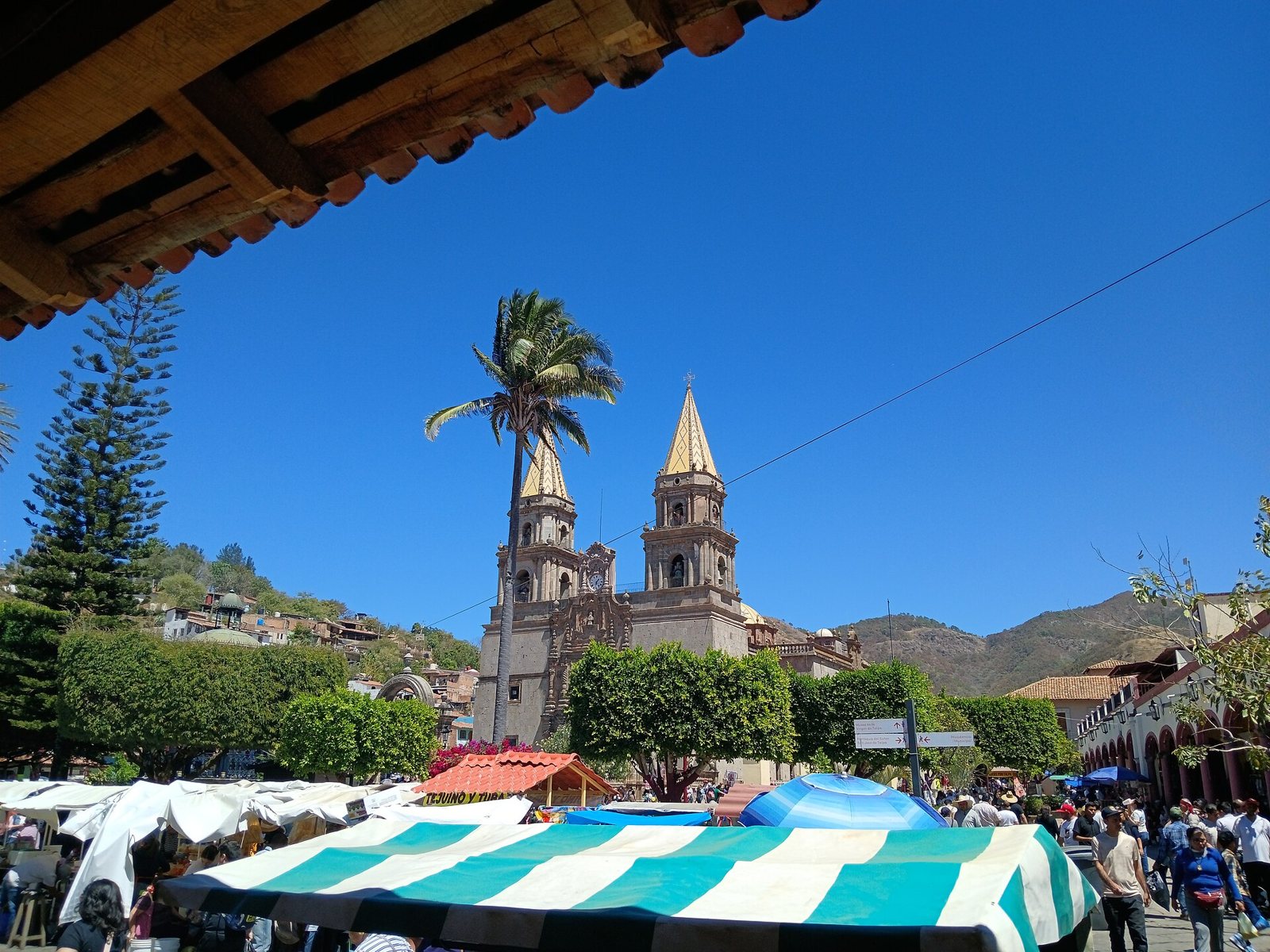 The basilica in Talpa de Allende, seen from the main square on a busy pilgrimage day.
The Miracle of the Renewal
Over time, the cane image deteriorated so badly that it was taken out of worship. According to the traditional account, on September 19, 1644, the parish priest ordered it buried, but as it was being wrapped a brilliant light dazzled everyone present: the figure appeared "renewed" and, tradition says, transformed into a solid carving, which some sources identify as tepehuaje wood. This event, the Renewal (la Renovación), is at the heart of the devotion. Local lore also explains the small mark on the Virgin's cheek: some say a nonbeliever tried to burn her with a cigarette; others see it as a sign of the miracle itself.
The Basilica and the Museum
The first chapels here date to around 1580. The current church, a neoclassical building of gray stone with a Latin-cross floor plan and twin towers topped by pyramids, was begun in 1782. Inside, a gilded main altar frames the image of the Virgin. Next door, the Museum of the Virgin of the Rosary of Talpa, opened in 1994, displays objects and ex-votos (thank-you offerings) connected to the devotion.
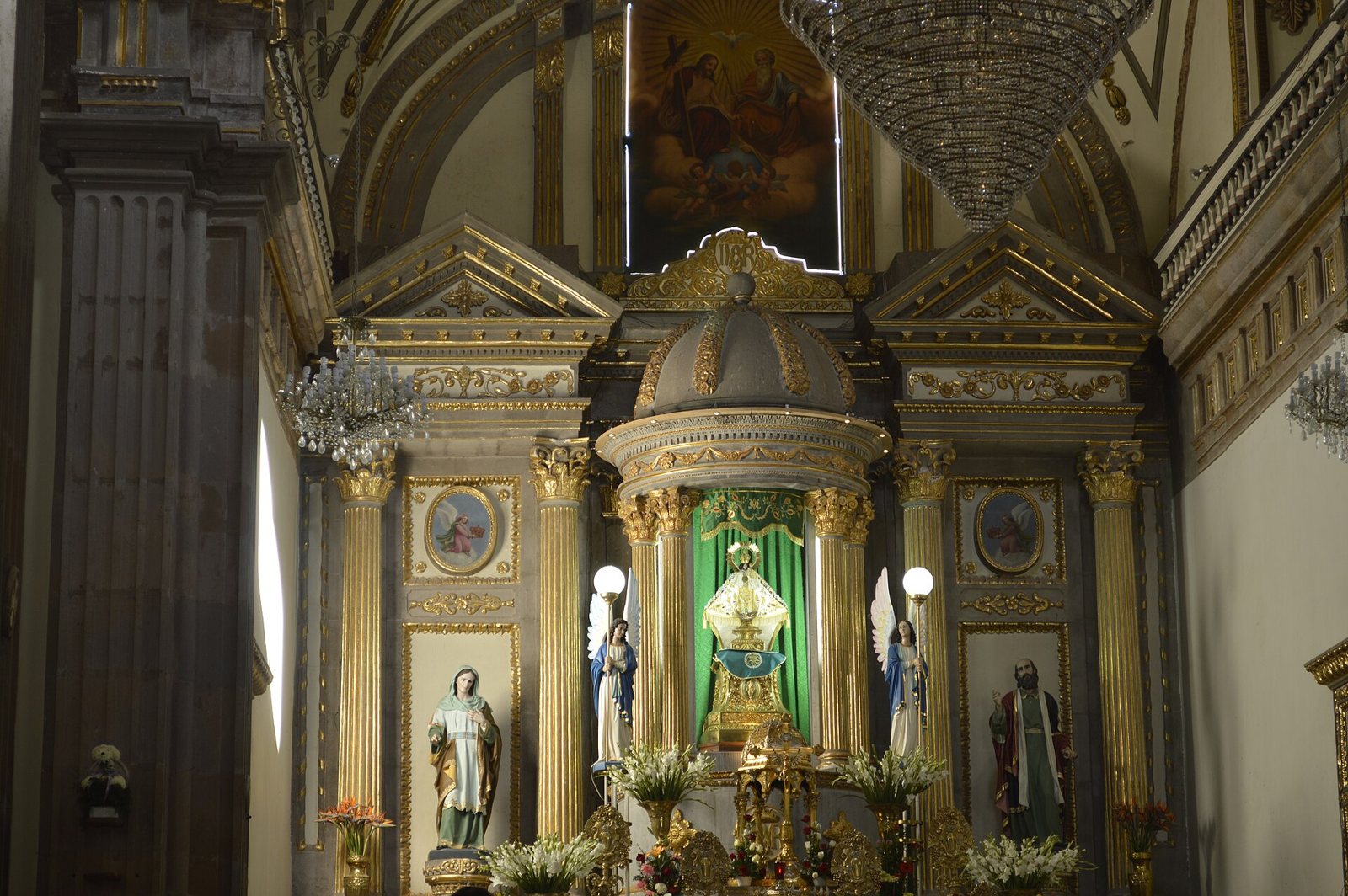 The main altar of the Basilica of Our Lady of the Rosary in Talpa de Allende.
A Future President in Disguise, and a Classic Short Story
In 1871, after launching a failed revolt (the Plan of La Noria) against President Benito Juárez, Porfirio Díaz, who would later rule Mexico for decades, hid in Talpa for several weeks disguised as a bell founder, according to the town's history.
Talpa also has a place in Mexican literature: Juan Rulfo, one of the country's greatest writers, titled one of the stories in El Llano en llamas (The Burning Plain, 1953) simply "Talpa." It follows a sick man walking to the shrine with his wife and his brother. Reading it before your trip adds real depth to what you'll see.
More Things to Do in Talpa
- Climb to a viewpoint. The hill with the Cristo Rey monument and the Cruz de Romero chapel both look out over the town and valley.
- Shop for guava sweets. Guava rolls, pastes, fruit leathers and jellies, plus cajeta (caramel) and milk sweets. The Guava Fair takes place in the third week of November.
- Try arrayán, a local fruit traditionally enjoyed by pilgrims.
- Look for chilte crafts, made from a natural tree gum shaped into baskets, pots, jugs and griddles.
Talpa's Maple Forest: A Natural Treasure
One of the region's best-kept secrets is Talpa's maple forest (Bosque de Arce). For years these trees were thought to be a variety of sugar maple, but University of Guadalajara researchers showed they are a separate species, described in 2017 as Acer binzayedii, whose lineage split from its relatives about 5.4 million years ago. It's considered critically endangered because it grows in such a small area.
The forest fills a damp ravine at about 5,600 feet (1,700 m), alongside walnut, fir, tree ferns and magnolias. On January 30, 2016, Jalisco created the Bosque de Arce State Park, covering about 150 hectares (370 acres); much of the forest remains outside it and faces illegal logging. If you want to go, hire a local guide and ask in Talpa about current access.
The Pilgrims' Route to Talpa
Millions of people visit Talpa every year, and many arrive on foot along the Ruta del Peregrino (Pilgrims' Route), a trail of roughly 73 miles (117 km) that starts in the town of Ameca and crosses the mountains. The tradition is more than two centuries old. Along the way are landmarks like Cerro del Obispo, at about 6,500 feet (2,000 m), the town of Atenguillo and the Espinazo del Diablo ("Devil's Spine"), a steep climb lined with crosses honoring pilgrims who died on the journey.
Around 2008, the state of Jalisco began improving the route, and its tourism ministry hired architects Tatiana Bilbao and Derek Dellekamp to design a master plan of shelters, lookouts and places to pray. Firms from Mexico and abroad took part, including artist Ai Weiwei (China), Elemental (Chile) and HHF (Switzerland). One highlight is an open-air chapel in Lagunillas with a "wall of promises" where pilgrims leave objects of thanks.
Talpa Festival Calendar
- March 11–19: Feast of St. Joseph, one of the busiest pilgrimage periods.
- Holy Week (Semana Santa): the year's biggest crowds.
- May 4–12: anniversary of the Virgin's coronation.
- September 10: the "Bath of the Virgin"; September 11–19, novena of the Renewal.
- October 7: feast of Our Lady of the Rosary.
- Third week of November: Guava Fair.
Avoid these dates for a quiet visit, or plan around them to see the celebrations, and book lodging well in advance.
Mascota and Talpa Timeline
- 1525: Francisco Cortés de San Buenaventura reaches Mascota.
- 1599: Santiago de Talpa is founded near the Aranjuez mines.
- 1644: the Renewal of the Virgin of Talpa, according to tradition.
- 1782: construction begins on Talpa's current church.
- 1871: Porfirio Díaz hides in Talpa.
- 1885: Mascota becomes a city; Talpa becomes the villa of Talpa de Allende.
- 1886: Las Peñas (today's Puerto Vallarta) becomes a district of Talpa.
- 2015: both towns are named Pueblos Mágicos.
Weather and Best Time to Visit
Both towns average about 70°F (21°C) over the year. January is the coolest month, and early mornings can dip below 50°F (10°C). The rains fall mostly from June to September (sometimes into October). That's when the hills are greenest, but also when landslides are most likely. November through April usually brings clear skies and more reliable roads.
How to Get to Mascota from Puerto Vallarta
From Puerto Vallarta, state highway 544 climbs past the turnoff to San Sebastián del Oeste and continues to Mascota. It's about 60 miles (around 100 km), and the drive takes roughly 1.5 to 2 hours on a winding mountain road through pine and oak forest. Talpa is about 30 minutes farther. For more on the road itself, see our guide to the mountains-to-sea route.
Tips for the drive:
- Leave early and drive in daylight.
- During the summer rainy season, landslides can close sections of road; check conditions before you go.
- Review current U.S. State Department travel advisories for Jalisco before your trip.
- Buses run from Puerto Vallarta to Mascota if you'd rather not drive, though the trip takes longer.
Suggested Itinerary
One day: Mascota in the morning (main square, parish church and the unfinished temple), Talpa in the afternoon (basilica, museum and guava sweets), and back before dark. It's a long day.
Two days (best): spend the first day in Mascota at an easy pace, with a visit to Corrinchis or one of the lagoons and the serenade if it's a Sunday. Spend the next day in Talpa and, with a guide, the maple forest.
Compared to the coast, these towns are inexpensive; transportation will be your biggest cost.
Want a Guided Day in the Sierra? Try San Sebastián del Oeste
Rather not drive? Our San Sebastián del Oeste tour does not go to Mascota or Talpa, but it explores the same sierra and takes you to another Pueblo Mágico, a historic silver-mining town founded in 1605. It runs Monday, Wednesday and Friday, lasts a full day and is offered in English and Spanish. It includes:
- Round-trip transportation
- Certified guide
- Visit to the Tequila Artisan Gallery
- Tour of an organic coffee factory
- Lunch and aguas frescas at a traditional Mexican restaurant
- Guided walk through downtown San Sebastián
- Free time to explore on your own
- Bottled water
Check dates and book the San Sebastián del Oeste tour →
To plan ahead, read our San Sebastián del Oeste travel guide, the story of its mining history and our guide to its haciendas and rural tourism. Staying on the coast? See our list of things to do in Puerto Vallarta.
Travel Tips for Mascota and Talpa
- Bring cash (pesos). Many small businesses in the mountain towns don't take cards.
- Dress in layers and wear comfortable shoes. Mornings are cool and streets are cobblestone.
- Be respectful in churches. The Talpa basilica is an active place of worship; keep your voice down and avoid photos during Mass. Expect lines at the busiest services.
- Respect pilgrims. Many arrive after days on foot to fulfill a promise; don't photograph them up close without asking.
- Expect spotty cell service on parts of the mountain road.
- Confirm hours. We recommend confirming museum and church hours directly with each place.
FAQ
How far is Mascota from Puerto Vallarta? About 60 miles (around 100 km), roughly 1.5 to 2 hours by car on a winding mountain road. Talpa de Allende is about 30 minutes beyond Mascota.
Which is better to visit, Mascota or Talpa de Allende? They complement each other. Mascota is best for scenery and architecture; Talpa for religious tradition and guava sweets. Since they're only 30 minutes apart, try to see both.
When is the pilgrimage to Talpa? Pilgrims come all year, but the biggest crowds arrive during Holy Week. Other key dates are in March, May, September 19 and around October 7.
What is the story of the Virgin of Talpa? According to tradition, she is a corn-cane image made by artisans from Michoacán that reached Talpa in the 1500s. In 1644, as she was about to be buried because of her poor condition, she was miraculously "renewed." The event is remembered every September 19.
Can I see Mascota and Talpa as a day trip from Puerto Vallarta? Yes, but it's a long day on mountain roads. If you can, stay one night so you can explore at a relaxed pace and avoid driving after dark.
Does the San Sebastián del Oeste tour stop in Mascota or Talpa? No. The tour visits San Sebastián del Oeste only. It's a good way to experience the Sierra Madre with a guide if you don't want to drive.
Photos: Adolfo Quintero / Public domain via Wikimedia Commons · YdelaT / CC0 via Wikimedia Commons · Roberto J. Arceo / CC BY-SA 3.0 via Wikimedia Commons · José Wences Equihua / CC BY 3.0 via Wikimedia Commons




