
Stand on the Malecón today and it is hard to picture, but in the mid-1800s there was no town here at all, just a river mouth, a beach and the mountains rising behind it. Puerto Vallarta's story is a surprisingly short one: a settlement founded to move salt to silver mines, a village owned for decades by a mining company, a town cut off from the rest of Mexico for almost a century, and then, almost overnight, a destination the whole world wanted to see. Here is the full story, from the first people on Banderas Bay to the boardwalk you walk today.
Before Puerto Vallarta: Banderas Bay's Early Days
People lived around Banderas Bay long before Europeans arrived. The oldest archaeological remains inside the city come from a site called La Pedrera, in the Lázaro Cárdenas neighborhood, and point to small settlements several centuries before the common era. Later, the region came under the influence of the Aztatlán culture, which flourished in western Mexico from roughly AD 900 to 1200 and is known for its painted pottery. When the Spanish arrived, the valley was home to groups archaeologists call the Banderas culture; a Spanish report from 1584 notes that locals called the valley Xihutla.
The first Spanish expedition here was led by Francisco Cortés de San Buenaventura, a relative of Hernán Cortés, around 1524–1525. It reached a region then known as Tintoque, today's Valle de Banderas. That encounter is the source of the best-known story about the bay's name, "Bay of Flags": according to the traditional account, the Spanish marched behind a religious banner and the Indigenous warriors met them carrying small feathered flags. It is tradition rather than proven fact, but it is part of how locals tell the story.
Another local legend explains the name of Playa de los Muertos ("Beach of the Dead") in the Romantic Zone: it supposedly recalls the crew of a Spanish ship wrecked in the bay in the 1500s. No documents confirm it, so treat it as folklore.
To see artifacts from those centuries, visit the Museo del Cuale, run by Mexico's national archaeology institute (INAH) on Isla Cuale, with rooms devoted to shaft tombs and to the Aztatlán culture.
When Was Puerto Vallarta Founded? Las Peñas, 1851
The official founding date of Puerto Vallarta is December 12, 1851. According to the traditional account, Guadalupe Sánchez Torres settled at the mouth of the Cuale River that day with his wife, Ambrosia Carrillo, and a few other families; sources name Cenobio Joya, Apolonio de Robles, Cleofas Peña and Martín Andrade among them. Because it was the feast of the Virgin of Guadalupe, they named the place Las Peñas de Santa María de Guadalupe.
The reason for being here was salt. Silver mines up in the Sierra Madre, around Cuale, Mascota and San Sebastián del Oeste, needed large amounts of it to refine their ore, and Sánchez Torres made his living hauling it. Las Peñas became the landing spot where salt arrived by sea before being carried up into the mountains by mule. For the mountain side of that story, read our guide to San Sebastián del Oeste's mining history.
One footnote historians like to add: Sánchez's land purchase record is dated 1859, and fishermen and other scattered residents were already living in the area before 1851. Still, December 12, 1851 is the date the city officially celebrates.
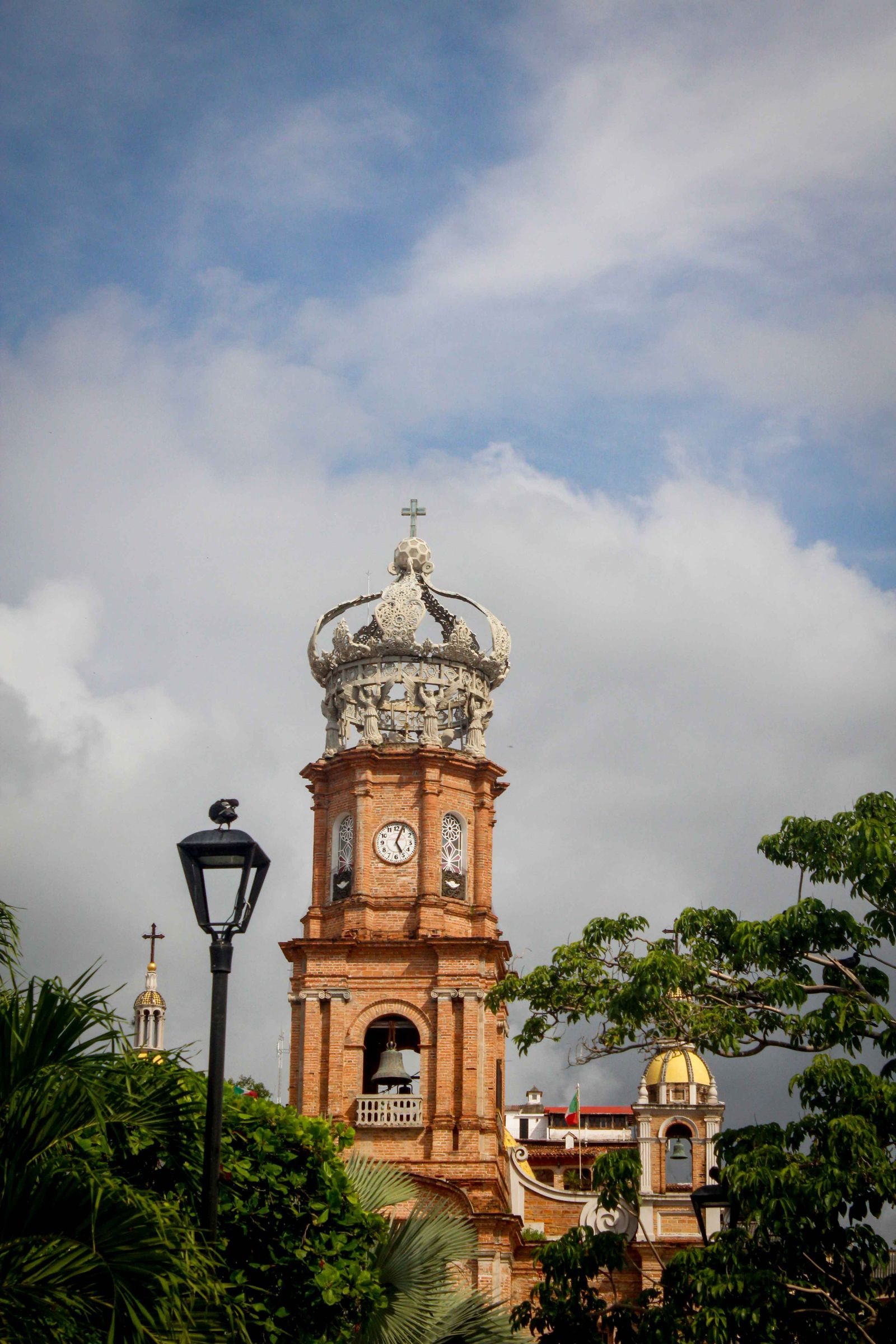 The church of Our Lady of Guadalupe. The town's first name, Las Peñas de Santa María de Guadalupe, comes from its founding date, December 12.
The Mining Company That Owned the Town
Here is a little-known chapter of Puerto Vallarta history: for decades, the land Las Peñas grew on belonged to a mining company. Around 1859, the Unión en Cuale company, partly owned by the Camarena brothers of Guadalajara, acquired a huge tract stretching from the coast up into the mountains. The government sold it on the condition that it be settled and made productive, so the bay could serve as a port, fishing ground and farm supply base for the mines. By the 1860s, Las Peñas was a stable village.
In June 1899, an American named Alfred W. Geist bought most of the company's stock and, with it, control of the mines and the land under the Las Peñas settlement. Land ownership stayed a sensitive issue through the 20th century, through the creation of ejidos (communal farmland) and a 1970 expropriation meant to sort out ownership in the tourist zone.
From Small Port to Municipality (1885–1918)
Las Peñas grew slowly through the late 1800s; population estimates from the period range from about 800 to 1,500 people, depending on the source. According to Jalisco's state statistics institute (IIEG), these were the key steps:
- 1885: the port opened to domestic shipping and got a maritime customs office.
- October 31, 1886: Las Peñas became a comisaría (an administrative district) of the municipality of Talpa.
- May 2, 1888: it was transferred to the municipality of San Sebastián.
- May 31, 1918: Las Peñas became a municipality in its own right and was renamed Puerto Vallarta. The decree was published on June 5 of that year.
The mountain towns Vallarta once answered to are now destinations themselves: see our guides to Mascota and Talpa and to San Sebastián del Oeste.
Why Is It Called Puerto Vallarta?
The town was named after Ignacio L. Vallarta, a lawyer and former governor of Jalisco. The name change was requested by state congressman Marcos Guzmán and took effect when Las Peñas became a municipality in 1918. The anniversary is still marked every May with a cultural festival.
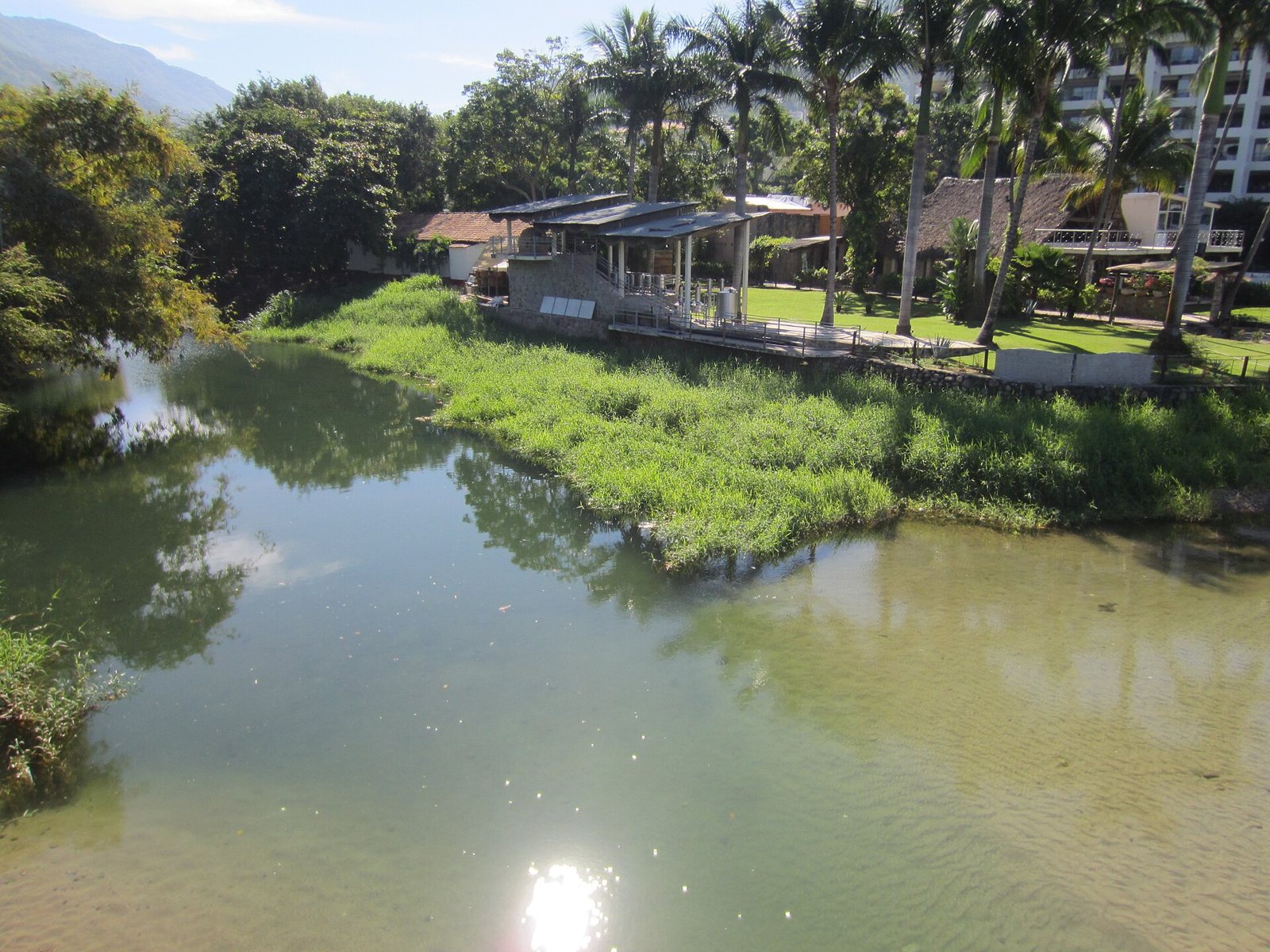 The Cuale River near its mouth on Banderas Bay, the area where the settlement of Las Peñas began.
A Remote Village: Fruit, Sharks and the First Visitors
For the first half of the 20th century, Vallarta lived on farming, fishing and trade. In 1925 the Montgomery Fruit company arrived; land reform forced it out around 1935, and shark fishing then became one of the town's main sources of income.
Getting here was the hard part. Mountains, ocean and the Ameca River boxed the town in, so most people arrived by boat or small plane; a commercial air route opened in the 1930s and brought the first Mexican and foreign visitors. A few dates show how the town slowly connected to the world:
- 1932: two lighthouses were inaugurated, one of them on Matamoros Street.
- 1935–1936: the first Malecón was built; it was expanded between 1940 and 1952.
- 1956: a road from Mascota to Puerto Vallarta opened, easing the town's overland isolation.
From the 1950s on, Americans and Canadians began settling in the hills above downtown, in an area still known as Gringo Gulch.
The Guadalupe Church and the Story of Its Crown
The crowned tower on every postcard has a story of its own. A rustic chapel stood on the site first. The current church was built in stages: work stopped from 1926 to 1929 during the Cristero War, the main body was finished in 1940, and the towers were completed in the following decades. The crown went up in 1965.
Here is a fun myth-buster: you will often read that the crown copies the one worn by Empress Carlota, wife of Emperor Maximilian. Local sources say that is not true and describe it as an original design, even giving it a Nahuatl name, Tecuntlanopeuh. The original crown was damaged in the October 1995 earthquake, replaced by a temporary fiberglass version, and in 2009 a new crown by Jalisco sculptor Carlos Terres was set in place.
The Night of the Iguana Puts Vallarta on the Map
Everything changed in 1963, when director John Huston shot The Night of the Iguana at Mismaloya, just south of town, starring Richard Burton, Ava Gardner and Deborah Kerr. Elizabeth Taylor came along to be with Burton, and the international press followed the famous couple. Photos of them with the bay in the background traveled around the world, and many sources point to this moment as the start of Puerto Vallarta as an international destination. The couple lived in Gringo Gulch, and in 1964 Burton had a raised bridge built over Zaragoza Street to link two houses; read about it in our Casa Kimberly history. Get the full film story in The Night of the Iguana in Puerto Vallarta, and see the filming location in our Mismaloya Beach guide.
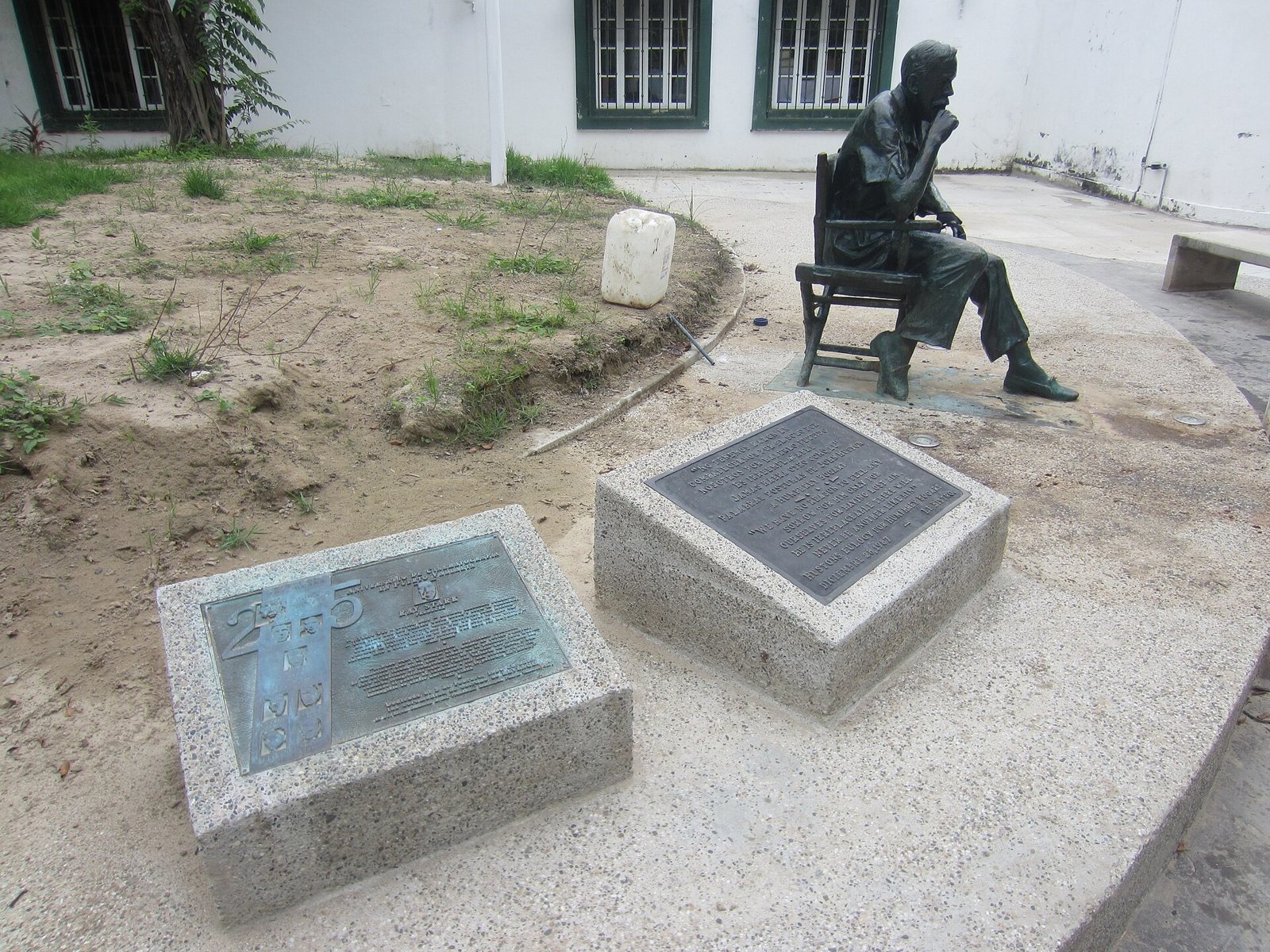 The John Huston statue on Isla Cuale honors the director of The Night of the Iguana, the film that made Vallarta famous.
1968: Puerto Vallarta Becomes a City
On May 31, 1968, exactly 50 years after it became a municipality, the Jalisco state congress granted Puerto Vallarta official city status. Big infrastructure projects arrived around the same time: road links toward Compostela and Tepic, a bridge over the Ameca River, and the international airport, named after President Gustavo Díaz Ordaz.
The symbolic moment came in August 1970, when Díaz Ordaz hosted U.S. President Richard Nixon in Puerto Vallarta to discuss border issues, and the airport and other projects were inaugurated during the visit. That same year the El Salado wharf, today's cruise terminal, opened, and the government announced the expropriation of more than 1,000 hectares of ejido land to create a trust to regulate land ownership in the tourist zone.
The Tourism Boom
From the 1970s on, Vallarta grew fast. Marina Vallarta was built between 1986 and 1993 (see our Marina Vallarta guide), and the hotel zone spread north along the bay. South of the Cuale, the old Emiliano Zapata neighborhood around Olas Altas beach started being marketed as the Romantic Zone.
On October 25, 2002, Hurricane Kenna made landfall north of the city and its waves destroyed the old Malecón, which was rebuilt wider and stronger; today it is a pedestrian boardwalk lined with sculptures. Most recently, the final stretch of the highway from Guadalajara opened at the end of 2024, cutting the drive to about two and a half hours.
According to Mexico's census bureau (INEGI), the city had fewer than 5,000 residents in 1950 and more than 220,000 in 2020. To explore the city as it is today, see our guide to things to do in Puerto Vallarta.
Puerto Vallarta History Timeline
- Centuries BC: first settlements on the bay (La Pedrera site).
- 1524–1525: Francisco Cortés de San Buenaventura's expedition reaches the Banderas valley.
- December 12, 1851: official founding of Las Peñas de Santa María de Guadalupe.
- 1859: the Unión en Cuale mining company acquires the coastal land.
- May 31, 1918: becomes a municipality named Puerto Vallarta.
- 1925: Montgomery Fruit arrives; Isla Cuale forms.
- 1963: The Night of the Iguana is filmed at Mismaloya.
- 1965: the church crown is installed.
- May 31, 1968: Puerto Vallarta is declared a city.
- 1970: Díaz Ordaz and Nixon meet; airport and El Salado wharf open.
- 1986–1993: Marina Vallarta is built.
- 1995: an earthquake topples the crown; a new one goes up in 2009.
- 2002: Hurricane Kenna destroys the old Malecón.
- 2024: the Guadalajara–Puerto Vallarta highway is completed.
Living Culture: Festivals and Flavors With History
From December 1 to 12, pilgrimages to the Guadalupe church fill downtown with dancers, music and fireworks; it is the city's biggest celebration and echoes the day Las Peñas was founded. In November, Day of the Dead brings altars and giant catrinas; in 2022, a 22.67-meter (about 74-foot) catrina made in Vallarta set a Guinness World Record.
Food carries history too. Pescado embarazado (a pun on en vara asado, "grilled on a stick") is a fishermen's dish skewered on sticks beside the fire, and tuba, a refreshing drink made from coconut palm sap, reached this coast through Filipino influence on the Manila galleon route. Find more in our Puerto Vallarta food guide.
Explore Historic Vallarta with Riviera Tours & Transfers
The best way to understand Puerto Vallarta history is to walk the downtown where it all started. Our Vallarta City Tour runs every day, lasts about 7 hours and is offered in English and Spanish. It includes:
- Guided walk through downtown Puerto Vallarta
- Visit to a traditional jewelry shop
- Free time for shopping
- Tequila stop
- Visit to a regional-cuisine restaurant (meal not included)
Prefer lunch included? The Vallarta Plus City Tour adds a distillery tour, a tequila tasting and a meal at a regional-cuisine restaurant.
Check dates and book the Vallarta City Tour →
Self-Guided Historic Walk (Half Day)
To visit the places in this story on your own, allow three to four hours on foot:
- Malecón and Los Arcos. Start on the boardwalk, first built in the 1930s and rebuilt after Kenna. See our Puerto Vallarta Malecón and Old Town guide.
- Main plaza and City Hall. On the stairwell landing is a naive-style mural by Vallarta-born painter Manuel Lepe (1936–1984).
- Guadalupe church. Look up at the crown, and step inside quietly if Mass is on.
- Matamoros Street lighthouse. One of the 1932 lighthouses; take it slow, as the hillside streets are steep.
- Gringo Gulch. Wander the hillside streets where the first foreign residents settled, including Burton's bridge over Zaragoza Street.
- Isla Cuale. According to local chroniclers, the island formed around 1925 when a cyclone shifted the river's course; it turned 100 in 2025. It was a modest neighborhood until floods in the 1970s, and today has suspension bridges, a craft market, the city's cultural center, the Museo del Cuale and the John Huston statue, installed in 1988.
- Romantic Zone. Cross south of the river and finish at Olas Altas or Playa de los Muertos.
Tips for Exploring Historic Puerto Vallarta
- Best time to go: November to May is the dry season; rains run from mid-June to mid-October, and August is the wettest month.
- Visit in early December to see the processions to the Guadalupe church, which build up to December 12.
- Walk early or late, in comfortable shoes, with water and sunscreen. Highs hover around 86°F (30°C) most of the year, and downtown has steep cobblestone streets.
- Budget: the walk itself is mostly free; carry pesos in cash for the museum, water and crafts.
- Respect religious spaces. Skip beachwear inside the church and keep quiet during Mass.
Frequently Asked Questions
When was Puerto Vallarta founded? The official date is December 12, 1851, when Las Peñas de Santa María de Guadalupe was settled at the mouth of the Cuale River.
Who founded Puerto Vallarta? Tradition credits Guadalupe Sánchez Torres, a salt trader, who arrived with his wife, Ambrosia Carrillo, and a few other families.
Why is Puerto Vallarta named Vallarta? It honors Ignacio L. Vallarta, a lawyer and former governor of Jalisco. The name was adopted in 1918, when Las Peñas became a municipality.
When did Puerto Vallarta become a city? On May 31, 1968, by decree of the Jalisco state congress, on the municipality's 50th anniversary.
What was here before Puerto Vallarta? Indigenous peoples lived on the bay from centuries BC; later there were only scattered fishermen until Las Peñas was founded.
Is the church crown a replica of Empress Carlota's crown? It is a popular story, but local sources say no: it is an original 1965 design, rebuilt in 2009.
What made Puerto Vallarta famous? The 1963 filming of The Night of the Iguana at nearby Mismaloya and the press that followed Burton and Taylor. New roads and the international airport did the rest.
Photos: Soly Moses / Pexels License via Pexels · Fernando González / Pexels License via Pexels · Another Believer / CC BY-SA 3.0 via Wikimedia Commons · Another Believer / CC BY-SA 4.0 via Wikimedia Commons




