
Cross the Cuale River heading south and the city's mood shifts. Streets get narrower, rooftop terraces and art galleries line the blocks, rainbow flags hang from balconies, and the ocean is never more than a few minutes away. The Romantic Zone, or Zona Romántica, is Puerto Vallarta's liveliest neighborhood: beach by day, street life by night.
Most visitors never hear the backstory: an old cemetery, a river that changed course in a cyclone and a beach whose eerie name locals still argue about. Here's that history, plus walking routes to explore it.
What Is the Romantic Zone in Puerto Vallarta?
"Zona Romántica" is not an official name. It is what locals and visitors call the part of the city just south of the Río Cuale, between the bay and the hills. Its core is the Emiliano Zapata neighborhood (colonia), and many guides also include parts of Alta Vista and Amapas. That's why there's no exact boundary: some people mean the few blocks around Los Muertos Beach, others stretch it up into the southern hillsides.
In English it often goes by Old Town, which is a little misleading. The city's original historic core is actually north of the river, around the church and the main Malecón. If you want to explore that side too, see our Puerto Vallarta Malecón and Old Town guide.
Romantic Zone History: From Cemetery Edge to Hot Spot
Puerto Vallarta was born on the Cuale River: on December 12, 1851, Las Peñas de Santa María de Guadalupe was founded at its mouth, a hamlet that supplied salt to the silver mines in the mountains and grew mostly on the north bank. For the full story, read our Puerto Vallarta history guide.
The south bank was the edge of town. According to Spanish-language Wikipedia, Los Muertos Beach sat on the outskirts with a simple wooden fishing pier, and a community grew up around the old cemetery. By the mid-20th century, Colonia Emiliano Zapata was a remote corner with flophouse hotels, cantinas and brothels, and a rough reputation.
Two waves changed that: the 1960s tourism boom, after The Night of the Iguana put Vallarta on the map, and then, from the 1980s, Canadian and U.S. retirees and many gay men who bought property cheaply and opened businesses. The result is today's neighborhood, one of the best-known gay neighborhoods in the world.
Another bit of history hides in the street signs: Basilio Badillo Street honors Basilio Vadillo (with a V), a teacher and politician who governed Jalisco from 1921 to 1922 and signed Puerto Vallarta's communal land grant. The grateful city named a street in the Olas Altas area after him.
Romantic Zone Timeline
- 1851: Las Peñas is founded at the mouth of the Cuale River.
- 1921–1922: Basilio Vadillo governs Jalisco and signs Vallarta's communal land grant.
- 1925: A cyclone shifts the Cuale River's course, creating the island.
- 1954: Construction begins on the Church of the Holy Cross.
- 1960s: The Los Muertos pier is still made of wood.
- 1980s: Retirees and the gay community transform the neighborhood; in 1988 the John Huston statue goes up on the island.
- 2013: The new pier opens on January 4; the first organized Vallarta Pride follows in May.
- 2021: Hurricane Nora floods the Cuale River.
- October 2025: Isla del Río Cuale turns 100.
Why Is It Called Los Muertos Beach?
"Beach of the Dead" is an odd name for the city's most popular shoreline, and there's no official explanation; per Spanish-language Wikipedia, authorities have tried to rename it without success. Local tradition offers several versions:
- The old cemetery. The most accepted story: this was once a burial ground; when it filled up, a new one opened farther away, but the name stuck. Some accounts say human remains turned up when hotels were built.
- The silver ambush. Gold and silver from the Cuale mines were loaded near the beach, and one shipment's crew was supposedly ambushed and killed. In another telling, the attackers were pirates.
- Pirates and lost treasure. Pirates who hid loot on this coast supposedly killed each other fighting over a forgotten treasure.
They're legends. Tradition also says someone once proposed renaming it "Playa del Sol" (Sun Beach), with no luck.
Los Muertos Beach and the Los Muertos Pier
Playa Los Muertos is the Romantic Zone's main beach and one of the busiest in town. It's an urban beach with loungers, vendors and lots of energy, especially on weekends and in high season. One stretch is known as "Blue Chairs" beach, and in 2019 Newsweek named Los Muertos among the world's best gay beaches. Farther south the coastline continues with smaller beaches such as Amapas; for more, see our guide to Puerto Vallarta's south shore beaches.
The beach's landmark is the Los Muertos Pier. The current pier opened in 2013, replacing an older wooden one, and was designed by Mexican architect José de Jesús Torres Vega. Its signature feature is the tall metal structure at the end, shaped like a sail, which is lit up at night. It's a favorite sunset spot, and boats and water taxis to beaches on the south side of the bay, including Yelapa, leave from here.
At the south end of the beach, look for The Boy on the Seahorse (El Caballito) by Rafael Zamarripa. A first version stood here in the late 1960s until a storm swept it away; the downtown Malecón copy replaced it in 1976.
Beach safety: swim only where conditions look calm, follow the beach flags and lifeguard instructions, and stay out of the water after drinking.
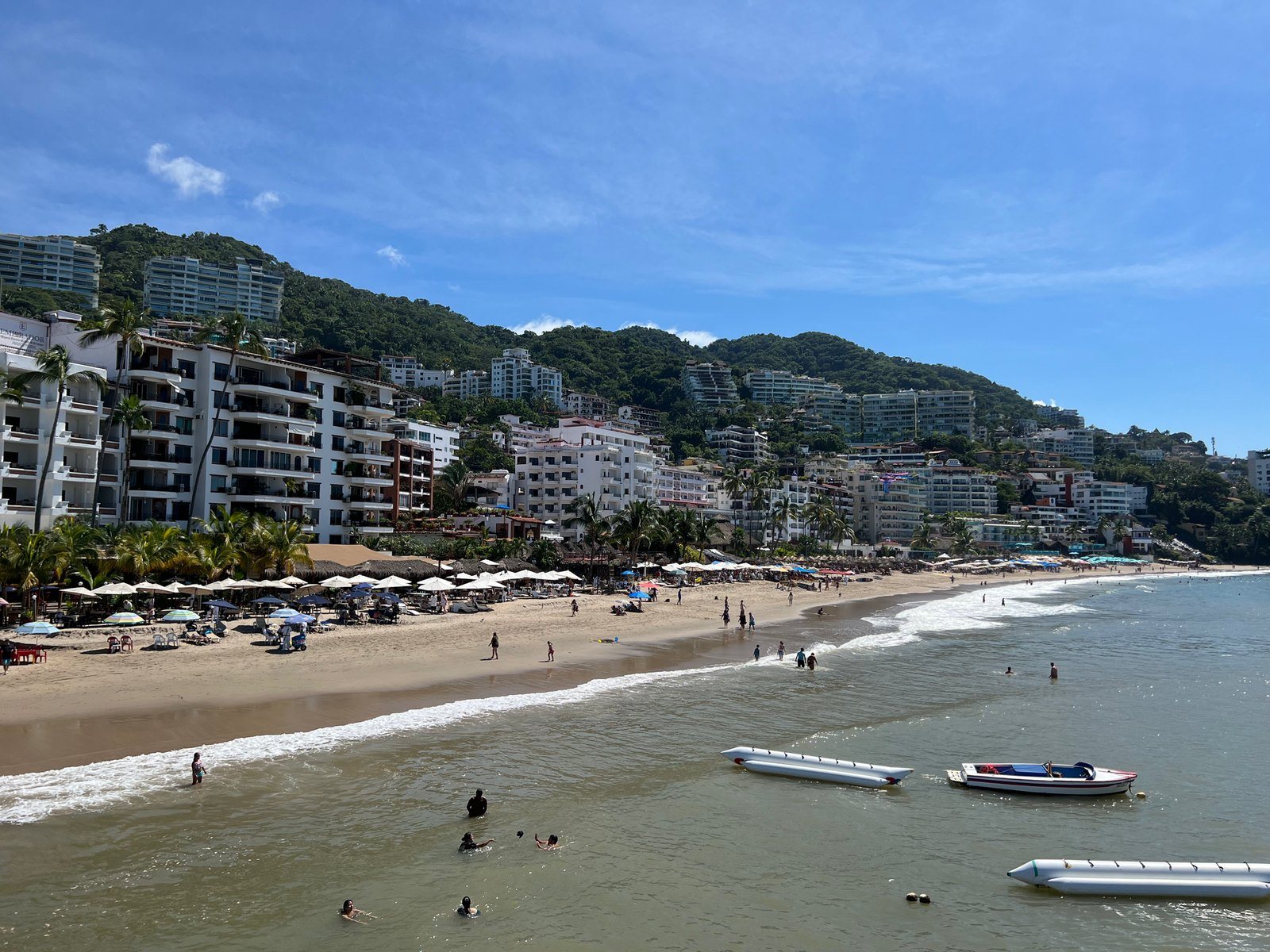 Los Muertos Beach seen from the pier.
Basilio Badillo Street and the Neighborhood Vibe
If the beach is the heart of the Romantic Zone, Basilio Badillo Street is its main artery. It is packed with restaurants, cafés, art galleries and shops, and it's often nicknamed "Restaurant Row." Several stretches have wide sidewalks, so it's an easy street to stroll, window-shop and pick a spot for dinner.
The streets around it, like Olas Altas, keep the same feel. We don't name businesses here because they change often; for specific picks, see our guides to Romantic Zone restaurants and Romantic Zone hotels, plus our Puerto Vallarta food guide.
Lázaro Cárdenas Park and the Church of the Holy Cross
A couple of blocks from the beach, Lázaro Cárdenas Park is the neighborhood square, with a statue of the former president, a bandstand, the sculpture Ándale Bernardo and mosaic benches from a tile project led by artist Natasha Moraga. In high season (roughly November to May), a Saturday-morning farmers market sets up here; check its social media for dates, and see our Puerto Vallarta markets guide for more.
At Lázaro Cárdenas and Aguacate streets stands the Church of the Holy Cross (Iglesia de la Santa Cruz), the neighborhood parish, begun in 1954. Its feast day is May 3, and in past years the parish has hosted several days of celebrations with a parade from Los Muertos Pier, folk dancers, mariachi and food stalls. It's a reminder that real people and traditions live here: be respectful if you step inside.
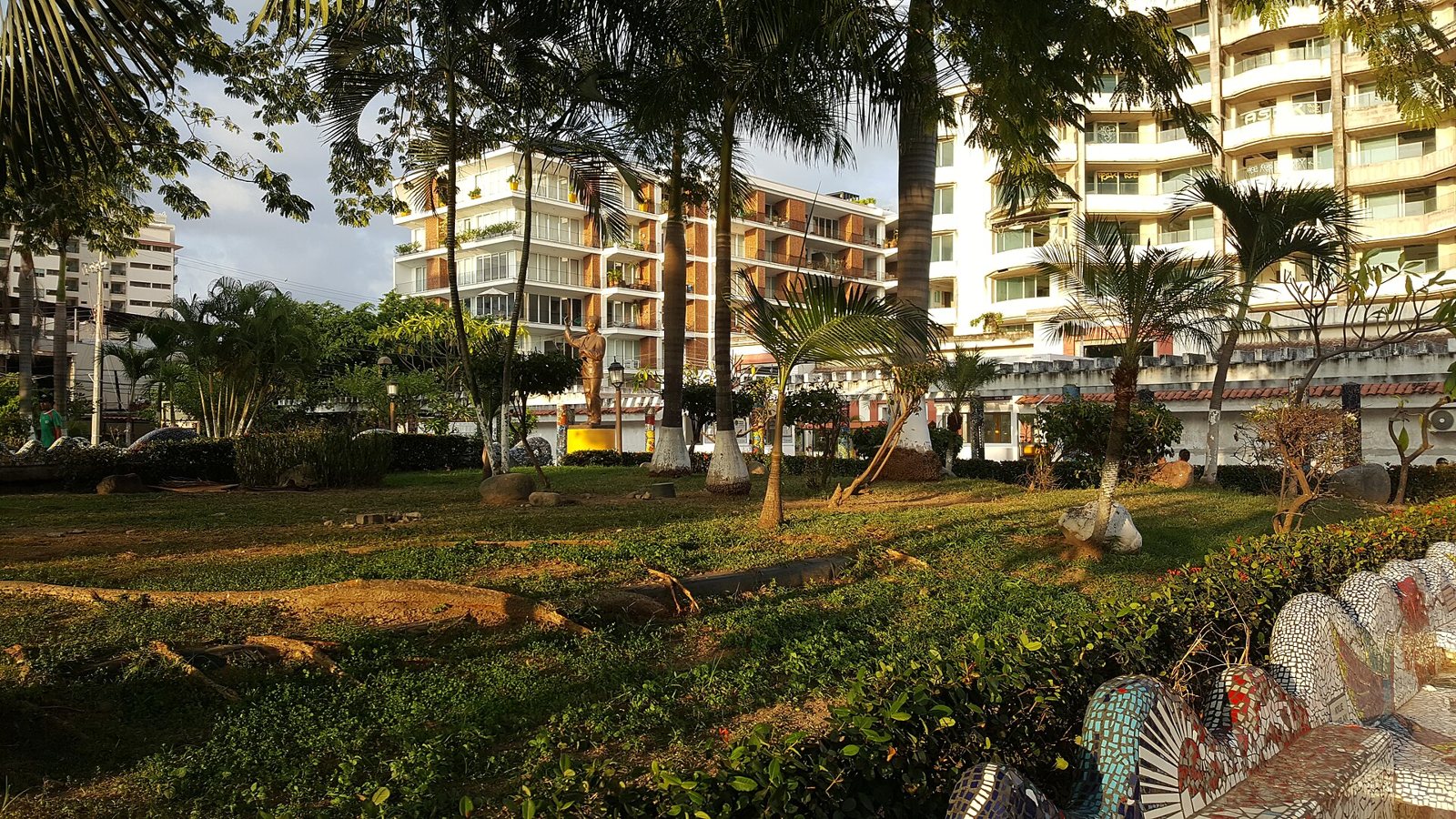 Lázaro Cárdenas Park, with its statue of the former president and tiled benches.
Isla Cuale: An Island Turning 100
The Cuale River runs between downtown and the Romantic Zone, and in the middle sits a long, narrow island: Isla Cuale (Isla del Río Cuale). According to local historian Moisés Hernández, a cyclone in 1925 shifted the river's course and split it into two channels; the land between them became the island. It was first called Isla de Santa Clara, then Isla de los Niños (Children's Island), because local kids played here. In October 2025 the city marked its centennial with music, workshops and a commemorative plaque.
Footbridges connect it to both sides, including a swaying suspension bridge. Inside are shaded paths, big trees, craft stalls (many with Wixárika pieces; see our Huichol art guide), galleries and the Vallarta Institute of Culture, which runs workshops and events. Iguanas and birds are easy to spot along the river, and it's the best escape from the midday heat.
La Iguana Bridge, built in 2012 with green and yellow tiles, climbs from the island to Gringo Gulch, the hillside where artists and expats settled from the 1950s on, and home to Casa Kimberly, Elizabeth Taylor and Richard Burton's former houses.
The island also holds the Museo del Cuale, a small archaeology museum opened in 1978 and refreshed in 2005, covering western Mexico's past: shaft tombs, Aztatlán ceramics, the Purépecha and the Spanish conquest. Heads up: INAH, Mexico's national heritage institute, lists it as temporarily closed, so check before you go.
And there's the bronze statue of John Huston, unveiled in the late 1980s to honor the director of The Night of the Iguana, the film shot at Mismaloya that made Puerto Vallarta famous. Read our guide to The Night of the Iguana in Puerto Vallarta, or plan a visit to Mismaloya Beach.
The river has a wild side, too: in August 2021, Hurricane Nora pushed it over its banks and damaged the island and riverside. In the rainy season, heed civil protection warnings near the riverbed.
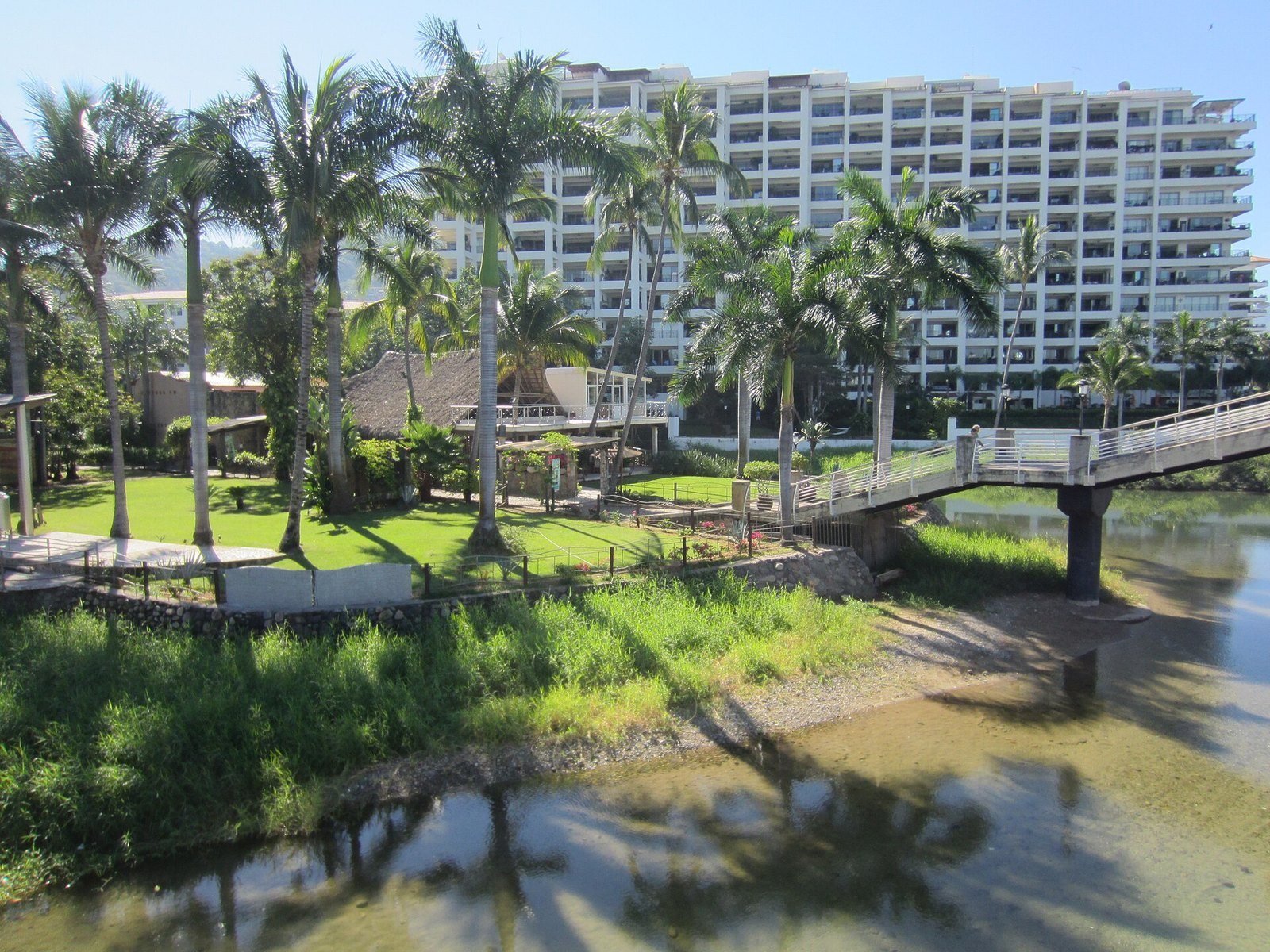 The Cuale River near where it meets the bay.
An LGBTQ+ Friendly, Welcoming Neighborhood
The Romantic Zone is the center of Puerto Vallarta's LGBTQ+ community, and the city has long been known as one of the most LGBTQ+ friendly destinations in Mexico. It has picked up international LGBTQ+ travel awards, and every May it hosts Vallarta Pride, with the Romantic Zone as the main hub.
The first organized Pride took place in May 2013, put together by local business owners, and ended with a parade and block party in Lázaro Cárdenas Park. Today it runs about a week (May 17–24 in 2026); check official channels for dates. You feel that openness on the street: couples of every kind, families and longtime residents all share the same beach.
Romantic Zone Nightlife
After sunset the neighborhood shifts gears. You'll find rooftop and beachfront bars, live music, cabaret and drag shows, dance clubs and quieter places for a drink by the ocean. Most of it is within walking distance, so you won't need a car.
Book or arrive early for dinner in high season, carry pesos along with your card, and if you're drinking, take a taxi or rideshare back.
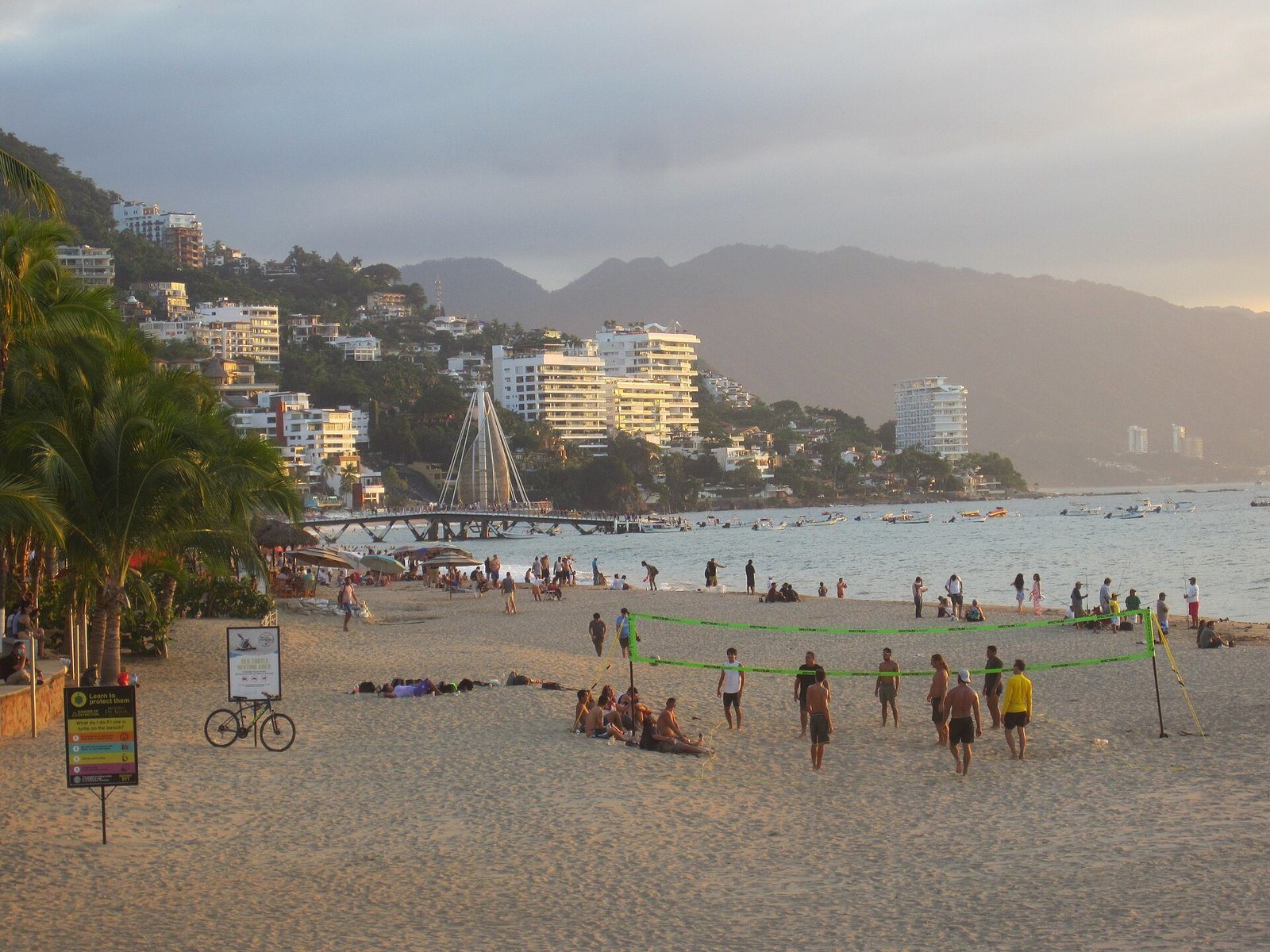 Late afternoon on Los Muertos Beach, with the pier and southern hills behind.
Weather and the Best Time to Visit the Romantic Zone
- Dry season (roughly November to May): clear skies, lower humidity and the best walking weather; also high season.
- Rainy season (roughly mid-June to mid-October): hot, humid days and afternoon or evening downpours; September tends to be wettest. Fewer crowds and very green hills.
- Hurricanes: the eastern Pacific season runs May 15 to November 30; watch official forecasts.
- Whales: humpbacks visit the bay from about December to March, sometimes visible from shore. See our whale watching in Puerto Vallarta guide.
Romantic Zone Walking Itinerary
Half day (morning or afternoon):
- From the downtown Malecón, cross to Isla Cuale and walk its paths to the Huston statue.
- Head south along Basilio Badillo and its galleries.
- Swing by Lázaro Cárdenas Park and the Church of the Holy Cross.
- Finish at Los Muertos Beach and the end of the pier.
Full day: the island and breakfast early (plus the park's farmers market on a high-season Saturday); beach time at Los Muertos or toward Amapas at midday; galleries and The Boy on the Seahorse in the afternoon; sunset on the pier; dinner or a show at night.
Budget: the beach, pier, island and park are free public spaces. Your real costs are food, drinks, water taxis and shopping, from cheap street food to high-end dining.
Is the Romantic Zone Safe?
The Romantic Zone is one of Puerto Vallarta's busiest tourist areas, with plenty of people around day and night. Still, use the same common sense you would in any city: keep an eye on your belongings at the beach, don't flash valuables, stick to well-lit streets at night, and use licensed taxis or trusted ride apps.
Conditions can change, so check the current U.S. State Department travel advisory for Mexico before your trip, consider enrolling in the State Department's STEP alerts, and follow local authorities' instructions if any alert is issued.
Explore Downtown Vallarta with Riviera Tours & Transfers
Our city tours don't cover the Romantic Zone itself. They focus on downtown Puerto Vallarta, just across the river. They're a great first-day introduction to the city, and afterward you can walk back to the Romantic Zone on your own for the beach or dinner.
- Vallarta City Tour: runs daily, takes about 7 hours and is offered in English and Spanish. Includes a guided walking tour of downtown, a traditional jewelry shop visit, free time for shopping, a tequila stop and a visit to a regional-cuisine restaurant (lunch not included).
- Vallarta Plus City Tour: also daily and about 7 hours. Adds a distillery tour, a tequila tasting and lunch included at a regional-cuisine restaurant.
See dates and book the Vallarta City Tour →
Looking for more ideas? Check out our guide to things to do in Puerto Vallarta.
Tips for Your Visit
- Wear comfortable shoes. Some curbs are high and some streets are cobblestone.
- Beat the sun. Bring a hat, reef-safe sunscreen and water; at midday, head for the shade on Isla Cuale.
- Carry small bills in pesos for street food, tips, taxis and water taxis.
- Remember people live here. Keep it down at night and ask before photographing anyone.
- Leave no trace. Pack out your trash and don't feed the iguanas.
- Respect the beach flags and ask lifeguards about sea conditions.
FAQ
Where is the Romantic Zone in Puerto Vallarta? Just south of the Cuale River, next to downtown. From the Malecón you can walk there by crossing the river bridges.
Is the Romantic Zone the same as Old Town? Mostly, yes, in everyday use. "Old Town" is a common English nickname for the Romantic Zone, even though the original historic center, with the church and main Malecón, is north of the river.
Why is it called Los Muertos Beach? There's no official answer; the most accepted story is an old cemetery, and other legends involve a silver-shipment ambush or pirates.
How much time do I need to explore the Romantic Zone? Half a day covers the highlights; give it a full day for beach time, shopping, sunset and dinner.
Is the Museo del Cuale open? INAH lists it as temporarily closed, so check before you go. The island itself is open to explore.
When is Vallarta Pride? It takes place in May, centered in the Romantic Zone. Exact dates change every year, so check the official event channels.
Does the city tour go through the Romantic Zone? The tour focuses on downtown Puerto Vallarta. The Romantic Zone is a short walk away, so you can explore it during free time or on another day. See the Vallarta City Tour.
Photos: daryl_mitchell / CC BY-SA 2.0 via Wikimedia Commons · RL0919 / CC BY-SA 4.0 via Wikimedia Commons · Another Believer / CC BY-SA 3.0 via Wikimedia Commons · Another Believer / CC BY-SA 4.0 via Wikimedia Commons (2 photos)




