
Drive south out of Puerto Vallarta and the road soon starts hugging the hills, with jungle running right down to the water. A few minutes later you reach a small cove where a river meets the bay. This is Mismaloya, a little coastal village that packs three highlights into one easy outing: a laid-back beach, the Los Arcos rock formations just offshore, and the spot where a Hollywood film helped put Vallarta on the map.
There is more here than a photo stop, though. This cove has a Nahuatl name, a land grant from the 1930s, two Hollywood productions shot more than twenty years apart, and granite islands that have been protected for half a century. Here's the story, plus everything you need to plan your visit.
Where Is Mismaloya?
Mismaloya sits on the south shore of Banderas Bay, within the municipality of Puerto Vallarta, about 10–12 km (6–7.5 miles) south of downtown. You get there on Federal Highway 200, the coastal road that heads south out of Vallarta toward the southern Jalisco coast. Boca de Tomatlán is a bit farther along the same road.
By car or taxi, the ride from the Romantic Zone or the Malecón usually takes around 15 to 20 minutes, though traffic on Highway 200 can stretch that, especially in high season or when there is a road closure.
What Does "Mismaloya" Mean?
The name comes from the Nahuatl word michmaloyan, usually translated as "place where they catch fish with their hands." It's a good clue to what this cove was for centuries: a community that lived off the river and the sea long before hotels and film crews showed up.
A Short History of Mismaloya
Until the mid-20th century, Mismaloya was a remote place. Longtime residents interviewed in 2009 by journalist Kent Paterson remembered getting around on foot, by canoe or on horseback, and making a living from fishing and farming.
In 1937, under President Lázaro Cárdenas, a presidential decree granted residents about 3,000 acres and created the ejido of Boca de Tomatlán and Mismaloya, a form of communal landholding that was central to Mexico's land reform. The ejido was expanded by nearly 2,400 acres in 1991.
Everything changed in 1963 with The Night of the Iguana. Residents later described the shoot as a bonanza of jobs and income for a small farming and fishing community, and it also drew outsiders eager to buy land by the sea. Over the following decades, hotels and condos went up on the beach and hillsides, and today the community mixes farming with tourism: boat rides, food and services. For the bigger picture of how the city grew in those years, read our Puerto Vallarta history.
Mismaloya Timeline
- 1937: A presidential decree creates the Boca de Tomatlán and Mismaloya ejido.
- 1961: Tennessee Williams' play The Night of the Iguana opens on Broadway.
- September 1963: John Huston begins filming the movie in Mismaloya; the shoot lasts 72 days.
- August 6, 1964: The film premieres.
- July 28, 1975: An agreement is published declaring the waters of Los Arcos a refuge for marine flora and fauna.
- April 14, 1986: Filming of Predator begins in the Puerto Vallarta area, including jungle scenes at Mismaloya.
- June 12, 1987: Predator is released.
- 1988: A statue of John Huston honoring the film is installed in Puerto Vallarta.
- 1991: The ejido is expanded.
- 2022: Puerto Vallarta starts celebrating Los Arcos de Mismaloya Day every July 28.
Mismaloya Beach
The beach is a compact cove at the mouth of the Mismaloya River. It tends to be calmer and less crowded than the beaches closer to downtown, and from the sand you look straight out at Los Arcos. It is a nice place to spend a few hours: swim when conditions allow, watch the pangas come and go, and have seafood with a view of the bay.
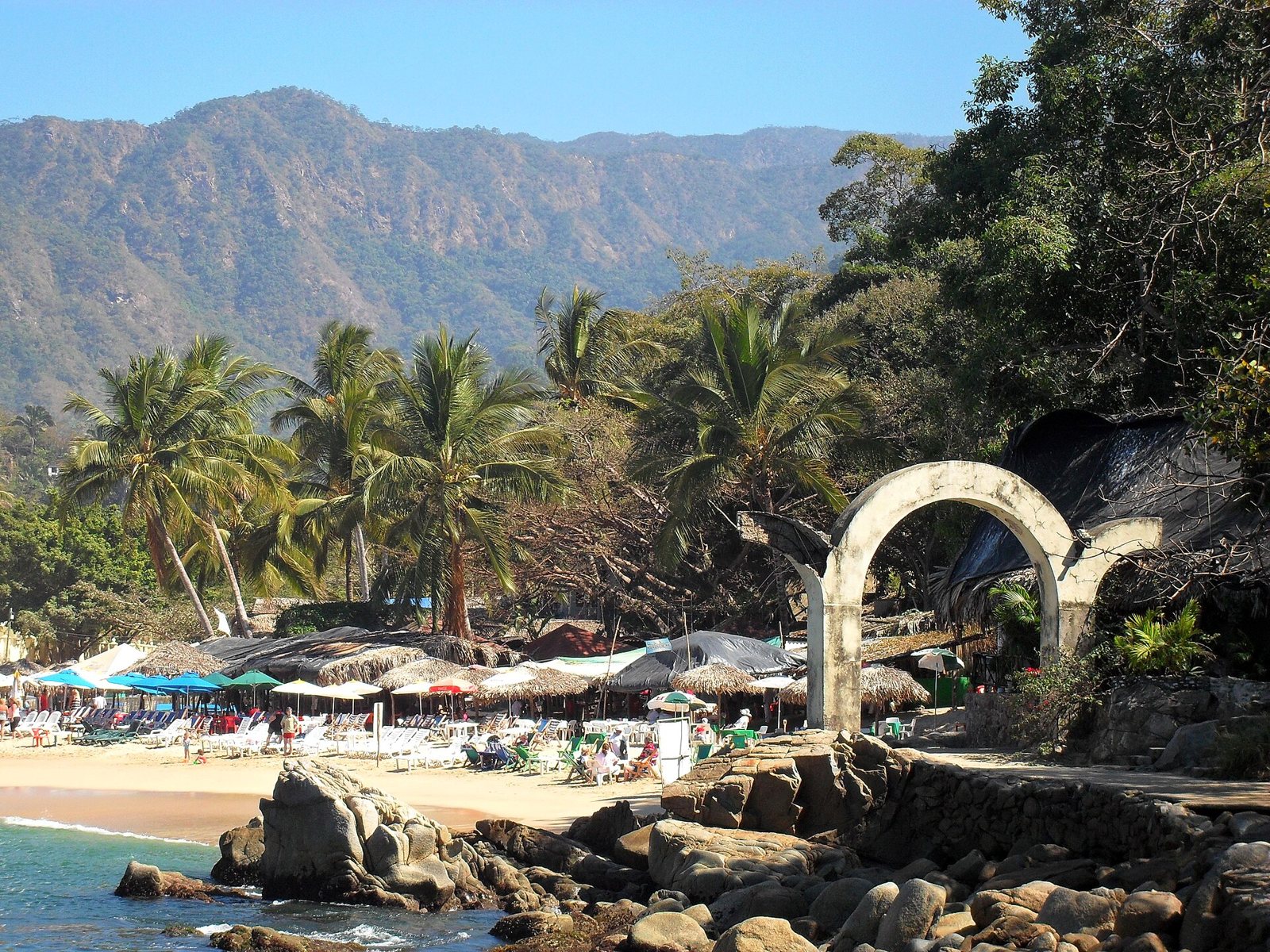 Palapas and palm trees on Mismaloya Beach.
Keep expectations realistic: there is hotel development on the hillside, so this is not a deserted beach. It is a working village beach, with local life and plenty of boat captains offering rides.
The Night of the Iguana Film Set
Mismaloya earned its place in movie history in 1963, when director John Huston shot The Night of the Iguana here, based on the Tennessee Williams play, with Richard Burton, Ava Gardner, Deborah Kerr and Sue Lyon. Filming started in September 1963 and the movie premiered in 1964. It earned four Oscar nominations and won for Best Costume Design (Black-and-White).
Because many locations could only be reached by boat, the production built a village of about 25 houses for the cast and crew, up the hill on the south side of the cove.
A few things most visitors don't know:
- Huston already knew Mexico. As a young man he spent about two years in the country and became an honorary member of the Mexican cavalry.
- A friend brought him here. He chose the area after meeting architect Guillermo Wulff, who owned property in town.
- The set drew more big names. Tennessee Williams and Mexican director-actor Emilio "El Indio" Fernández spent time there during the shoot. Elizabeth Taylor arrived with Burton in September 1963, and their romance dominated the gossip columns.
- A famous line. Huston liked to say, more or less, that the press came expecting fireworks between the stars, and when there were none, they ended up writing about Puerto Vallarta.
- He never really left. Huston bought a house in the area and spent his last years at Las Caletas, a secluded cove on the bay's south shore. He died in 1987.
The international attention the shoot brought is often credited with helping turn Puerto Vallarta into a travel destination, and the city honors Huston with a statue by sculptor Carlos Ramírez.
Today the set is mostly in ruins. What was once a café named for Huston at the top of the hill is an empty shell, and the director reportedly said he was the only one who cared about the place. A faded Iguana sign still stands by the road. If you want to hike up to the ruins, ask in the village whether access is open that day and wear closed-toe shoes. For the full story of the shoot and how it changed Vallarta, read our guide to the Night of the Iguana in Puerto Vallarta.
Mismaloya in Predator
More than twenty years later, Mismaloya's jungle was back on screen in Predator, directed by John McTiernan and starring Arnold Schwarzenegger, which began filming in April 1986. Some of the jungle scenes were shot in the forest across Highway 200 from the beach.
A fun detail: the movie was shot in the dry season, so crews watered the locations every day and brought in 30-foot artificial trees, fake rocks and vines to make the jungle look denser.
Snorkeling at Los Arcos de Mismaloya
Right off Mismaloya rise Los Arcos, a group of granite islets with natural tunnels carved through them; the largest arches are big enough for small boats to pass through. They are a refuge for seabirds such as pelicans and blue-footed boobies, and underwater you will find rocky reef, tropical fish, rays and, if you are lucky, sea turtles.
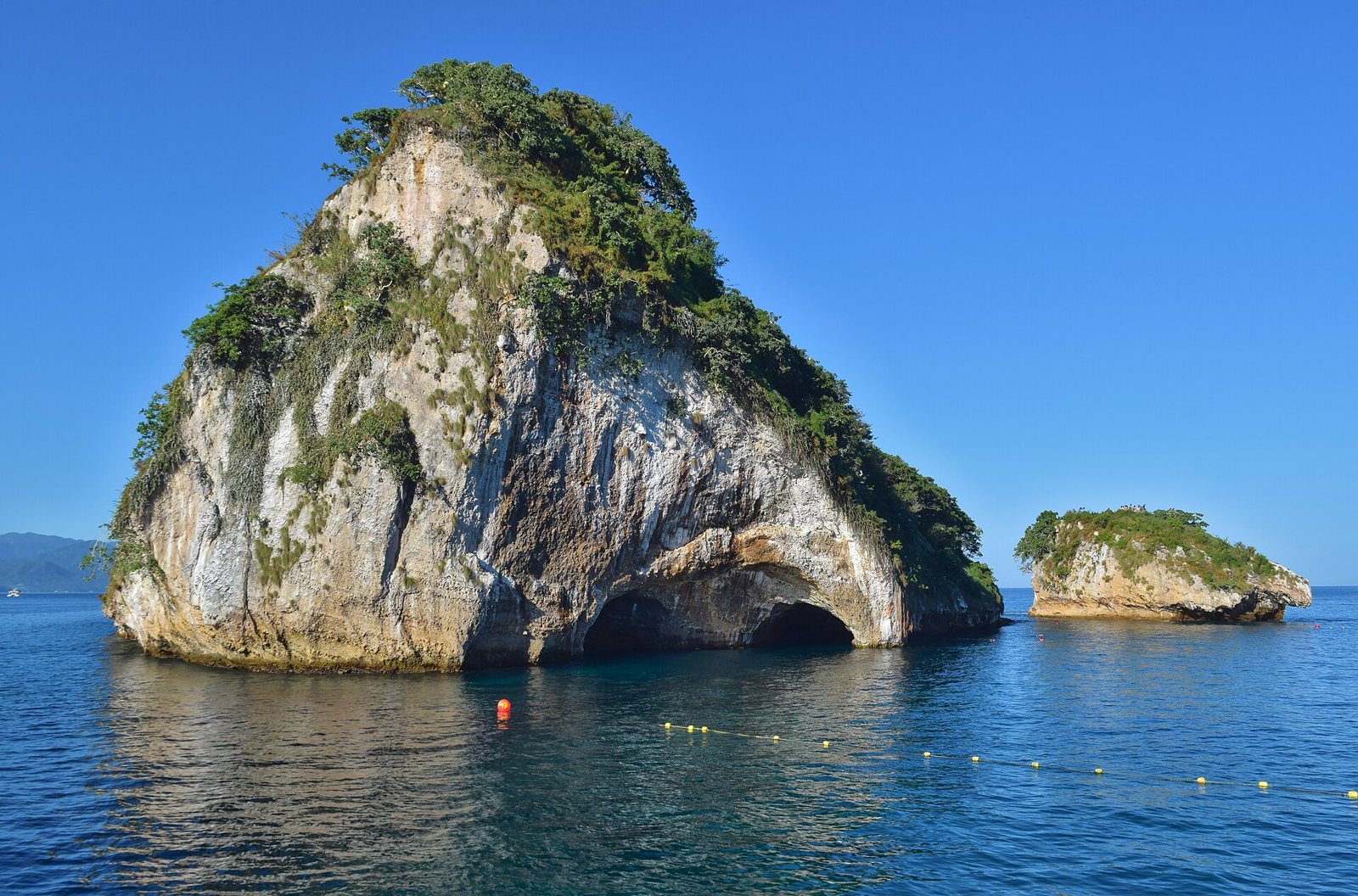 Los Arcos de Mismaloya: granite islets with natural tunnels just off the beach.
How Los Arcos Formed
Los Arcos are five islets that were once hills of the Sierra Madre Occidental right on the coast. The ocean gradually wore away the surrounding rock, exposing their granite cores and cutting them off from the mainland.
The three best known have names: Roca de Los Arcos (Arches Rock), Roca de la Tortuga (Turtle Rock) and Roca del Diablo (Devil's Rock), named for a dark shadow on one of its cliffs. The largest islet is roughly 250 m long and 160 m wide (820 by 525 feet), and the two biggest rise 43–54 m (141–177 feet) above the water. The surrounding waters are among the deepest in Banderas Bay.
What You'll See Underwater
With a mask and snorkel you can spot Moorish idols, Pacific sergeant majors, angelfish, parrotfish, pufferfish and moray eels, and if you're lucky, eagle rays or an octopus. Pelicans, cormorants, blue-footed boobies and ospreys use the islets as breeding grounds. From November to March, humpback whales and dolphins are more common in the bay; if your trip lines up, see our whale watching guide.
The Legend of Devil's Rock
According to a story passed down in Vallarta, a group of young people ignored warnings about the currents and tried to take a boat under the arches. A wave flipped it, and once ashore, some claimed they had seen a reddish, horned figure in the shadows. It's a legend, not history, but the lesson is real: at Los Arcos, the ocean is in charge.
Protecting Los Arcos
The waters around Los Arcos have been protected since July 28, 1975, when an agreement set them aside as a refuge zone for the protection of marine flora and fauna, a response to reef damage and overfishing. Since 2022, Puerto Vallarta has celebrated Los Arcos de Mismaloya Day every July 28. You will often see the area called "Los Arcos National Marine Park," but Puerto Vallarta's own tourism board describes national marine park status as a goal it is still promoting, so treat that name with some caution.
How to Snorkel Los Arcos
There are two main ways to snorkel Los Arcos:
- Take a panga from Mismaloya Beach. It is the closest land access point, and local boat operators offer rides out to the arches.
- Join a boat tour from Vallarta. Many leave from the Los Muertos Pier or the Maritime Terminal.
Visibility is usually best in the dry season, roughly November to April, when the water is calmer. Kayaking, paddleboarding and scuba diving are also popular here.
Protect the reef: don't touch or stand on the coral, don't feed the fish, use reef-safe sunscreen and follow your guide's or captain's instructions. Rules for protected areas can change, so check the current regulations before you go.
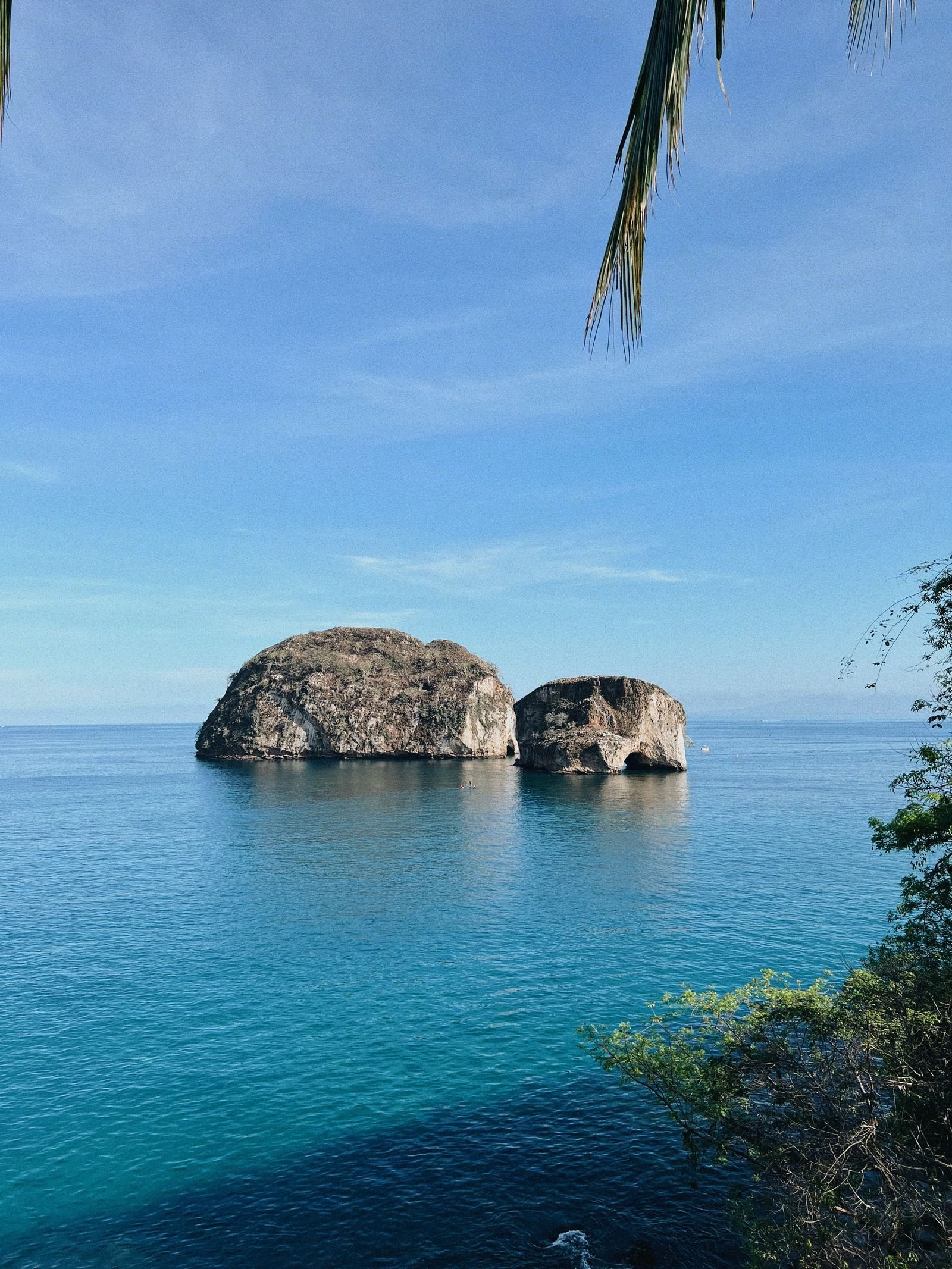 The Los Arcos rocks seen from the south shore of Puerto Vallarta.
Weather and the Best Time to Visit Mismaloya
Mismaloya has a tropical climate with two clear seasons:
- Dry season (November to May). Little rain and usually calmer seas, which makes it the best time for snorkeling. The water is coolest in late winter, around 73°F (23°C) in March.
- Rainy season (June to October). Heavy rain, especially July through September; heat and humidity build, the ocean warms to about 86°F (30°C) in August, and the jungle turns intensely green. It also overlaps with the Pacific hurricane season, so check the forecast before you go.
UV levels are high year-round. From August to December it is also sea turtle nesting season around the bay; learn more in our guide to sea turtles in Riviera Nayarit.
How to Get to Mismaloya from Puerto Vallarta
- Local bus. The cheapest option. Southbound buses pass through the Romantic Zone; Vallarta's tourism board points to the corner of Constitución and Basilio Badillo as the place to catch one. Ask the driver if the bus stops at Mismaloya before you board.
- Taxi. Faster and easier, especially for groups or if you are carrying snorkel gear. Agree on the fare before you get in.
- Rental car. Take Highway 200 south. Drive carefully: it is a winding road with local traffic and buses stopping along the way.
Suggested Mismaloya Itinerary
Half day (morning):
- Head out early and take a panga to Los Arcos while the water is calm.
- Come back to the beach for a swim and a seafood lunch facing the bay.
- If access is open, walk up to see the ruins of the film set.
Full day: pair Mismaloya with the rest of the south shore. Continue down the highway to Boca de Tomatlán, where boats leave for beaches you can only reach by sea, or head up to the Vallarta Botanical Garden, a bit farther south. For more ideas, see our guides to Puerto Vallarta's south shore beaches and Yelapa.
Ocean Safety at Mismaloya
A sheltered cove doesn't mean the water is always calm. Before you go in:
- Check the beach flag and follow the lifeguards and Civil Protection. A red flag means high risk, so stay out of the water. Civil Protection also posts special flags for dangerous marine life or red tide, and these warnings have been issued for Mismaloya before.
- Currents can change quickly, especially near the river mouth and when there is a swell.
- When snorkeling, wear a life vest if you are not a strong swimmer, and stay close to your group and the boat.
- Respect the sun: bring water, a hat and reef-safe sunscreen.
Want to See Downtown Vallarta Too?
Mismaloya is best enjoyed on your own or on a snorkeling trip, and our tours do not go there. But if you also want to explore downtown Puerto Vallarta with a guide, our Vallarta City Tour runs every day, lasts about 7 hours and is offered in English and Spanish. It includes:
- Guided walking tour of downtown Puerto Vallarta
- Visit to a traditional jewelry shop
- Free time for shopping
- Tequila stop
- Visit to a regional cuisine restaurant (lunch not included)
If you would rather have lunch included, the Vallarta Plus City Tour adds a distillery tour, a tequila tasting and lunch at a regional cuisine restaurant.
See dates and book the Vallarta City Tour →
To plan the rest of your trip, see our list of things to do in Puerto Vallarta and our guide to the Malecón and Old Town.
Tips for Visiting Mismaloya
- Go early. You will beat most of the tour boats, and the sea is often calmer in the morning.
- Bring cash (pesos) for boat rides, food and the bus. Boats and lunch are the main costs, and prices vary by season, so agree on them up front.
- No snorkel gear? Ask whether the boat ride or tour includes it before you pay.
- What to pack: swimsuit, hat, reef-safe sunscreen, water and a dry bag for your phone.
- Be a good guest. People live and work here: ask before photographing locals, pack out your trash and spend your money with local boat captains and vendors.
- Check Highway 200 conditions before heading out; accidents, heavy rain and protests occasionally close the road.
FAQ
How far is Mismaloya from Puerto Vallarta? About 10–12 km (6–7.5 miles) south of downtown on Highway 200, roughly 15 to 20 minutes by car without traffic.
Can you swim at Mismaloya Beach? Yes, when conditions allow. Always check the day's flag and ask the lifeguards, since currents and Civil Protection advisories change.
Can you snorkel Los Arcos from Mismaloya? Yes. Boats leave from the beach for Los Arcos, which sit just offshore. Boat tours from Puerto Vallarta also stop there.
When is the best time to visit Mismaloya? November to April, during the dry season, when the sea is usually calmer and visibility is better for snorkeling. The rainy season (June to October) is hotter and more humid, so keep an eye on the forecast.
Is the Night of the Iguana set still there? Mostly ruins remain on the hillside, plus a sign by the road. It is more of a piece of history than a polished attraction; ask locally whether access is open.
Was Predator really filmed in Mismaloya? Yes. Some of the jungle scenes in Predator (1987), starring Arnold Schwarzenegger, were filmed around Mismaloya, across the highway from the beach.
Photos: colorqueeny / CC BY-SA 3.0 via Wikimedia Commons · The Cosmonaut / CC BY-SA 2.5 ca via Wikimedia Commons · Hana Brannigan / Pexels License via Pexels · colorqueeny / CC BY-SA 3.0 via Wikimedia Commons




