
Spend a few days in Puerto Vallarta and someone will probably offer you raicilla. It's an agave spirit from the mountains and coast of western Jalisco, made in small family distilleries called tabernas, and it only received its own Denomination of Origin in 2019. Its backstory has everything: silver mines, Spanish crown bans, a still with Asian roots and agaves that grow wild in pine forests. Here's the full story, plus how to enjoy it the right way.
What Is Raicilla?
Raicilla is a 100% agave spirit produced in western Jalisco and one neighboring municipality in Nayarit. Like tequila and mezcal, it's made from the agave heart (the piña), which is cooked, crushed, fermented and then distilled.
Many agave experts call raicilla a "regional mezcal" because the process is so similar. Legally, though, it can't be labeled mezcal: it has its own protected name and its own production area.
The official declaration sets its alcohol content between 35% and 55% ABV, so this is a strong spirit meant for sipping, not shooting. Mexico's draft raicilla standard describes it as clear when rested in glass and yellowish when rested in wood, with a character shaped by the agave, soil, climate, water, yeast and each maestro raicillero.
The History of Raicilla
Agave Before the Spanish
The first Spaniards to explore this region, sent by Hernán Cortés in 1524 and 1525, reported that people grew agave and that coastal communities from Cihuatlán to Tepic even wove clothing from its fiber. What hasn't been proven is that anyone was distilling yet. Researchers at the University of Guadalajara point out that distilling requires a metal condenser, and none has turned up in pre-Hispanic digs, so they place the arrival of distillation after the Spanish conquest.
The First Written Record
In 1621, Domingo Lázaro de Arregui, a resident of Tepic, described how people on the coast of New Galicia (as western Mexico was then called) made a distilled "wine" from agave that was clearer than water and stronger than brandy. He also noted that people drank far too much of it. By the early 1600s, agave spirits were clearly part of coastal life.
Mines, Taxes and Bans
Mexico's draft raicilla standard traces the spirit's birth to the mining towns of the Sierra Occidental, including San Sebastián del Oeste, Mascota and Talpa, with San Sebastián the most important mining center. During the 1600s and 1700s, Spanish authorities tried to suppress local liquor because it competed with imported Spanish wine and brandy. Production carried on anyway, largely to supply the mining camps, and the crown eventually settled for taxing it. A formal ban on making alcoholic beverages ran from 1785 to 1792.
Dig deeper in our San Sebastián del Oeste mining history. A fun link to the coast: Las Peñas, the village that became Puerto Vallarta, supplied salt to those mountain mines, as we explain in our Puerto Vallarta history.
Raicilla Timeline
Until recently, raicilla was barely known outside its home villages. Here are the key dates:
- 1524–1525: The first Spaniards in the region record widespread agave use.
- 1500s: Arab-style and Asian-style distilling techniques reach Mexico.
- 1621: Arregui describes agave spirits on the coast of New Galicia.
- 1600s–1700s: The Spanish crown tries to curb local liquor, then taxes it.
- 1785–1792: A formal ban on producing alcoholic beverages.
- 2000: The Consejo Mexicano Promotor de la Raicilla (Mexican Raicilla Promotion Council) is founded in Mascota, led by producers including Jorge Dueñas, Alfredo Cachua, Jorge Amigo and Jorge Carbajal, with support from then-governor Alberto Cárdenas.
- 2010: The council begins pursuing a Denomination of Origin.
- June 2019: The Raicilla Denomination of Origin is published.
- April 2022: A draft official standard for raicilla is published for public comment.
Why Is It Called Raicilla?
"Raicilla" translates roughly as "little root." The most popular explanation is a colonial-era legend: to dodge taxes and bans, local producers supposedly claimed their drink wasn't mezcal at all, but something made from the agave's "root." One version told on the coast credits a San Sebastián del Oeste miner who also made the spirit; the draft standard repeats a similar tale about a tabernero who picked a name that didn't sound like liquor.
There's a less dramatic theory, too. Arregui wrote in 1621 that the spirit came from the agave's "root," and University of Guadalajara researchers suggest the name simply reflects how the piña, sitting at ground level, looks like a root. Either way, raicilla has always been made from the piña, and the miner story is folklore: sources don't even agree on the century.
The "Filipino" Still: Raicilla's Asian Connection
On the coast, especially around El Tuito in Cabo Corrientes, some raicilleros still distill with a remarkably simple rig: a wood-fired pot, a hollowed-out log (often from the bonete tree) that the vapor rises through, and a copper basin of cold water on top that's constantly refilled to condense the alcohol.
It's known as the "Filipino," "Asian" or "Huichol" still, the last name coined by explorer Carl Lumholtz. A 2008 University of Guadalajara study compares it to the stills used for shochu in southern Japan and argues that this Asian technique reached New Galicia during the colonial era. The popular account says Filipino sailors on Spain's trade route from Manila brought it over, first using it for coconut spirits; the authors urge caution, since distilling may have arrived by more than one route.
In the mountains, the Arab-style alembic with a coiled condenser took hold instead, and San Sebastián del Oeste has documented hybrid setups that mix both systems.
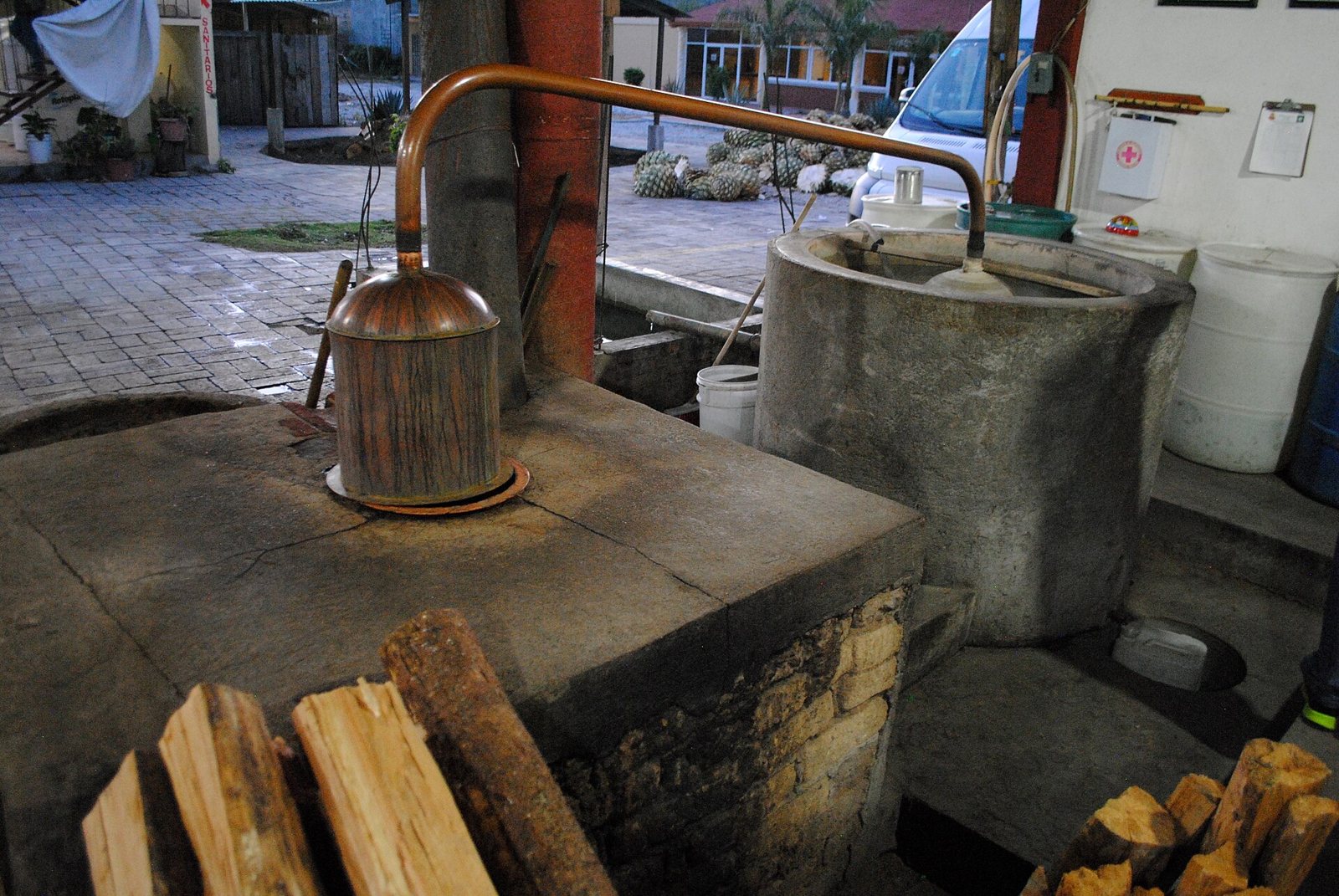 Artisanal copper still at a mezcal distillery in Oaxaca; raicilla is distilled in a similar way.
Raicilla Agave Types: Mountain vs. Coastal
The Denomination of Origin recognizes two styles, based on where the spirit is made and which agaves are used:
- Raicilla de la Sierra (mountain): made mainly from Agave maximiliana (locally called lechuguilla), Agave inaequidens and Agave valenciana. It's most associated with the Mascota and San Sebastián del Oeste area.
- Raicilla de la Costa (coastal): made from Agave angustifolia and Agave rhodacantha. It's most associated with Cabo Corrientes and the coast.
Agave valenciana, nicknamed maguey risquero, is a rarity: according to the draft standard, it's endemic to Talpa de Allende and Mascota.
In the mountains, these agaves grow in clearings in pine and oak forests, spread by seed and are pollinated by bats. On the coast they're grown in small hillside plots from offshoots. Truly wild agave is now scarce in the region; most is cultivated or semi-wild and takes around eight years on average to mature. A plant is ready when its central bud narrows or it starts to send up its flower stalk, the quiote.
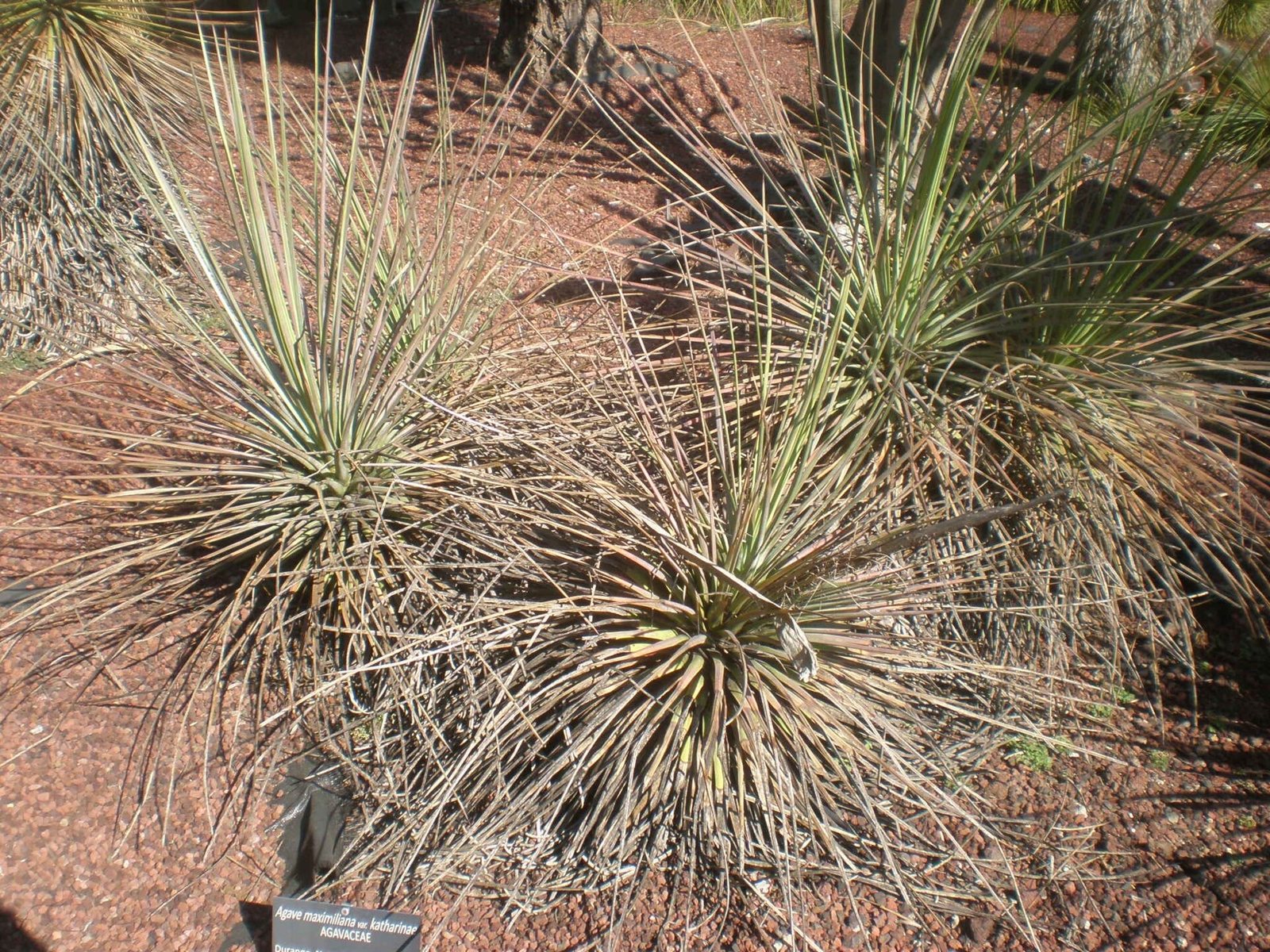 Agave maximiliana, one of the species used for mountain raicilla (botanical garden specimen).
How the Two Styles Differ
The climate changes (the coast is hot and humid; the mountains, temperate and dry), and so do the methods. In the mountains, piñas are typically roasted in above-ground, wood-fired ovens and distilled in metal alembic stills, sometimes just once. On the coast, they're roasted for several days in stone-lined pits and distilled in Filipino-style stills, typically twice. That's why the two taste different, though the agave, the water and each producer matter a lot. Two names carry special prestige locally: raicilla from El Tuito on the coast and from Mascota in the mountains (see our Mascota and Talpa guide).
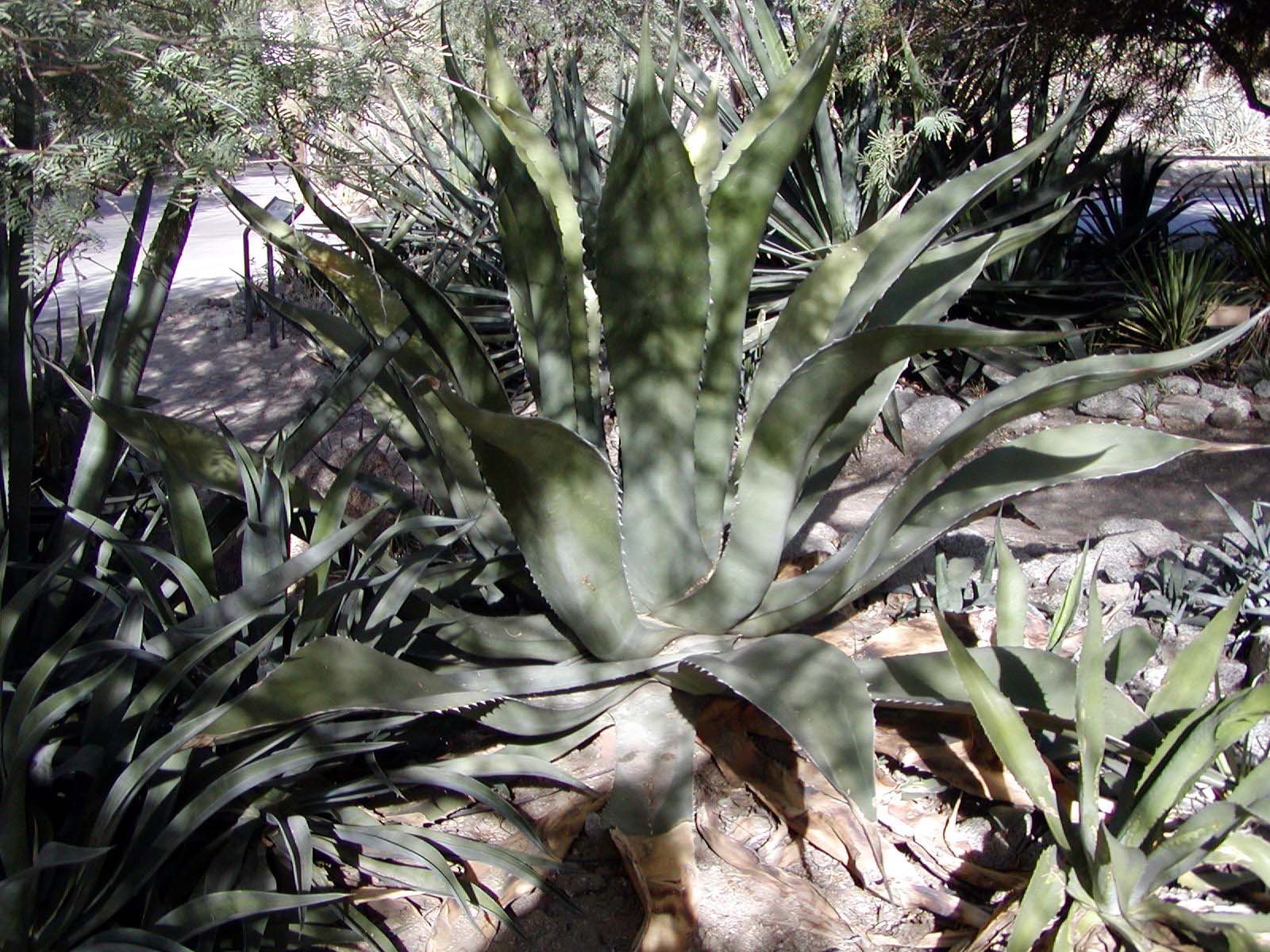 Agave inaequidens, another mountain raicilla species (botanical garden specimen).
How Raicilla Is Made, Step by Step
- Harvest. The leaves of a mature agave are trimmed away with a machete, leaving the piña.
- Roasting. On the coast, a bonfire heats stones in a pit, the stones are covered in wet agave fiber, and the piñas are buried for about three days or more. In the mountains, above-ground ovens shaped a bit like bread ovens are used.
- Crushing. By hand with wooden mallets inside a canoa (a hollowed log), or with mechanical shredders.
- Fermentation. Juice and fiber rest with water in vats of wood, stone, concrete or plastic, using wild airborne yeast: about a week in warm weather and up to a month in the cold or at altitude.
- Distillation. In a copper alembic or a Filipino-style still. To judge strength, producers shake the spirit and read the perlas, the bubbles that form at roughly 45% to 55% ABV.
Fun fact: on the coast people also drink an undistilled agave ferment, also called lechuguilla. It's only lightly alcoholic and very close to the mash that later gets distilled into raicilla.
The Raicilla Denomination of Origin
Mexico's Institute of Industrial Property (IMPI) issued the Raicilla Denomination of Origin, published in the country's Official Gazette in June 2019. The request came from the raicilla promotion council based in Mascota, which now has more than 200 members, including producers, farmers, sellers and academics. That made raicilla one of six Mexican spirits with a Denomination of Origin.
The protected area covers 17 municipalities:
- 16 in Jalisco: Atengo, Chiquilistlán, Juchitlán, Tecolotlán, Tenamaxtlán, Puerto Vallarta, Cabo Corrientes, Tomatlán, Atenguillo, Ayutla, Cuautla, Guachinango, Mascota, Mixtlán, San Sebastián del Oeste and Talpa de Allende.
- 1 in Nayarit: Bahía de Banderas.
In other words, Puerto Vallarta and San Sebastián del Oeste are both raicilla country. The rules are still evolving, which is why some bottles made in a very similar way are sold simply as "agave spirit" (destilado de agave).
Categories and Classes in the Draft Standard
The draft official standard, published for comment in April 2022 (we couldn't confirm it has been finalized), helps decode some labels. It proposes three categories: clásica (allows autoclaves and column stills), artesanal (wood-fired ovens and small direct-fire stills) and ancestral (all by hand, native yeasts and clay, wood or copper stills no larger than 200 liters). It also lists classes by aging: joven, blanco or plata (unaged), madurada en vidrio (more than 12 months in glass), reposada (2 to 12 months in wood), añejada (more than 12 months in wood), extra añejada (more than 24 months in oak) and abocada (with added flavorings). Labels would show "100% agave," the species and the municipality.
Raicilla vs. Tequila vs. Mezcal
- The agave. Tequila can only be made from blue agave (Agave tequilana Weber, blue variety). Raicilla uses the mountain and coastal agaves listed above. Mezcal allows many species depending on the region.
- The region. Each spirit has its own Denomination of Origin; raicilla's is the smallest of the three.
- The protection. Tequila was Mexico's first beverage with a Denomination of Origin, in December 1974; raicilla got its own 45 years later.
- The flavor. Raicilla is often described as floral, fruity or herbal, and it isn't always smoky the way many mezcals are.
- The scale. Tequila is a major global industry; raicilla is still largely small-batch and artisanal.
How to Drink Raicilla
Traditionally, raicilla is sipped neat so you can taste the agave. Locals sometimes use a cuernito (a hollow cow horn) or a jícara, a cup made from the cuastecomate gourd, which is also used to infuse the spirit. At village parties it's mixed with soda, and craft bars use it in margarita- and paloma-style cocktails.
Into traditional drinks? Read about tuba and tejuino, two coastal classics.
A few ground rules:
- Legal age only. In Mexico, selling or serving alcohol to minors is prohibited; the age of majority is 18.
- Go slow. Raicilla can be high-proof. Small sips, and alternate with water.
- Never drink and drive, especially on mountain roads.
Raicilla Festivals and Culture
San Sebastián del Oeste has hosted a raicilla and coffee festival in May, with tastings, cultural events and production tours, and Mascota holds its own raicilla festival. Dates vary from year to year, so confirm with each town before you plan around them. The council, the state of Jalisco and ITESO university have also promoted a raicilla route to connect visitors with the tabernas. For the coffee side of the story, see our San Sebastián del Oeste coffee and food guide.
San Sebastián del Oeste: Mountain Raicilla Country
San Sebastián del Oeste sits inside the Denomination of Origin and is one of the towns most closely linked to mountain raicilla. Founded in 1605, named a Pueblo Mágico in 2011 and sitting at roughly 4,850 feet (about 1,480 meters), it still feels like an old mining town. Read our San Sebastián del Oeste travel guide, our route from San Sebastián to the coast and, if you have extra time, the Cerro de La Bufa lookout.
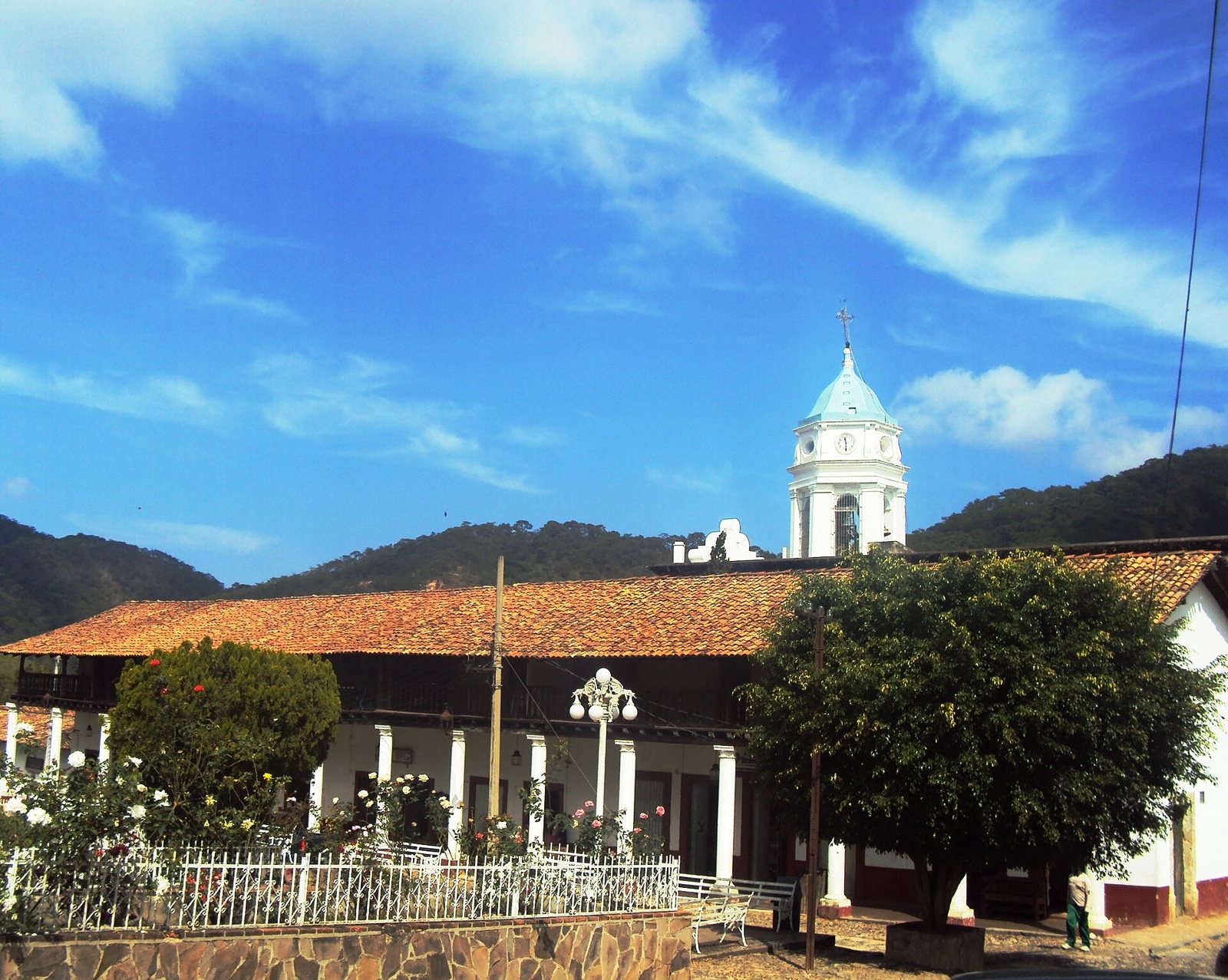 San Sebastián del Oeste, a mountain town in Jalisco with a raicilla tradition.
Visit San Sebastián del Oeste with Riviera Tours & Transfers
Our tour does not include a raicilla tasting, but it's an easy way to see the mountains where this spirit comes from. The San Sebastián del Oeste tour runs Monday, Wednesday and Friday. It's a full-day tour offered in English and Spanish, and it includes:
- Round-trip transportation
- Certified tour guide
- Visit to an artisanal tequila gallery
- Organic coffee factory tour
- Lunch and aguas frescas at a traditional Mexican restaurant
- Guided walking tour of downtown San Sebastián
- Free time to explore on your own
- Bottled water during the tour
See dates and book the San Sebastián del Oeste tour →
Staying by the bay? See our list of things to do in Puerto Vallarta.
Tips for Trying Raicilla
- Ask and read the label: mountain or coastal, which agave species, which municipality, and whether it carries the Denomination of Origin.
- Start with a small pour. Some raicillas are well above typical spirit strength.
- Be a respectful guest at a taberna: these are family workplaces, so ask before taking photos and don't touch the equipment or the fire.
- Bring cash to mountain towns; many businesses don't take cards.
- Check current rules on alcohol sales and consumption where you are; they can change.
- Flying home with a bottle? U.S. Customs says the state where you first arrive sets how much alcohol you can bring in, so check current CBP guidance before you fly.
FAQ
Is raicilla a type of mezcal? It shares mezcal's basic process and many experts call it a regional mezcal, but it has its own Denomination of Origin and can't legally be labeled mezcal.
When did raicilla get its Denomination of Origin? In June 2019. It covers 16 municipalities in Jalisco plus Bahía de Banderas in Nayarit, and sets alcohol content at 35% to 55% ABV.
Is raicilla made from roots? No. It's made from the agave piña; the name comes from a colonial legend or from the piña's root-like look.
What is a Filipino still? A rustic, Asian-influenced still with a hollowed-log column and a copper condenser, still used by some coastal producers in Cabo Corrientes.
What's the difference between mountain and coastal raicilla? The agave (maximiliana, inaequidens and valenciana in the mountains; angustifolia and rhodacantha on the coast), the climate, the oven and the distillation.
Does the San Sebastián del Oeste tour include a raicilla tasting? No. The tour includes the artisanal tequila gallery, an organic coffee factory, lunch and a guided walk through town. See the full details here.
Photos: BurseraLinanoe / CC BY-SA 4.0 via Wikimedia Commons · Consultaplantas / CC BY-SA 4.0 via Wikimedia Commons · ProtoplasmaKid / CC BY-SA 4.0 via Wikimedia Commons · Mechitas / CC BY-SA 3.0 via Wikimedia Commons · Stan Shebs / CC BY-SA 3.0 via Wikimedia Commons




