
Part of the fun of a day in San Sebastián del Oeste is what ends up in your cup and on your plate. This old silver mining town in the Jalisco mountains, founded in 1605 and named a Pueblo Mágico ("Magic Town") in 2011, is known for its locally grown coffee and for simple, home-style mountain cooking.
The town was built to serve the mines, and many of its food traditions, from raicilla to orchard-fruit sweets, make more sense once you know where they came from. Here is what to try, the story behind each flavor, and how to fit it all into a day trip from Puerto Vallarta.
San Sebastián del Oeste Coffee: Organic and Mountain-Grown
The town sits at roughly 1,480 meters (about 4,850 feet), surrounded by pine and oak forest and fruit orchards. Coffee is grown on the hillsides around town, and tourism guides describe it as high-altitude, organic coffee raised by local families on small plantations.
According to state data cited by Jalisco media in 2026, coffee in Jalisco is concentrated in six municipalities: Talpa de Allende, San Sebastián del Oeste, Cuautitlán de García Barragán, Cabo Corrientes, Amacueca and Zapotitlán de Vadillo. In Talpa and San Sebastián it is grown agroforestry-style, under shade: coffee shrubs share the hillside with native trees, which protects the beans' flavor and helps conserve the forest's biodiversity. Most of it is arabica, valued for its smooth notes and balanced acidity, with a smaller harvest of robusta.
A few family farms and roasters welcome visitors. You can walk among the coffee plants, hear how the harvest works and taste a freshly brewed cup. Bags sold in town include espresso blends, a classic medium cup and a chocolate-and-cinnamon blend, which makes an easy souvenir.
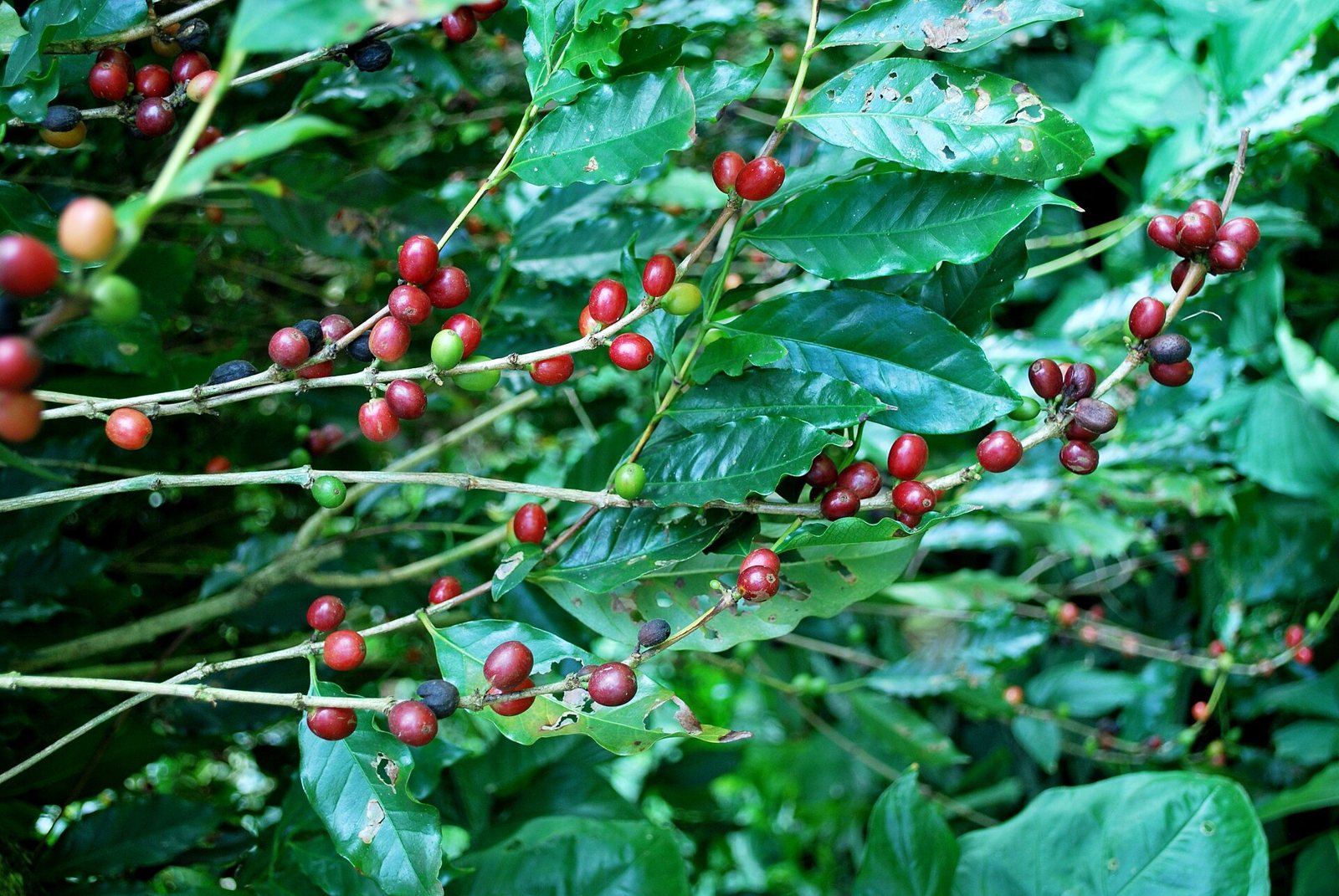 Coffee cherries ripening on the plant (illustrative photo taken in Tabasco, not in San Sebastián).
How Coffee Came to Mexico
Coffee is not native to the Americas. It reached Mexico from the Caribbean at the end of the 18th century and was first planted in Veracruz. Exports did not take off until the 1870s, and in the late 1800s the crop spread to Chiapas, where much of Mexico's coffee is grown today.
In the 20th century coffee became a matter of national policy. A government agency, the Mexican Coffee Institute (INMECAFE), gave growers technical help and managed export quotas. When the International Coffee Agreement collapsed and INMECAFE was dissolved in 1989, prices fell and a long crisis followed. For small mountain regions like the Jalisco sierra, shade-grown coffee sold directly to visitors is one way to get fair value from a small harvest.
From Cherry to Cup: How Coffee Is Processed
Every farm does things its own way, but the basic journey of a coffee bean looks like this:
- Harvest. Ripe coffee fruit, called cherries, is picked by hand.
- Pulping. The fruit is removed soon after picking; waiting too long hurts the flavor.
- Fermenting and washing. In the "washed" method, the beans rest so the sticky layer (mucilage) loosens, then they are rinsed with clean water.
- Drying. Beans are dried in the sun or in a dryer until they reach low moisture. At this stage they are called parchment coffee.
- Hulling and roasting. The papery husk is removed and the green beans are roasted. Roasting shapes much of the aroma and flavor you taste.
If you visit a farm, ask which varieties they grow and how they process them. It is the best way to understand why each region's coffee tastes different.
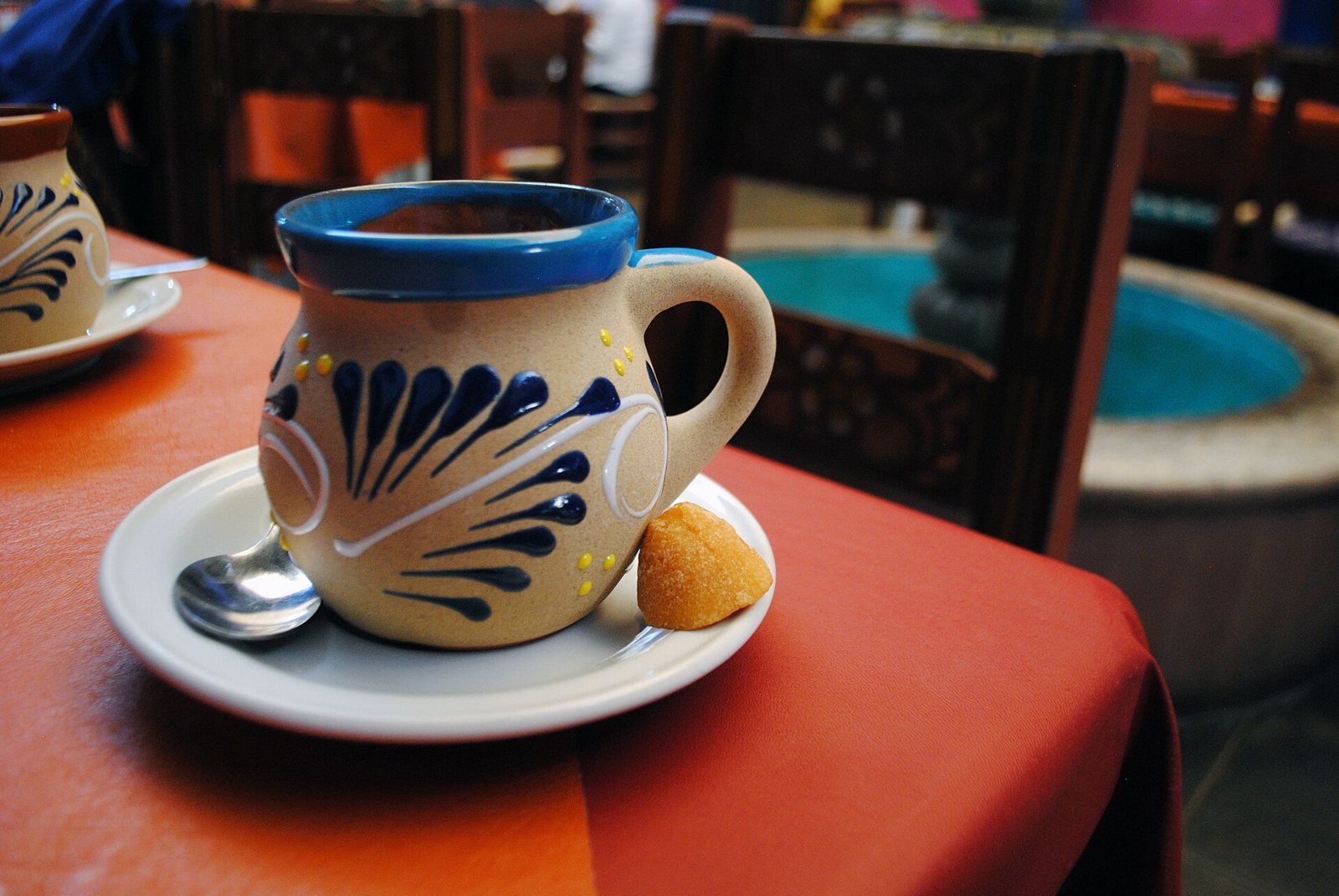 Coffee served in a clay mug with piloncillo, a traditional way to drink it in Mexico (illustrative photo).
Café de Olla: Mexico's Spiced Coffee
The most Mexican way to drink coffee in the mountains is café de olla: coffee simmered with cinnamon and piloncillo (unrefined cane sugar), sometimes with cloves, star anise, chocolate or orange peel. It is traditionally made in a clay pot, which adds a slightly smoky note that metal pots don't.
You may hear that café de olla is pre-Hispanic. It can't be: coffee only arrived in the 18th century, so the recipe dates from the colonial era. If you buy a clay pot as a souvenir, ask whether it is lead-free, since some traditional glazes contain lead.
Timeline: The Town's Story at the Table
- 1542. Mines are discovered in the region, which is placed under the Real de Minas de San Sebastián.
- 1605. The mining town of San Sebastián is founded.
- 1621. Chronicler Domingo Lázaro de Arregui describes an agave "wine" distilled in the region, an early written record of what became raicilla.
- 1785–1792. According to the history in Mexico's draft raicilla standard, agave spirits are banned in the area.
- Late 1700s. Coffee reaches Mexico through Veracruz.
- 1851. Las Peñas, today's Puerto Vallarta, is founded; it supplied salt to the mountain mines.
- Around 1921. The mines close and the town turns to farming.
- 2010. UNESCO lists traditional Mexican cuisine as Intangible Cultural Heritage.
- 2011. San Sebastián del Oeste is named a Pueblo Mágico.
- 2014. A documented edition of the Coffee and Raicilla Festival is held May 3–5.
- 2019. The Raicilla designation of origin is published, and it covers the municipality.
For the full mining story, read our San Sebastián del Oeste mining history.
What to Eat in San Sebastián del Oeste
The food here is classic Jalisco home cooking. Mexican travel guides and media most often mention:
- Birria, a slow-cooked meat stew in a chile marinade and one of Jalisco's signature dishes.
- Pozole, a hearty hominy soup served with crunchy toppings such as lettuce, radish and oregano.
- Tamales, including red-salsa tamales and tamales colados, a smooth, strained-dough style.
- Enchiladas and tostadas, staples of nearly every family kitchen in the region.
Meals usually come with aguas frescas, fresh fruit or flower drinks such as hibiscus (jamaica). Ask what the dish of the day is: in a small mountain town, the menu often follows the season. Local land produces arrayanes, oregano, squash, peaches and coffee, and it shows up on the table.
The Story Behind Each Dish
Birria. Meat marinated in vinegar, dried chiles, garlic and herbs, then slow-cooked. In Jalisco, "birria" is also the regional name for pit-roasted barbacoa. Goat is the traditional meat, though lamb and beef are common now. Its origin is often linked to the town of Cocula, and a popular story says it was invented to use up goats brought by the Spanish in the 16th century; that story is folklore, not documented history. To keep tasting on the coast, see our guide to birria in Puerto Vallarta.
Pozole. The name comes from the Nahuatl pozolli, linked to "boiled" or "foamy." It appears in Fray Bernardino de Sahagún's Florentine Codex and, because corn was sacred, was made for ceremonies. It is cooked with large cacahuazintle corn kernels treated with lime (nixtamalized) until they burst open like flowers. Jalisco-style pozole is red, and a "pozole jalisciense" recipe was recorded in the 1964 cookbook Las senadoras suelen guisar.
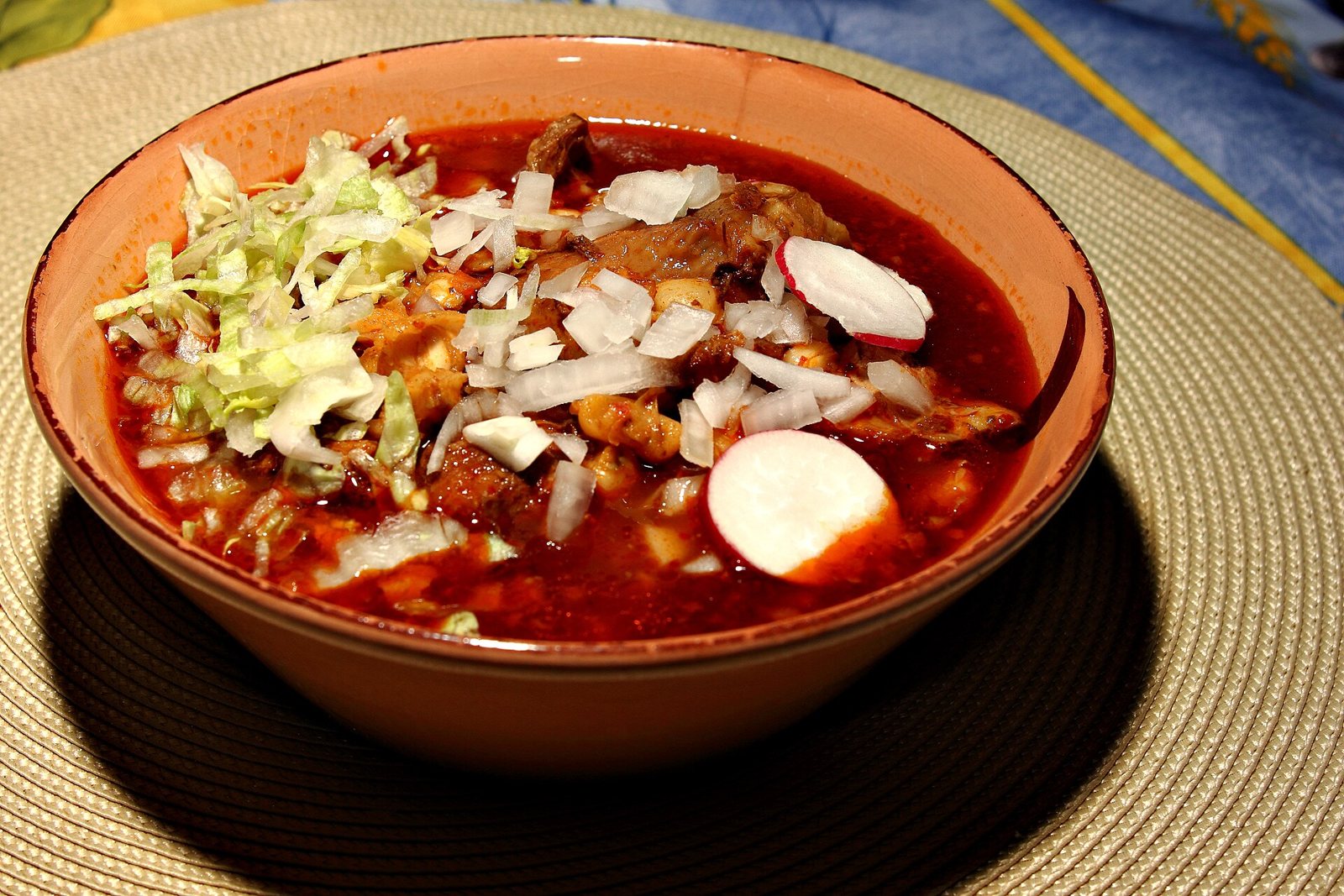 Red pozole topped with lettuce, onion and radish (illustrative photo, not taken in San Sebastián).
Tamales. The word comes from the Nahuatl tamalli, "wrapped." Some archaeologists identify tamales in the Maya mural at San Bartolo, Guatemala, dated to around 100 BC. Tamales colados, also a tradition in Yucatán and Tabasco, use masa pushed through a strainer for a silky texture; in San Sebastián they are listed with red-salsa tamales as the most famous.
A cuisine that is world heritage. In 2010 UNESCO added traditional Mexican cuisine to its Intangible Cultural Heritage list. It recognized not a single dish but a whole system, built on corn, beans and chile and on knowledge passed down in family kitchens. A home-cooked meal in San Sebastián is a good example of exactly that.
Sweets, Fruit and Mountain Drinks
Sweets. Around the main square you will find fruit cajetas (thick fruit pastes and spreads) and fruit rolls, along with handmade sweets from local producers. Orchards in the area have been documented growing guava, lime, banana, orange and peach, so seasonal fruit often ends up as dessert.
Arrayán sweets. Worth seeking out. The local arrayán is a wild relative of guava (Psidium sartorianum) with small, tart fruit. Educational material from Mexico's Ministry of Education (SEP) describes arrayán sweets as a tradition of Jalisco's north coast and Nayarit, naming Talpa de Allende and San Sebastián del Oeste: the fruit is cooked and sweetened, often in syrup.
Atole and ponche. Guides list atole, coffee and ponche as the town's traditional drinks, perfect for chilly winter mornings. Atole (from the Nahuatl atolli) is pre-Hispanic: corn cooked in water until thick, which the Aztecs flavored with cacao, chile or honey, and which is still a breakfast drink with tamales. Ponche, the warm fruit punch, has foreign roots: its name is linked to a Persian or Indian drink ("panch") that became punch in English. It arrived in New Spain with Catholic customs and became a Christmas tradition. The Mexican version uses tejocote (a small hawthorn fruit), guava, apple, sugarcane, prunes or tamarind, with cinnamon and piloncillo. Fruit liqueurs are also sold near the plaza.
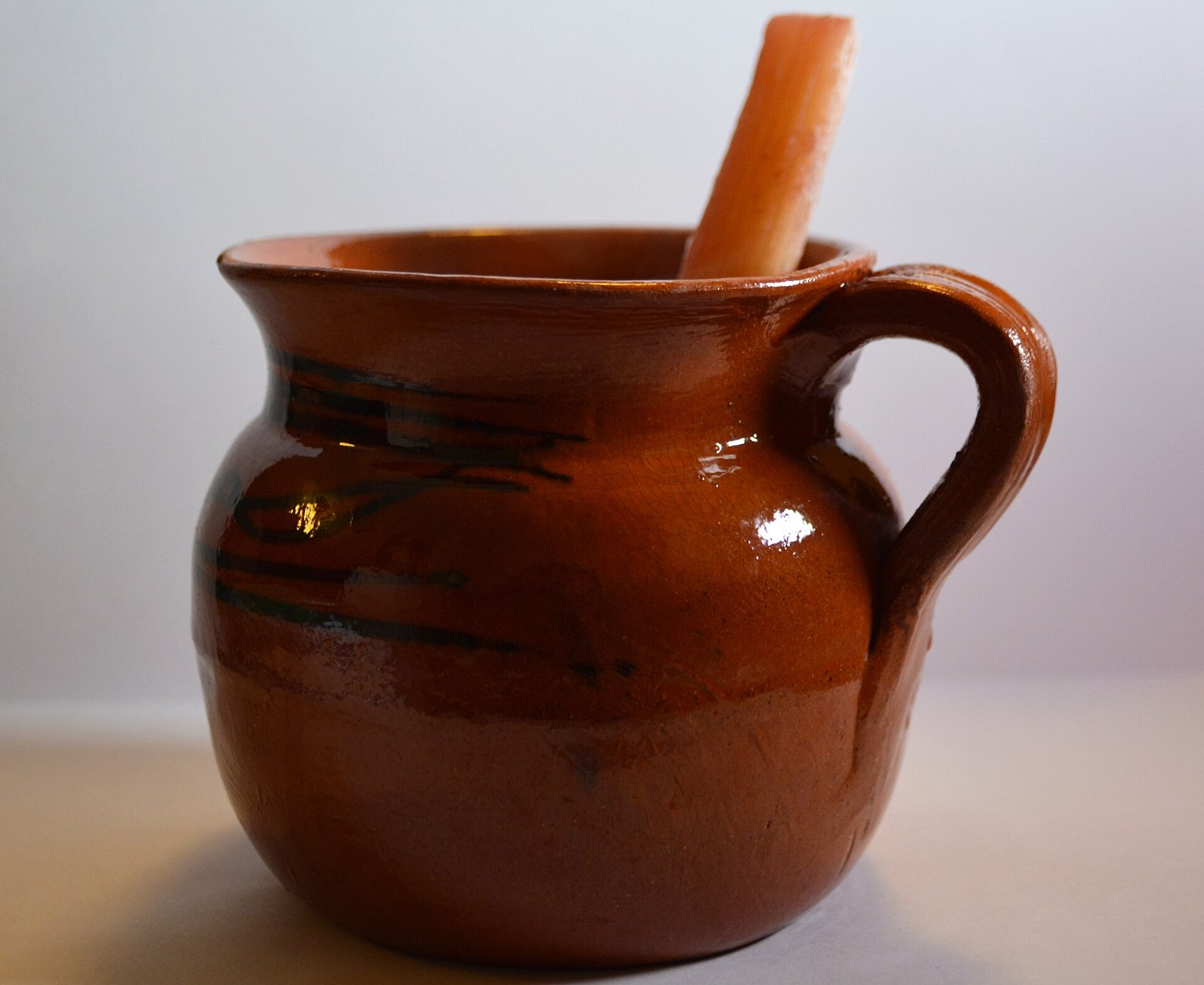 Ponche, Mexico's warm fruit punch, served in a clay mug with a stick of sugarcane (illustrative photo).
Raicilla: A Spirit Born in the Mines
Raicilla, an agave spirit with its own protected designation of origin since 2019, is also protected in San Sebastián del Oeste. Its history is tied to mining: Mexico's draft official standard for raicilla says the spirit was born in mining areas, that San Sebastián had the most mining activity, and that during the 17th and 18th centuries it was suppressed because it competed with wine and brandy shipped from Spain.
According to local tradition, the name "raicilla" ("little root") was a way to fool the authorities: it was passed off as a root remedy rather than a taxable mezcal. Researchers at the University of Guadalajara record this popular version, which credits a miner from San Sebastián.
One local way to drink it is chocorraíz, raicilla mixed with chocolate. To learn more, read our guide to raicilla, Mexico's other agave spirit. Alcohol is sold only to adults in Mexico, so drink responsibly, especially if you are driving the mountain road.
The Coffee and Raicilla Festival and Other Fiestas
San Sebastián has hosted a Coffee and Raicilla Festival in spring, with tastings, demonstrations of how both are made, food booths, music and cultural events. Sources disagree on the exact timing, and we could not find details on recent editions, so check with the town's tourism office to confirm whether the festival is still held and when before planning a trip around it.
The town's biggest celebration honors its patron saint, Saint Sebastian, on January 20, with a fair and charreadas (Mexican rodeo). Celebrations are also held on August 15 and October 7. The town fills up on these dates, so arrive early.
A Day of Coffee and Flavors: Suggested Itinerary
If you drive yourself from Puerto Vallarta, it's about 60 to 70 km (37 to 43 miles) of mountain road, roughly 1 hour 15 minutes to 2 hours depending on traffic and weather. A one-day plan could look like this:
- Morning. Arrive early, while mist still hangs over the hills, and start with a coffee or atole near the plaza.
- Late morning. Visit a family coffee farm or roaster that welcomes guests, then walk the plaza and the parish church.
- Lunch. Home cooking: pozole, birria or tamales with an agua fresca.
- Afternoon. Shop for coffee beans, cajetas or arrayán sweets. For more ideas, see our guide to haciendas and rural tourism in San Sebastián del Oeste.
Nearby you can also explore Mascota and Talpa (Talpa is another coffee-growing town) or take the route from San Sebastián del Oeste to the coast.
Best Time to Go and What to Bring
- November to February: cold mornings, perfect for hot coffee and ponche.
- June to October: rainy season; the forest is greener, but landslides can happen, so check road conditions before you go.
Home-style meals are usually affordable; bring enough cash for food and shopping. Ask before taking photos inside farms or homes, don't pick coffee cherries, and if a family offers you a tasting, buy something from them.
Riviera Tours & Transfers' San Sebastián del Oeste Tour
Want to taste the local coffee without driving the curvy mountain road? Our San Sebastián del Oeste tour runs Monday, Wednesday and Friday. It is a full-day tour offered in English and Spanish, and it includes:
- Round-trip transportation
- Certified tour guide
- Visit to an artisanal tequila gallery
- Organic coffee factory tour
- Lunch and aguas frescas at a traditional Mexican restaurant
- Guided walking tour of downtown San Sebastián
- Free time to explore on your own
- Bottled water during the tour
The lunch menu is set by the restaurant, so we can't promise any specific dish. During free time you can browse for sweets or a bag of coffee to take home. For everything else the town has to offer, see our San Sebastián del Oeste travel guide.
See dates and book the San Sebastián del Oeste tour →
Tips for Eating and Shopping in San Sebastián
- Bring cash in pesos. Many businesses in town only take cash, and the tour is cash only too.
- Save room in your suitcase for coffee beans or sweets.
- Buy whole beans if you can and keep them sealed, away from light and heat; grind them at home just before brewing.
- Pack a light jacket, especially from November to February. Hot coffee tastes even better in the mountain chill.
- Don't rely on your phone to pay or look things up; reception is limited.
- Food allergies or a special diet? Mention it when you book and again at the restaurant.
FAQ
Is San Sebastián del Oeste coffee organic? Tourism guides describe the area's coffee as organic, high-altitude and shade-grown, raised by families on small plantations. If a specific certification matters to you, ask the grower directly.
What food is San Sebastián del Oeste known for? Home-style Jalisco cooking: birria, pozole, tamales, enchiladas and tostadas with aguas frescas. For dessert, fruit cajetas, fruit rolls and arrayán sweets; to drink, coffee, atole and ponche.
Can I visit a coffee farm? Yes, some family farms welcome visitors; check ahead that they are open. Riviera's tour includes an organic coffee factory tour.
What is chocorraíz? A local way to drink raicilla, mixed with chocolate. Adults only.
When is the best time to go for coffee? November to February, when mornings are cold. In the rainy season (June to October), check road conditions.
Does the tour include lunch? Yes. Riviera's tour includes lunch and aguas frescas at a traditional Mexican restaurant, plus an organic coffee factory tour.
When is the Coffee and Raicilla Festival? It has been held in spring, but we could not confirm recent dates. Check with the San Sebastián tourism office before you go.
Photos: Tania Vizcaíno / CC BY-SA 4.0 via Wikimedia Commons · AlejandroLinaresGarcia / CC BY-SA 3.0 via Wikimedia Commons · ProtoplasmaKid / CC BY-SA 4.0 via Wikimedia Commons · Diegosalcido / CC BY-SA 4.0 via Wikimedia Commons · ProtoplasmaKid / CC BY-SA 4.0 via Wikimedia Commons




