
Most visitors come to Puerto Vallarta for the seafood, and fair enough. But Vallarta is in Jalisco, and in Jalisco the weekend breakfast of choice is birria: slow-cooked, chile-marinated meat served with a cup of rich consommé.
Here's what birria is, where it really comes from (legends included), how to order it, and where to find the best birria in Puerto Vallarta, plus the other Jalisco classics worth tracking down, from tortas ahogadas to a custard dessert born in a Guadalajara orphanage.
What is birria?
Birria is meat marinated in an adobo of dried chiles, vinegar, garlic and spices, then cooked low and slow for hours. The word started out as Jalisco's regional name for meat cooked in an earth oven, what the rest of Mexico calls barbacoa. The traditional meat is goat, though lamb and beef are common too.
In Puerto Vallarta, beef birria is the norm, though some places also serve goat. It's a breakfast food, and many stands sell out before noon.
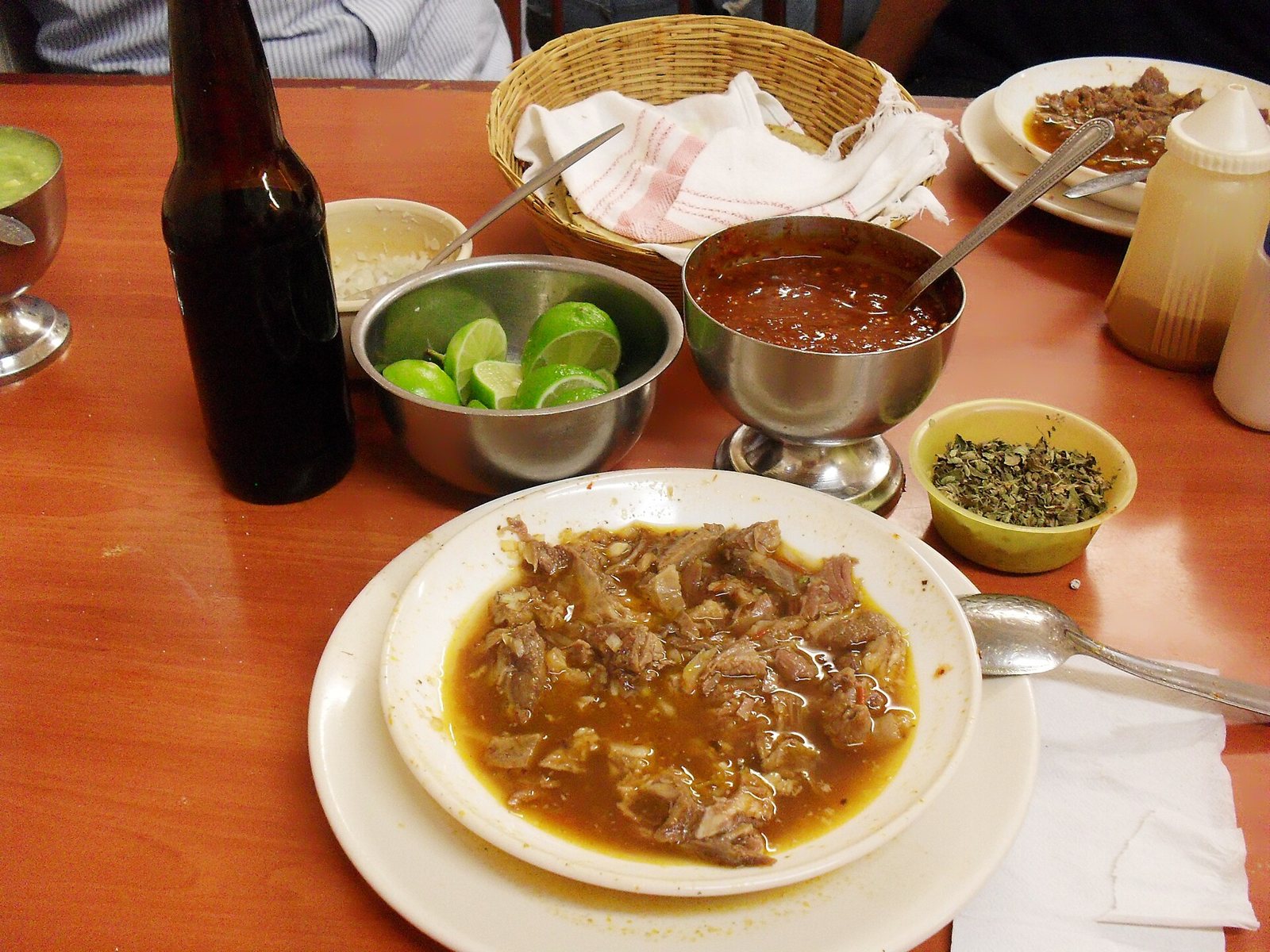 Birria with the classic sides: lime, salsa, oregano, onion and tortillas.
The history of birria: one word, three hometowns and a few legends
What the dictionaries say
Birria has no birth certificate, but it does leave a paper trail. In 1898, Cuban professor Félix Ramos y Duarte recorded it as a word for goat barbacoa. By 1945, historian Leovigildo Islas Escárcega placed it as a term from Jalisco and parts of Mexico's interior, and in 1959 lexicographer Francisco J. Santamaría described it as lamb or goat barbacoa typical of Guadalajara.
As for the name, in everyday Spanish "birria" can mean something worthless. Scholar José Ignacio Dávila Garibi argued it actually comes from Coca, an Indigenous language of the region. Neither theory is proven.
Cocula, Tlaquepaque or Guadalajara?
Cocula, southwest of Guadalajara, is the town food writers most often call birria's birthplace, and it was named a Pueblo Mágico (Magic Town) on June 26, 2023. Other sources point to San Pedro Tlaquepaque, home to several well-known birrierías, while the old dictionaries tie it to Guadalajara. The fair answer: birria belongs to western Mexico, Jalisco is its main home, and you'll also find birrierías all over Michoacán, Aguascalientes, Zacatecas and Colima.
The legends (told as legends)
- The conquistadors' goats. According to popular tradition, Hernán Cortés arrived in 1519 with goats that multiplied out of control. The Spanish looked down on the tough, gamey meat, but Indigenous marinades made it delicious, and the dish got a name meaning "worthless." Another version sets it in Cocula, where the goats were trampling the cornfields.
- The shepherd and the volcano. Another tale says steam from an eruption cooked a herd of goats sheltering in a cave.
Neither story is documented.
How it was cooked, and how it's cooked now
Traditionally, the marinated meat went into a metal pot set in a pit, surrounded by embers, covered with maguey leaves and buried under earth for about four hours. Today most cooks use gas or ovens, and purists insist only pit-cooked birria is the real thing.
The adobo changes from kitchen to kitchen. Expect one or more dried chiles (ancho, guajillo, pasilla, puya or chilacate), cumin, bay leaf, cloves, garlic, oregano and vinegar, sometimes made from pineapple. The cooking juices become the consommé, the part many fans call the soul of the dish. Beyond goat, you'll now find birria made with beef, pork, lamb, rabbit and even catfish.
Keep an eye out for birria tatemada ("charred" birria): marinated, simmered, then finished in a very hot oven so the outside turns crisp and golden.
Birria timeline
- 1500s: goats and European livestock arrive in western Mexico; the origin legend is set here.
- 1898: first dictionary entry, as goat barbacoa.
- 1950: in Tijuana, taquero Guadalupe Zárate, originally from Coatzingo, Puebla, starts selling beef birria with extra broth, because goat was pricier and fattier. He's considered the first in Tijuana to serve it with consommé.
- 2010s: the quesabirria, a cheesy birria taco from Tijuana, takes off across the US.
- Late 2010s: birriamen (birria with ramen noodles), credited to Mexico City chef Antonio de Livier, catches on in Los Angeles.
- 2026: the MICHELIN Guide arrives in Jalisco and recommends two Guadalajara birrierías.
Party food. In Jalisco, birria isn't just Sunday breakfast. It's served at weddings, baptisms, Christmas, Easter and even funerals.
How to eat birria: bowls, tacos and consommé
- In a bowl: the meat comes swimming in its broth, topped with chopped onion, cilantro or oregano, chile de árbol salsa and lime, with corn tortillas on the side.
- As tacos: order them "blandos" (soft, just steamed) or "dorados" (crispy off the griddle), with a cup of consommé for dipping.
- Quesabirria: a birria taco with melted cheese. It took off in Tijuana and later became a craze across the US.
Is it spicy? Not on its own. Most stands serve salsa on the side, usually one mild and one hot, so you control the heat.
The best places for birria and Jalisco food in Puerto Vallarta
Birriería El Tío Toño: beef birria, Jalisco style
This family business has been serving birria since 2011. Founder Héctor named it after his mother's brother, Toño, who taught the family the traditional recipe they still cook low and slow. The specialty is beef birria, as crispy tacos or as a plate with seared (tatemada) meat and freshly made tortillas, and the menu also has some fun twists, like birria pizza on a crunchy tortilla.
What makes it special: it's one of the birria spots food guides mention most in Vallarta, and its motto proudly promises the "original flavor of Jalisco."
Area: Versalles neighborhood.
Best for: a weekend breakfast the way locals do it.
Tacos El Moreno: carnitas by the Cuale River
This carnitas stand is one of Puerto Vallarta's most beloved spots. The pork is slow-cooked in its own fat until it's tender inside and crisp on the edges, then chopped and piled on corn tortillas with onion, cilantro and lime.
Fun fact: carnitas are most closely tied to Michoacán, but Jalisco, the State of Mexico, Hidalgo and Querétaro all claim to have invented them.
Area: Romantic Zone, near the Cuale River.
Best for: a Saturday brunch with an agua fresca.
Las Cazuelas: pajaretas on the road to Las Palmas
On the ranches in the hills northwest of Vallarta, mornings start with a pajareta: fresh milk straight from the cow mixed with chocolate, coffee, sugar and a splash of aguardiente (cane spirit). It's a cousin of Jalisco's pajarete, raw milk with cane alcohol. Las Cazuelas, a rustic roadside restaurant on the way to Las Palmas, is one of the best-known places to try one.
What makes it special: it's ranch life, a world away from the hotel zone. Pajaretas are only served in the early morning.
Area: road to Las Palmas, northwest of Puerto Vallarta.
Best for: early-rising adults looking for something authentic (the drink contains alcohol).
Gaby's Restaurant: traditional Mexican cooking since 1989
Gaby's has served traditional Mexican food since 1989 from a classic-style house in downtown Vallarta, one block from the Malecón, with indoor and outdoor tables. Highlights include chicken in mole poblano and arrachera steak. It also runs cooking classes led by chef Julio César Castillón that start with a walk through the downtown market and end with hands-on cooking: salsas, ceviche, mole or chile relleno.
Area: Downtown (Centro), Calle Mina.
Best for: a relaxed meal, or bringing a few recipes home.
Pancho's Takos: the taco joint in the MICHELIN Guide
For dinner, Pancho's Takos is one of Vallarta's most famous taquerías, and it's listed in the MICHELIN Guide Mexico 2026 as a recommended restaurant. The star is al pastor, thinly sliced and topped with cilantro and onion. The guide calls it a longtime favorite of locals and tourists alike.
What makes it special: the nightly line. Bring cash: the guide notes cards aren't accepted.
Area: Romantic Zone, Basilio Badillo street.
Best for: ending the day with tacos. Find more favorites in our guides to iconic restaurants in Puerto Vallarta and the best tacos in Puerto Vallarta.
We recommend confirming hours and availability directly with each place.
More Jalisco dishes to try in Vallarta
Torta ahogada
The "drowned sandwich" is Guadalajara's signature street food: crusty birote salado bread stuffed with carnitas and soaked in tomato sauce and a fiery salsa made with Yahualica chiles. Legend says it was born by accident in the 1920s, when a sandwich fell into the salsa.
The vendor was Luis de la Torre, nicknamed "El Güero" for his red hair, and his stand sat in Guadalajara's Jardín de San Francisco. His protégé, Ignacio "Nacho" Saldaña, "El Güerito," carried on the trade. Today Guadalajara alone has more than 1,150 torta ahogada vendors.
Three things make it unique:
- The bread. Birote is harder and crunchier than a regular bolillo roll, with a slightly sour taste from a long fermentation, so it soaks up salsa without falling apart. The most popular story credits Camille Pirotte, a Belgian cook with the French army who reached Guadalajara in 1864; "going for bread at Pirotte's" supposedly became "birote."
- The chile. The hot salsa uses Yahualica chile de árbol from Jalisco's Los Altos region. It holds a denomination of origin, one of only two Mexican chiles with that protection (the other is the habanero).
- How to order. Ask for "media" if you want just some chile rather than a full dunk; "mitad" means half the size. Traditionally it was dipped until the salsa bubbled, hence "drowned." Locals swear by it as a hangover cure.
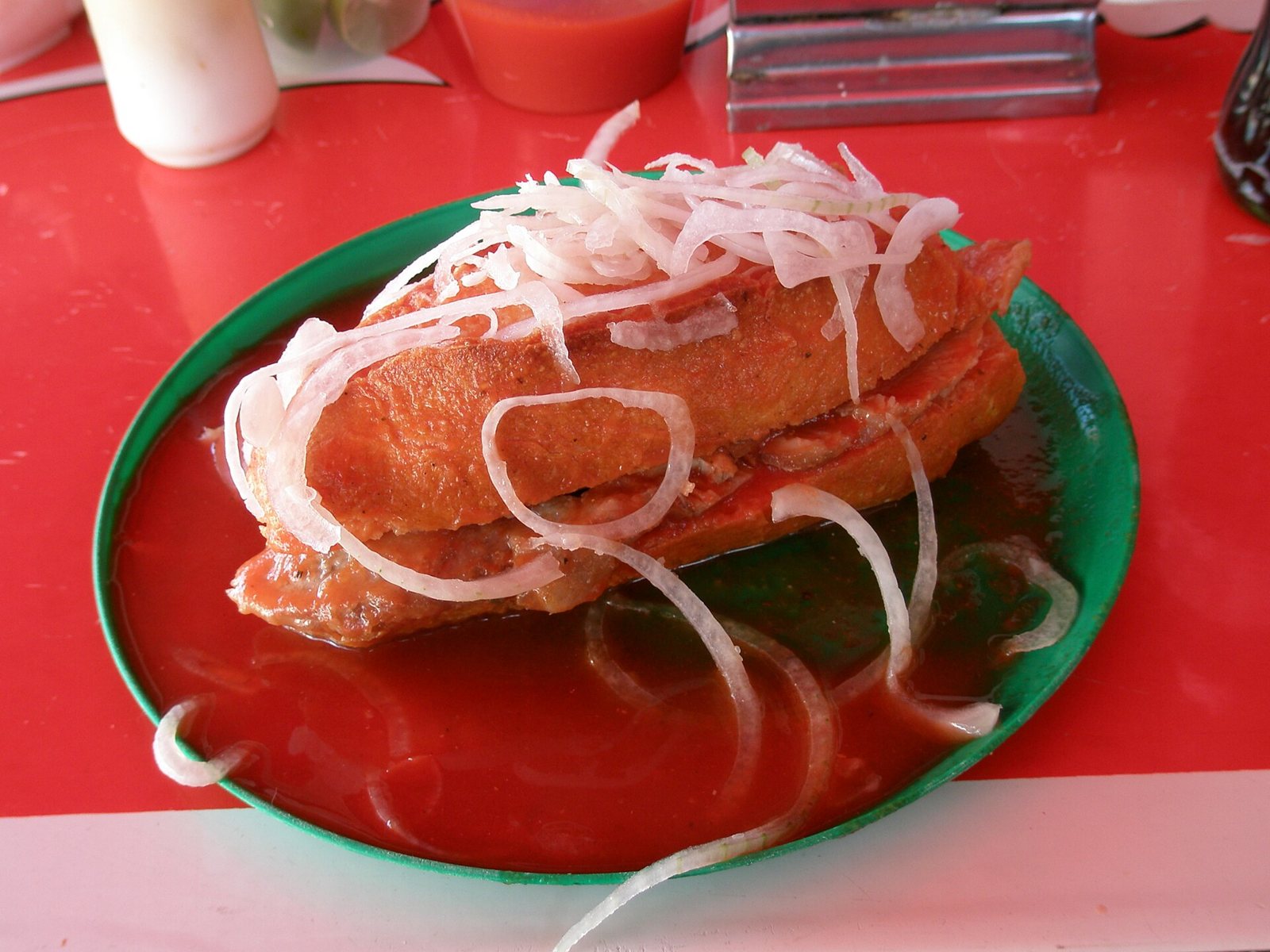 Torta ahogada, Guadalajara's most famous street food.
Carne en su jugo
"Meat in its own juice" is finely chopped beef simmered in its broth with whole pinto beans and bits of crispy bacon, finished with onion and cilantro. It comes with tortillas, lime and salsa, and often a glass of horchata or jamaica (hibiscus water). Its roots are in the Los Altos region of Jalisco (Acatic), and Guadalajara's Santa Tere neighborhood is famous for it.
Unlike birria, it's a fairly young dish: it doesn't appear in old cookbooks, and tradition credits the de la Torre family of Piedra Amarilla, in Acatic. It's usually served in a clay bowl with grilled onions on the side.
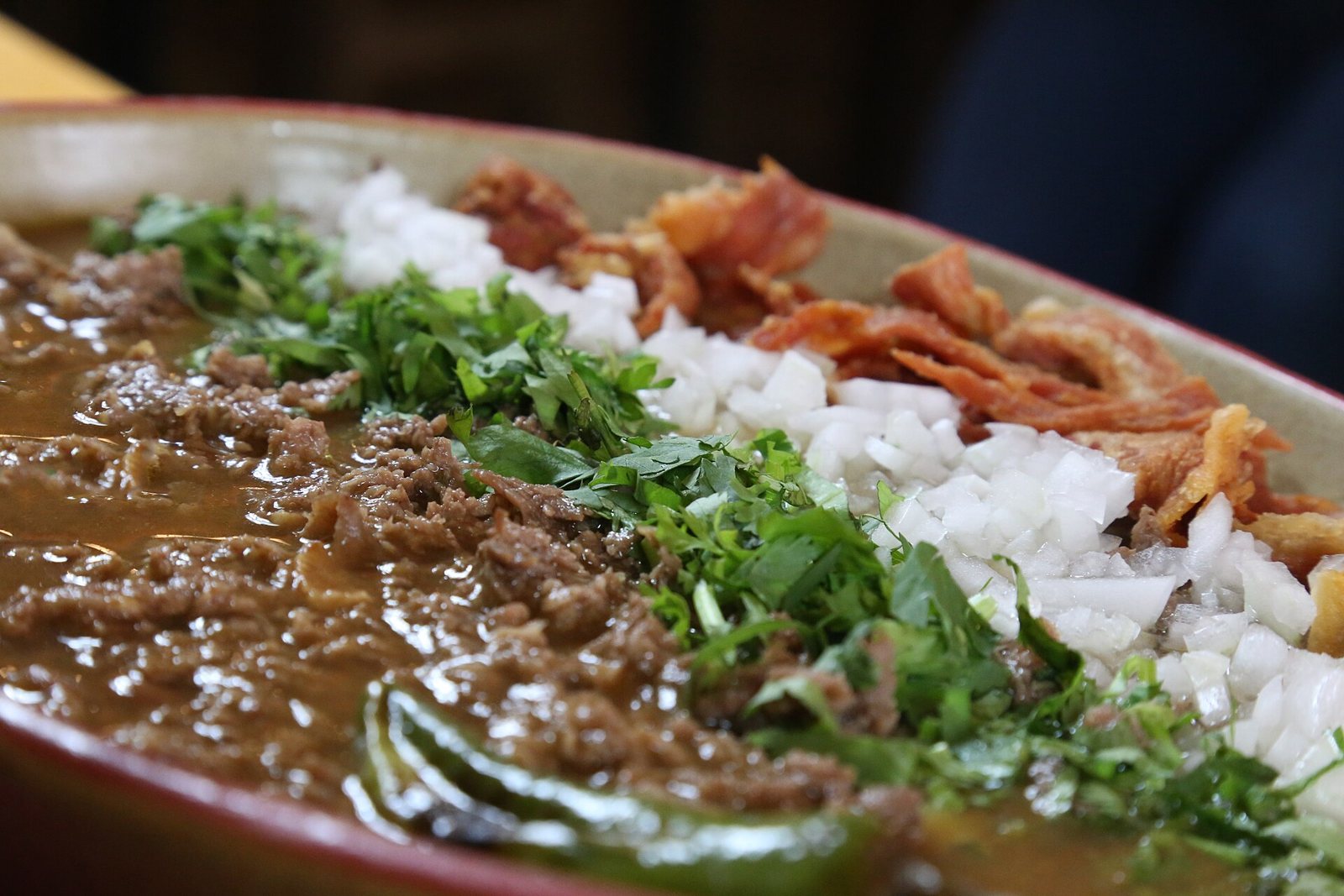 Carne en su jugo with bacon, onion and cilantro.
Red pozole
Pozole is a pre-Hispanic soup of large-kernel hominy, cooked until the kernels burst open like flowers, usually with pork. Jalisco-style pozole is red, served with lettuce, onion, radish, oregano, lime and tostadas. In Vallarta you'll find it everywhere from street stands to sit-down restaurants.
The name comes from the Nahuatl pozolli, linked to "boiled" or "foamy." Corn was sacred in Mesoamerica and pozole was ceremonial food; the friar Bernardino de Sahagún described it at festivals for the god Xipe Tótec. After the Conquest, pork became the standard meat. The corn is nixtamalized (cooked with lime, just like corn for tortillas), then simmered for hours until it blooms. A "Pozole Jalisciense" recipe appears in the 1964 cookbook Las Senadoras Suelen Guisar, and it's a favorite during the Independence celebrations in September.
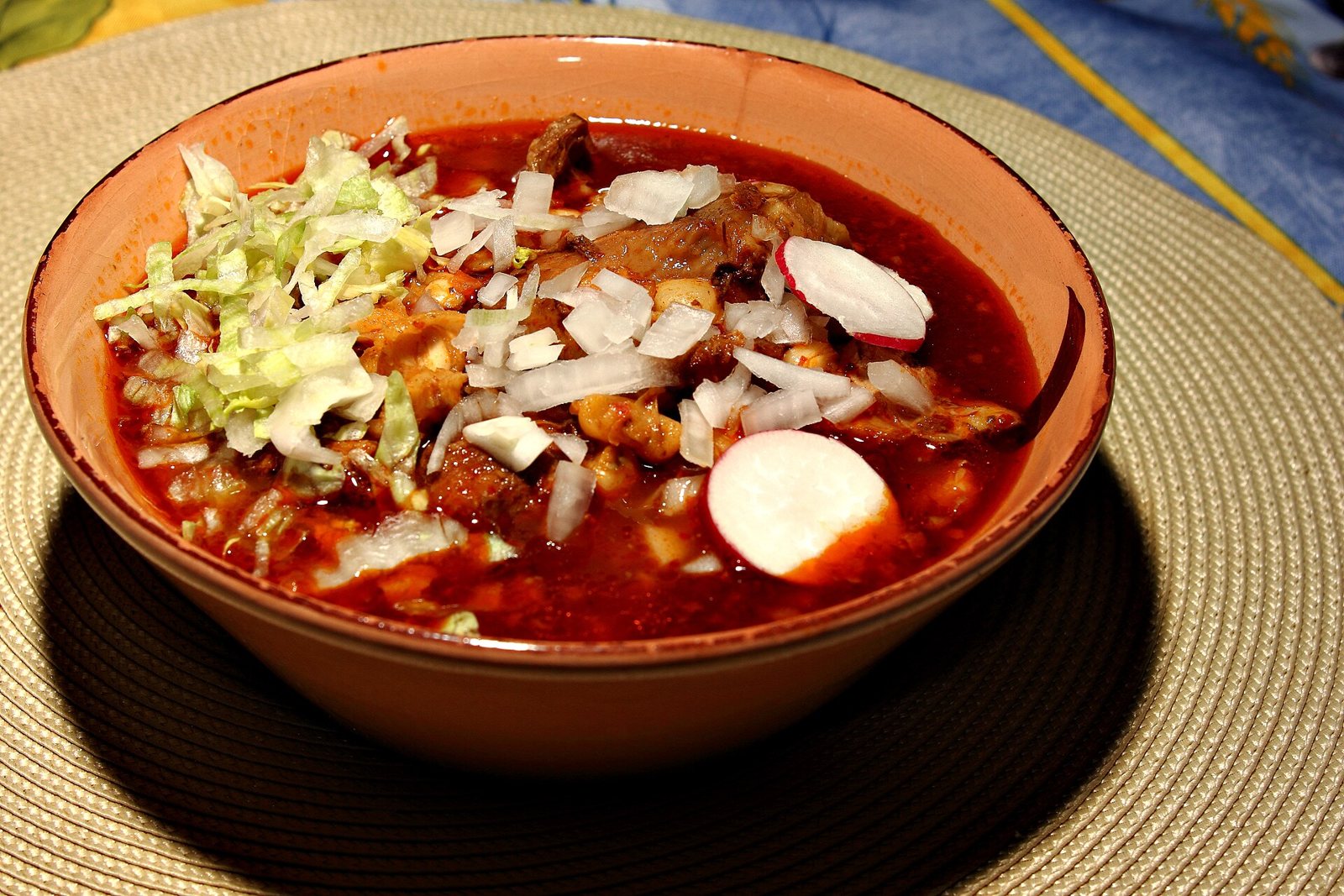 Red pozole with lettuce, onion and radish.
Dessert and drinks: jericalla, tejuino and raicilla
- Jericalla. Guadalajara's answer to flan, made with milk, eggs, sugar, cinnamon and vanilla. The most popular story places its birth in the 1800s at the Hospicio Cabañas, then an orphanage, where nuns made it for the children; the name supposedly honors Jérica, one nun's hometown.
- Tejuino. A pre-Hispanic fermented corn drink served over shaved ice with lime and salt. Read more in our guide to tuba and tejuino.
- Raicilla. An agave spirit related to mezcal; Jalisco produces and drinks more of it than any other state. Get the full story in our raicilla guide.
Jalisco birria in the MICHELIN Guide
In 2026 the MICHELIN Guide covered Jalisco for the first time and recommended two Guadalajara birria institutions. At Birriería David, on the second floor of the Mercado Alcalde, the founder's son and grandson still cook a recipe the family has refined for about 60 years. There are just eight stools at a steel counter, and the meat comes in chunks, crisp outside and juicy inside, with a pour of consommé. Birriería Las 9 Esquinas, downtown, specializes in goat birria with tortillas made to order, in a tiled dining room with a stained-glass goat's head by the kitchen.
Taste regional cooking on the Vallarta Plus City Tour
Want to explore the city and enjoy a regional meal without planning a thing? Our Vallarta Plus City Tour runs every day and lasts about 7 hours. It includes:
- Guided walk through downtown Puerto Vallarta
- Visit to a traditional jewelry shop
- Free time for shopping
- Distillery tour and tequila tasting
- Lunch included at a regional cuisine restaurant
The tour doesn't visit the places on this list, but it's an easy way to see the Malecón and Old Town and taste the region's cooking in one day. For birria, head out on your own in the morning.
See dates and book the Vallarta Plus City Tour →
A Jalisco food day in Vallarta: sample itinerary
- Breakfast: birria in Versalles or your own neighborhood, before it sells out.
- Mid-morning: walk the Malecón and browse a market; see our guide to Puerto Vallarta markets.
- Lunch: a bowl of pozole or traditional Mexican cooking downtown.
- Afternoon: a tejuino or agua fresca to beat the heat, then a stroll through the Romantic Zone.
- Night: al pastor tacos and, if there's room, a jericalla.
Tips for eating birria in Puerto Vallarta
- Go early. Many stands sell out before noon.
- Carry pesos in cash. Small taquerías and stands often don't take cards.
- Learn two words. "Blandos" for soft tacos, "dorados" for crispy.
- Budget: street birria is one of the cheapest meals in town; sit-down restaurants and cooking classes cost more.
- Walk it off. After breakfast, stroll the Romantic Zone and dig into the city's past with our Puerto Vallarta history guide.
FAQ
Is birria from Jalisco? Yes. It's one of the dishes most closely tied to Jalisco, and the town of Cocula is most often named as its birthplace, though there's no documented origin.
Is birria in Puerto Vallarta made with goat or beef? Beef is the most common in Vallarta. Goat is the traditional recipe, and some places still serve it.
What's the difference between birria and barbacoa? Historically, "birria" was simply Jalisco's word for barbacoa. Today birria stands apart for its chile-and-vinegar adobo and its consommé.
What is quesabirria? A birria taco with melted cheese, crisped on the griddle and served with consommé for dipping. It spread from Tijuana in the 2010s.
Does the Vallarta Plus City Tour serve birria? The tour includes lunch at a regional cuisine restaurant, but we can't promise a specific dish. If birria is your priority, go on your own in the morning.
What other Jalisco dishes can I try in Puerto Vallarta? Tortas ahogadas, red pozole, carne en su jugo and carnitas. Check out our Puerto Vallarta food guide, our street food guide and our list of things to do in Puerto Vallarta.
Photos: Janeefun / CC BY-SA 4.0 via Wikimedia Commons · Equipo 9mkt / CC BY-SA 3.0 via Wikimedia Commons · Ivan.Romero / CC BY 3.0 via Wikimedia Commons · Pablo Villaseñor / CC BY-SA 4.0 via Wikimedia Commons · Diegosalcido / CC BY-SA 4.0 via Wikimedia Commons




