
Some of the best meals in Puerto Vallarta cost a few pesos and come on a paper plate. At sunset the Malecón fills with food carts, lines form outside the Romantic Zone's taco stands, and vendors walk the beaches with freshly grilled fish and shrimp. Every one of those bites carries a story: corn snacks that were already sold in Aztec markets, a palm drink that crossed the Pacific on the Manila galleons, and a taco born when Lebanese immigrants met Mexican cooks. This guide to Puerto Vallarta street food covers what to try, where each dish comes from, where the locals go, and how to eat street food with confidence.
A Little History: Why Mexico Eats on the Street
Street food in Mexico isn't a trend. It's part of a food culture that UNESCO added to its Representative List of the Intangible Cultural Heritage of Humanity in 2010. UNESCO describes traditional Mexican cuisine as a complete cultural model, from the cornfield to the table, built on corn, beans and chile and on nixtamalization, the old technique of cooking corn with lime to make it more nutritious.
A lot of what you'll buy from a cart today has deep roots. Bernardino de Sahagún, the 16th-century Franciscan chronicler, recorded the tamales sold in Aztec markets and a toasted corn the Aztecs called izquitl, the origin of the word esquites. Even the word "taco" is up for debate: one popular theory says 18th-century silver miners used "taco" for the paper-wrapped gunpowder charges they set in the rock. That's a fun echo for Vallarta, which began in 1851 as Las Peñas de Santa María de Guadalupe, a small settlement that supplied salt to the silver mines in the mountains. Read more in our Puerto Vallarta history guide.
Puerto Vallarta Street Food Timeline
- Pre-Hispanic era: tamales and toasted corn (izquitl) are sold in central Mexico's markets, as Sahagún later recorded.
- 1565–1815: the Manila galleons link the Philippines with New Spain, bringing coconut palms and the know-how to tap them for tuba.
- 1619: Captain Sebastián de Piñeda complains to King Philip III that Filipino settlers' tuba is hurting sales of Spanish wine.
- 1851: Las Peñas, the village that became Puerto Vallarta, is founded.
- Late 1800s–early 1900s: Lebanese immigrants bring vertical-spit shawarma to Mexico; by the 1920s pork replaces lamb, planting the seed of tacos al pastor.
- 1935–1936: the Malecón is built. Today it's the city's main stage for street snacks.
- 1957: the Río Cuale Municipal Market is founded; its current building goes up between 1977 and 1979.
- 1989 and 1990: Pancho's Takos and Marisma open, two of the Romantic Zone's best-loved stands.
- 2026: Pancho's Takos earns a MICHELIN Guide recommendation.
What to Eat: Puerto Vallarta's Signature Street Foods
Pescado Embarazado (Fish on a Stick)
The name translates as "pregnant fish," but it's really a pun on pescado en vara asado, "fish grilled on a stick." The fish, usually mojarra or tilapia, is rubbed with an adobo of guajillo chile, garlic and achiote, skewered on wooden sticks pushed into the sand and slow-cooked beside an open fire. Local guides say it began as the way fishermen cooked their catch right on the beach, though no one knows who came up with the name. You'll find it with vendors walking the beach, and if you want to watch it being made, travel guides point to the South Shore villages of Boca de Tomatlán, Yelapa and Quimixto. Camarones embarazados are the shrimp version: skewered, brushed with adobo and grilled over charcoal, and many people believe they were born on Vallarta's beaches. Get the full story in our fish on a stick guide.
Tacos: Al Pastor, Carnitas and Birria
Tacos rule the night in Vallarta. Al pastor has one of the best backstories in Mexican food: it descends from the shawarma that Lebanese immigrants brought over. In Puebla in the 1930s, that spit-roasted meat became tacos árabes, and in Mexico City cooks began marinating pork in chile adobo and serving it on corn tortillas with pineapple. The vertical spit, called a trompo, is the most visible trace of that journey. In Vallarta, al pastor stands cluster in the Romantic Zone.
Carnitas are a Saturday-morning tradition, often with an agua fresca. Birria was originally Jalisco's regional name for meat cooked in an earth oven and was traditionally made with goat; in Vallarta, beef is more common. It's a breakfast dish served with its consommé, in soft or crispy tacos, and many stands sell out before noon. Go deeper with our guides to birria in Puerto Vallarta and the best tacos in Puerto Vallarta.
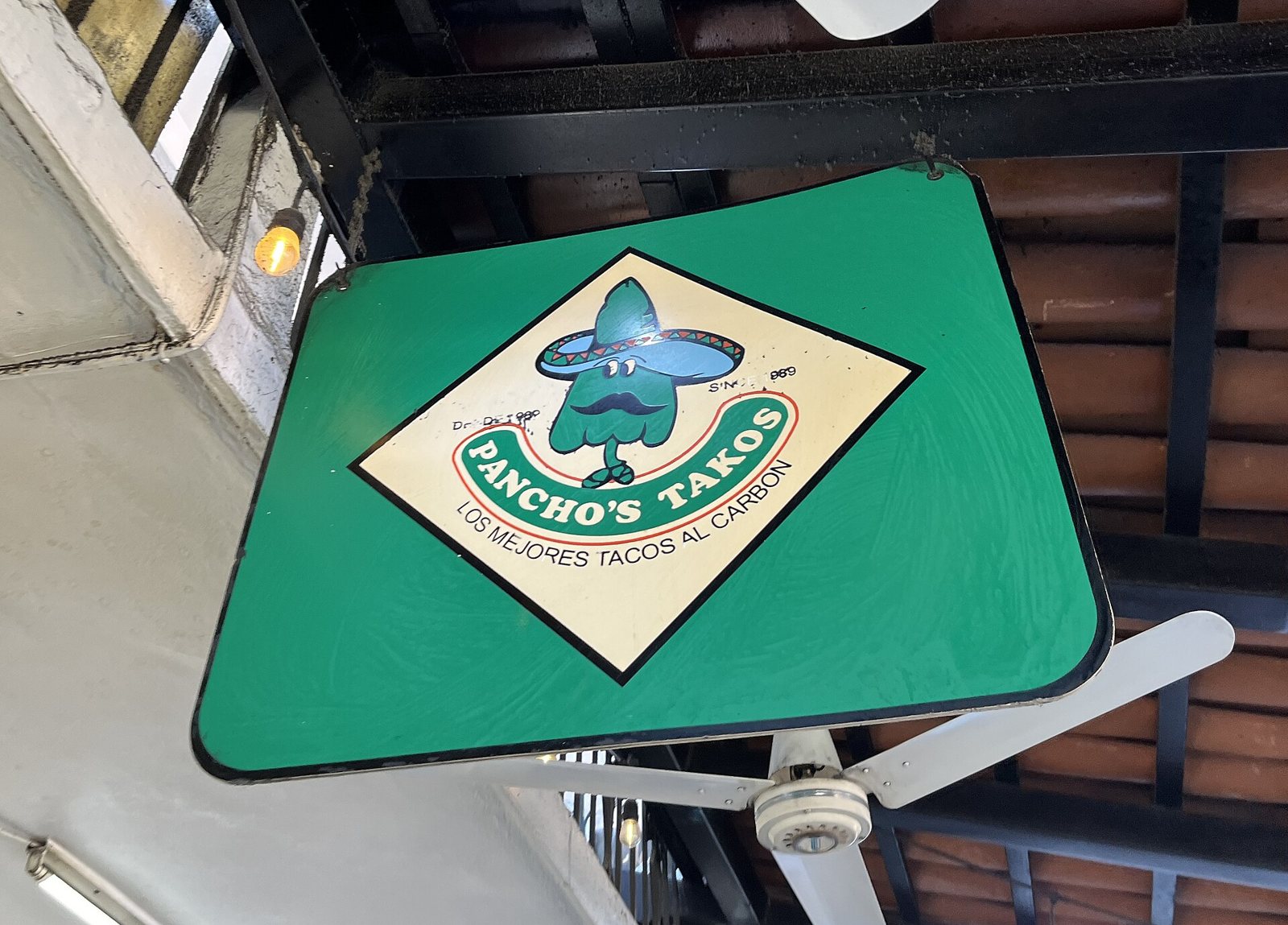 The Pancho's Takos sign in the Romantic Zone (2025).
Fish and Shrimp Tacos
This is a seaside town, after all. Look for battered fish or shrimp in a tortilla with cabbage slaw, a mildly spicy creamy sauce and lime. The battered fish taco is tied to Baja California, and a few Vallarta stands make it Baja-style with seafood from Banderas Bay (see below).
Marlin Burritos
Called burritas de marlín, these are flour tortillas filled with smoked marlin, cheese and fresh toppings like lettuce, tomato and red onion, crisped on the griddle. They're a very Vallarta snack, and you'll also find versions with shrimp, octopus or crab. If you love seafood, continue with our Puerto Vallarta seafood guide.
Malecón Snacks: Elotes, Esquites, Churros and More
In the late afternoon and evening, the Malecón turns into a snack lane. Eloteros sell corn on the cob and esquites (corn in a cup) with mayo, cheese, chile and lime. Esquites literally carry an Aztec name, from izquitl, toasted corn.
You'll also see papaelotes (corn cups loaded with potato and toppings), tostilocos (a split-open bag of tortilla chips piled with cucumber, jícama, Japanese-style peanuts, tamarind candy, chamoy and hot sauce), churros, and candied nuts in paper cones. Churros have Spanish and Portuguese roots, and in Mexico they're often filled with cajeta (goat's milk caramel). For something sweet from the coast, try cocadas (coconut candies), sold on the beach and at roadside stands, or a scoop of nieve de garrafa, hand-churned sorbet in flavors like mango, guava and tamarind.
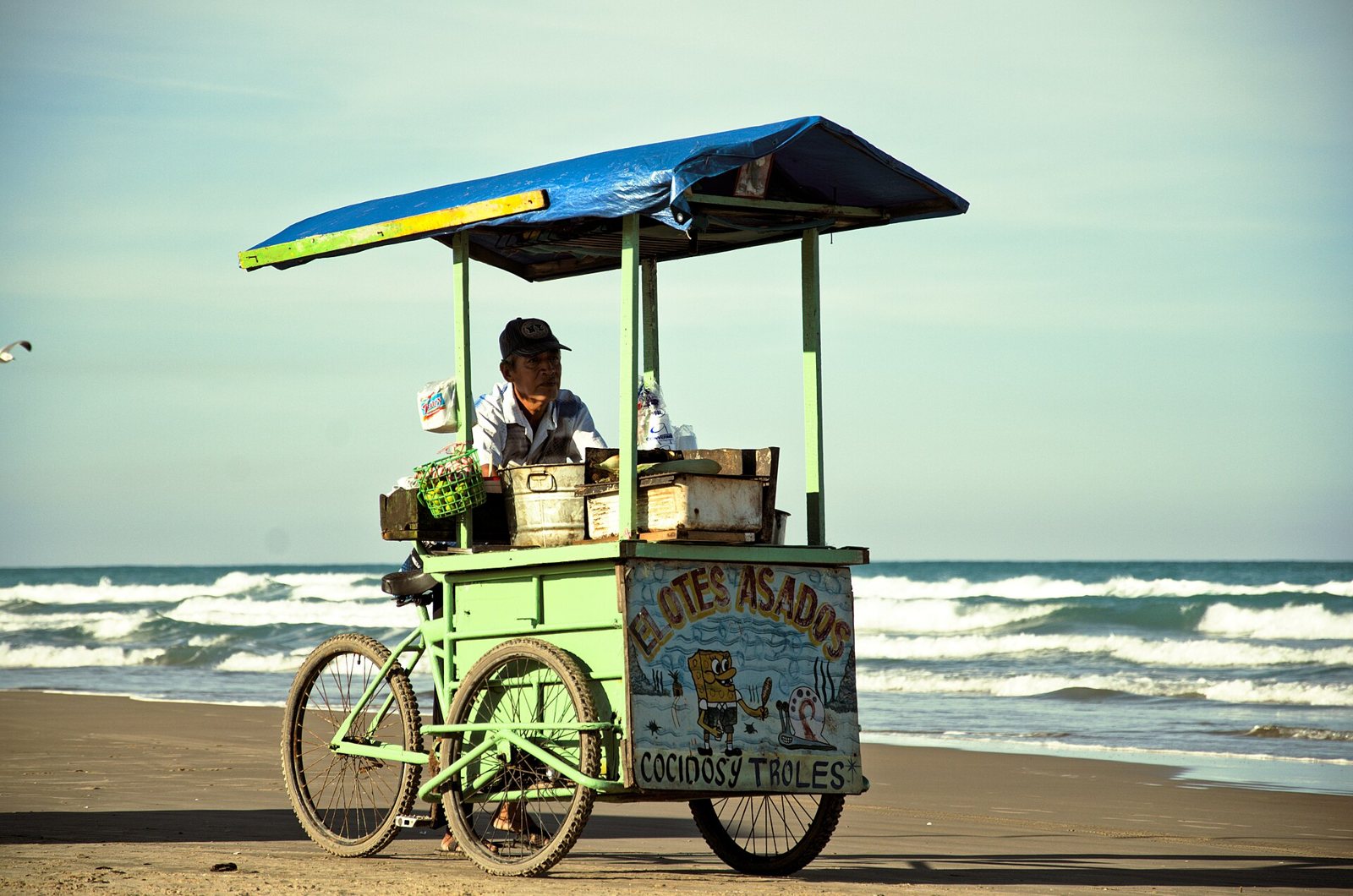 A corn (elote) cart on the beach (photo taken in Tampico; in Vallarta, elote vendors set up along the Malecón).
Tamales and Tacos Dorados
The evening markets on Calle Honduras and in Lázaro Cárdenas Park sell tamales and crispy rolled tacos (tacos dorados), an easy light dinner. Many of those stands have been run by the same families for generations. The tamale is one of Mesoamerica's oldest foods: its name comes from the Nahuatl tamalli, and the Aztecs and Maya packed tamales for long journeys and to feed their armies.
What to Drink: Tuba and Tejuino
Tuba is the Malecón drink: coconut palm sap served cold over ice with diced apple and peanuts or walnuts. Its history is one of the best on Mexico's Pacific coast. Filipino sailors and settlers who arrived on the Manila galleons in the 16th and 17th centuries brought both coconut farming and tuba, and today it's part of the identity of Colima, Jalisco, Michoacán and Guerrero. It's sold by tuberos, who often dress in white and carry it in gourds or wooden barrels; many have made it from family recipes for decades. The fresh tuba sold on the street has little or no alcohol.
Tejuino is made from corn masa and piloncillo sugar, left to ferment briefly, and served cold with lime and salt from carts in plazas and neighborhoods. In Guadalajara it's often topped with lime sorbet, while in Vallarta it's frequently served without it. Learn more in our guide to tuba, tejuino and traditional drinks and our Puerto Vallarta food guide.
Salsa Culture
Taquerías and markets in Vallarta often set out a salsa bar: chile de árbol, tomatillo, avocado, pico de gallo, salsa macha (dried chile and peanuts) and a sweet, charred salsa negra. Birria stands usually give you two, one mild and one hot. Ask before you pour.
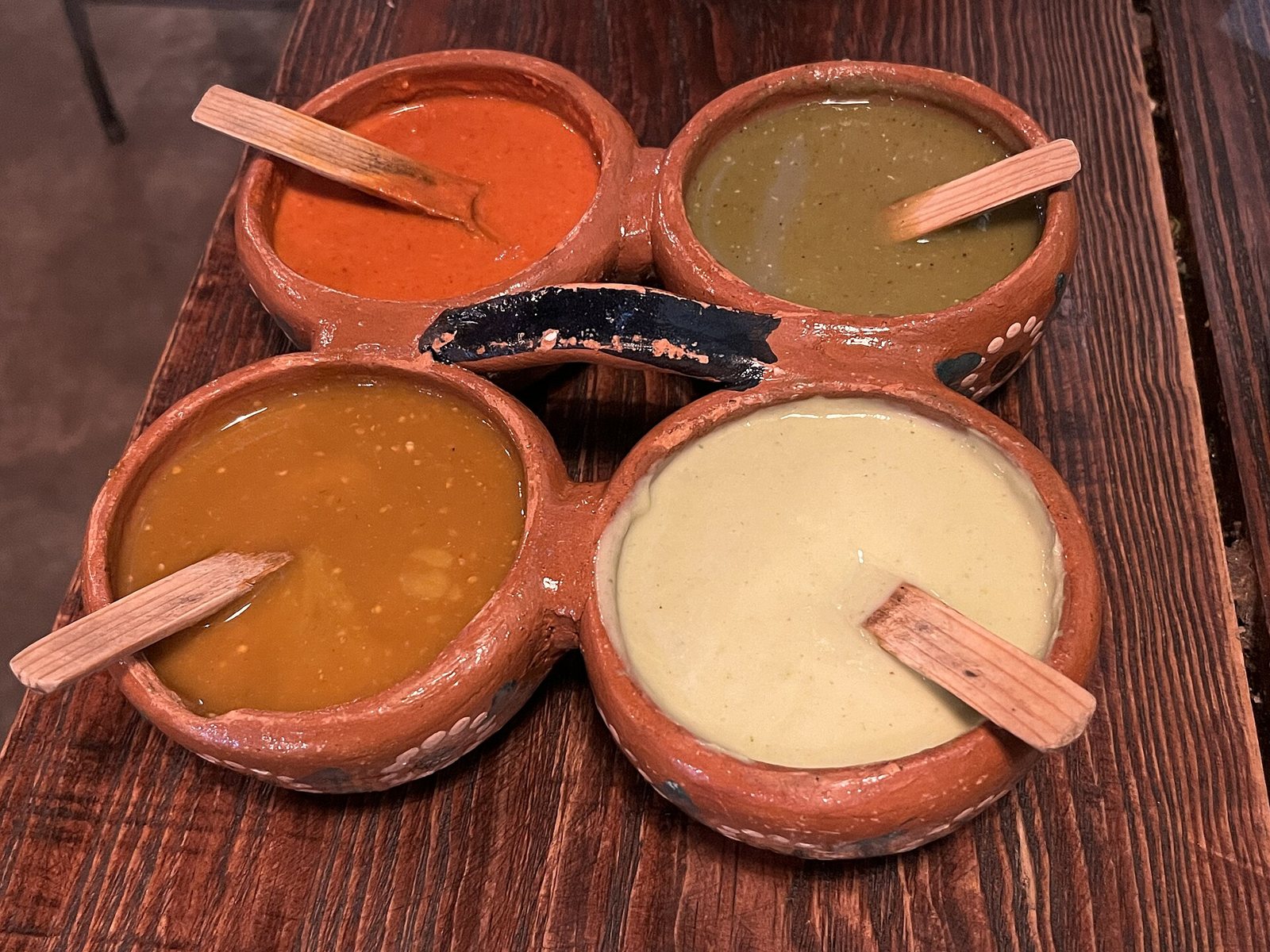 Taco salsas at a taquería in Puerto Vallarta.
Where to Eat Street Food in Puerto Vallarta: Famous Spots
Pancho's Takos: MICHELIN-Listed Tacos al Pastor
Pancho's Takos opened on Basilio Badillo street in 1989 and has been one of the city's best-loved taquerías ever since. Guidebooks like Lonely Planet and Fodor's have recommended it, and in 2026 it joined the MICHELIN Guide as a recommended restaurant in the guide's first-ever Jalisco selection. The star is the al pastor taco on a corn tortilla with cilantro and onion, but the menu also includes stuffed avocados, potatoes au gratin with al pastor, and cheesy alambres. Expect a line, especially at night, and bring cash.
Area: Romantic Zone, Basilio Badillo street. Best for: a taco dinner after exploring the Romantic Zone.
Marisma: Fish and Shrimp Tacos
Marisma has been frying fish and shrimp tacos in the Romantic Zone since 1990. Its style is Baja California with an extra-crispy batter, made with fresh seafood from Banderas Bay. Beyond the tacos, it's known for smoked marlin quesadillas and ceviche tostadas. It has a handful of side tables and is a favorite of Vallarta locals.
Area: Romantic Zone. Best for: a quick lunch that tastes like the ocean.
Tacos El Moreno: Carnitas by the Cuale River
A carnitas taco spot near the Cuale River in the Romantic Zone, considered one of the best-loved places for a classic Saturday-morning carnitas breakfast with an agua fresca.
Area: Romantic Zone, near the Cuale River. Best for: early risers who want carnitas fresh from the pot.
Maria Baja: Family-Run Fish Tacos
A family-run Romantic Zone spot that makes several fresh salsas every day and is highly recommended for fish tacos and seafood tostadas. Bring cash.
Area: Romantic Zone. Best for: seafood lovers who want something simple and homemade.
Mercado Municipal Río Cuale
This market was founded in 1957 on the banks of the Cuale River, and its current building, designed by architect Alejandro Zohn, went up between 1977 and 1979. Mexico's Federation of Colleges of Architects has recognized it as part of the city's architectural heritage. Besides handicrafts, it has inexpensive traditional food and fresh juices. The city announced a full renovation starting in 2026 that preserves the original architecture, so check which sections are open before you go. More in our Puerto Vallarta markets guide.
Area: Downtown, by the Cuale River. Best for: combining souvenir shopping with a casual meal.
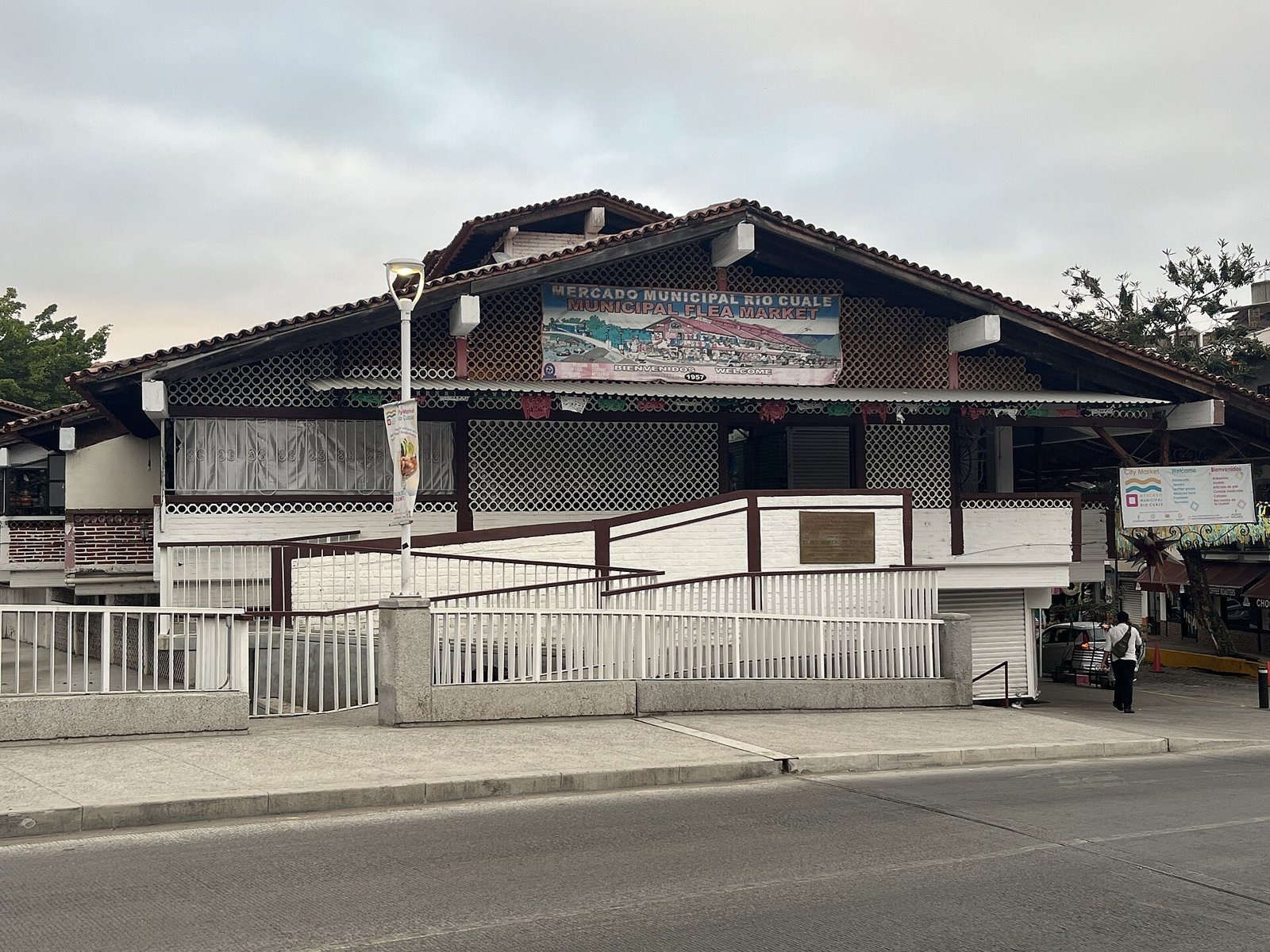 Mercado Municipal Río Cuale in downtown Puerto Vallarta.
Mercado del Mar
A bit farther from the tourist zone, this market is known for ceviche, fish chicharrón (fried fish) and sopes topped with pressed pork rinds.
Best for: travelers who want to step off the tourist path and eat seafood the way locals do at home.
Olas Altas Farmers Market
On Saturdays in season in Lázaro Cárdenas Park, this market brings together local producers, crafts, live music and street-style prepared foods such as tamales and churros.
Area: Romantic Zone. Best for: an open-air Saturday breakfast or brunch.
We recommend confirming hours and availability directly with each place.
Beyond Downtown: Where Locals Eat
To eat like a local, step outside the tourist circuit. Puerto Vallarta's tourism board recommends these areas:
- El Pitillal: in the evening, the main plaza by its church fills with taco and churro stands and Mexican snacks.
- Versalles: a quiet neighborhood about 10 minutes from downtown, with tacos al pastor, birria, seafood and grilled steak.
- Los Sauces: about 15–20 minutes from downtown; at night, stands sell tacos, burritos, tamales, esquites, churros and sweet bread.
- Aramara and La Aurora: the fish and seafood market faces the cruise terminal, with breakfast and lunch stands; across the street in La Aurora you'll find cut fruit and juice in the morning, and tacos, tortas and quesadillas all day.
- Around the Santa Cruz church in the Romantic Zone: ceviche, fish tacos, fresh coconut water and cut fruit like cucumber, jícama and watermelon.
A Day of Street Food in Vallarta: Sample Itinerary
- Morning: birria with consommé or, on a Saturday, carnitas tacos. For something lighter, fruit and juice in La Aurora, or the Saturday market in Lázaro Cárdenas Park in season.
- Midday: fish and shrimp tacos in the Romantic Zone, or ceviche at the Aramara market. Heading down the South Shore? Look for pescado embarazado in Boca de Tomatlán.
- Late afternoon: stroll the Malecón with an ice-cold tuba and a cup of esquites as the sun goes down.
- Night: tacos al pastor in the Romantic Zone, then churros or candied nuts for dessert.
Budget: street food is some of the most affordable eating in Vallarta; a modest amount of pesos in cash goes a long way toward sampling several dishes in one day.
Street Food Etiquette and Key Phrases
- "¿Con todo?" means "with everything," usually onion, cilantro and salsa. If you'd rather skip something, say so when you order.
- "¿Blandos o dorados?" At birria stands you'll be asked whether you want your tacos soft or crispy.
- Standing up or sharing a table is normal. A long line is usually a good sign.
- Vendors are welcoming to visitors, even if you don't speak much Spanish. Pointing and smiling works.
Best Time of Year for Street Food
February through April tends to be the clearest stretch of the year. The rainy season runs from mid-June to mid-October, with August the wettest month, so pack an umbrella for afternoon walks. From December 1 to 12, during the festivities for the Virgin of Guadalupe, downtown fills with processions, music and food stands.
Is Street Food Safe in Puerto Vallarta? Smart Tips
- Pick busy stands, especially ones full of locals: it usually means high turnover and fresh ingredients.
- Go for food that's freshly cooked and steaming hot, like tacos and corn straight off the grill.
- Peel your own fruit. Pre-cut fruit and raw vegetables are the trickiest for unaccustomed stomachs.
- Drink sealed bottled water and ask whether the ice is made with purified water.
- Wash your hands or use hand sanitizer before eating.
- Carry pesos in cash: most street vendors don't take cards.
- Ask how spicy it is before you add salsa to everything.
Get Your Bearings Downtown on the Vallarta City Tour
If you'd like to get to know downtown before heading out to eat on your own, our Vallarta City Tour runs every day, lasts about 7 hours, and is offered in English and Spanish. It includes:
- Guided walk through downtown Puerto Vallarta
- Visit to a traditional jewelry shop
- Free time for shopping
- Tequila stop
- Visit to a regional-cuisine restaurant (meal not included)
The stands and restaurants in this guide are not part of the tour; they're suggestions for you to enjoy on your own. If you'd rather have lunch included, check out the Vallarta Plus City Tour.
See dates and book the Vallarta City Tour →
Frequently Asked Questions
What street food is Puerto Vallarta known for? Pescado embarazado (fish grilled on a stick), marlin burritos and tuba on the Malecón are as Vallarta as it gets. Tacos al pastor, fish tacos and birria are must-tries too.
Where can I find the best tacos in Puerto Vallarta? The Romantic Zone is home to many of the best-known taco spots, including Pancho's Takos (MICHELIN Guide 2026), Marisma and Tacos El Moreno. Outside downtown, El Pitillal, Versalles and Los Sauces come alive at night.
Is it safe to eat street food in Puerto Vallarta? Plenty of visitors enjoy it without trouble. Choose busy stands, freshly cooked hot food and sealed bottled water.
Does tuba contain alcohol? The fresh tuba sold on the street has little or no alcohol.
Why is it called "pregnant fish"? It's wordplay: en vara asado ("grilled on a stick"), said quickly, sounds like embarazado ("pregnant"). It has nothing to do with the fish itself.
What time of day should I eat each dish? Birria and carnitas are morning foods (and sell out early), seafood is for midday, esquites, tuba and churros belong to the late-afternoon Malecón, and al pastor is a nighttime taco.
Do street food stands take credit cards? Most are cash only, so carry pesos.
Photos: Another Believer / CC BY-SA 4.0 via Wikimedia Commons (4) · Gabriel Saldana from Monterrey, Mexico / CC BY-SA 2.0 via Wikimedia Commons




