
Spend an afternoon on a Puerto Vallarta beach and sooner or later someone will walk by carrying wooden sticks loaded with bright red, freshly grilled fish. That's pescado embarazado, also called pescado en vara ("fish on a stick"), one of the beach snacks most closely tied to Banderas Bay. Puerto Vallarta's official tourism board lists it alongside ceviche and pescado zarandeado among the region's traditional dishes.
Below you'll find where the odd name comes from, the backstory of each ingredient, how fishing shaped the town, where to watch it being made, and its cousins on other coastlines.
What is pescado embarazado?
It's fish brushed with a red chile adobo, threaded onto long wooden sticks and cooked over an open fire. The most traditional version uses a whole fish, usually mojarra or tilapia, though fillets work too. The sticks are planted in the sand next to the fire so the fish cooks slowly and picks up a smoky flavor.
The adobo typically combines guajillo chile, garlic, achiote paste and butter, and some cooks add a good squeeze of lime. The result is juicy, a little spicy, and that unmistakable brick-red color you can spot from down the beach.
There's no single "official" recipe. México Desconocido describes a version soaked in plenty of lime, tangy and spicy at once. A 2019 flavor guide from a Vallarta hotel sums it up as lime-marinated fish grilled over coals and served with Huichol hot sauce. Every beach cook has a personal twist.
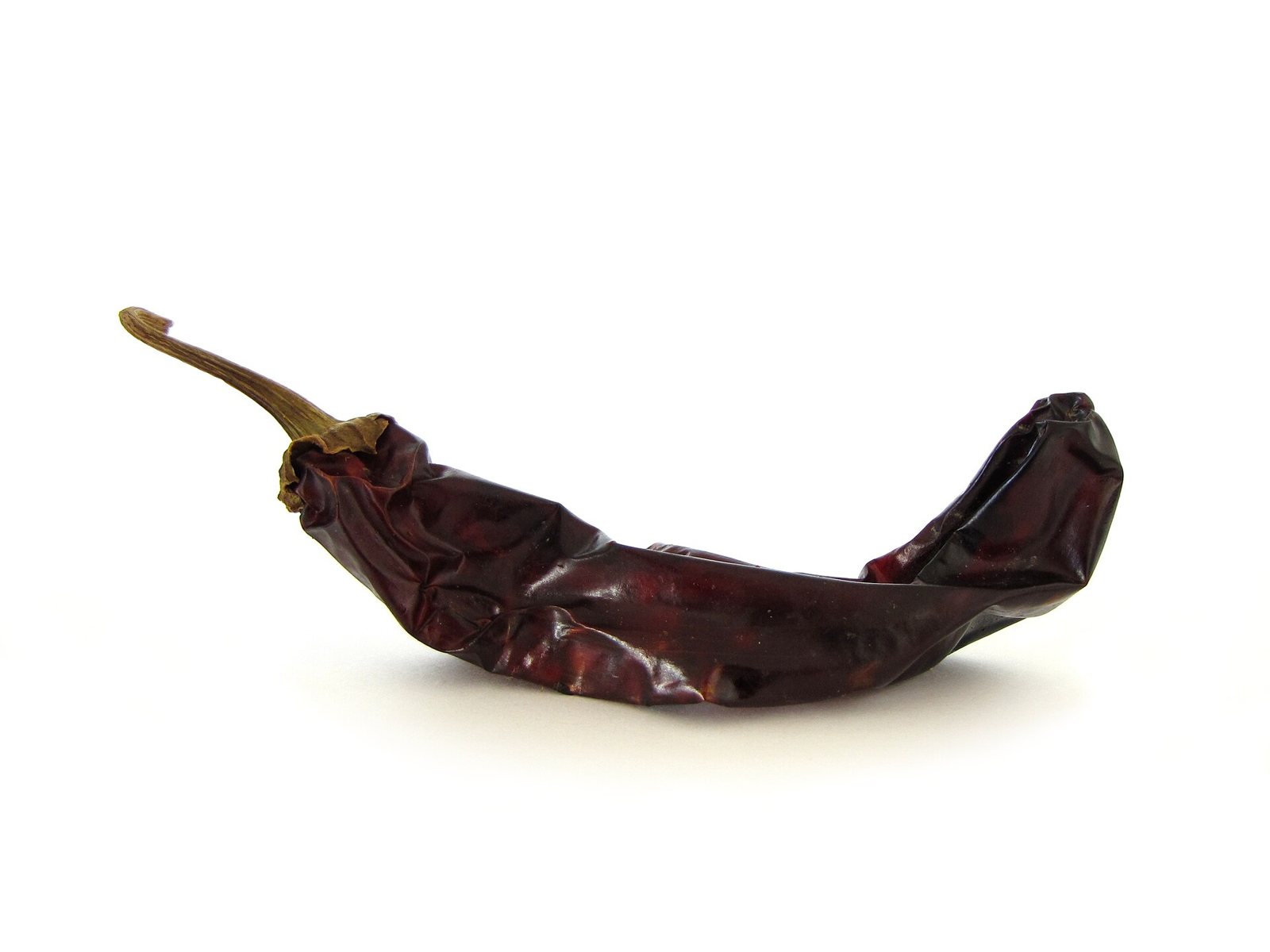 Dried guajillo chile, the base of the red adobo on pescado embarazado.
Why is it called "pregnant fish"?
Translated literally, pescado embarazado means "pregnant fish," which confuses plenty of visitors. It's actually a pun: pescado en vara asado means "fish roasted on a stick," and said quickly, en vara asado sounds like embarazado. The nickname stuck, and today that's simply what everyone calls it.
The same joke applies to camarones embarazados, "pregnant shrimp": shrimp threaded on skewers, coated in a spicy, garlicky adobo and grilled over charcoal.
Where pescado en vara comes from
No one knows for sure who made it first. What local guides agree on is that it started as the way fishermen cooked their catch right on the beach: a fire, a few wooden sticks and the fish of the day. Over time it became one of the dishes most associated with Puerto Vallarta. Some writers call it an icon of the port, and many believe the shrimp version was born on its beaches and spread across Mexico from there. That's popular belief, not documented fact.
It isn't exclusive to Vallarta, though. You'll also find it along the Riviera Nayarit; in Rincón de Guayabitos, for example, dozens of fishermen set up grills right on the sand. For more on that stretch of coast, see our guide to Riviera Nayarit beach towns.
A bay made for fishing
To understand why a beach-grilled fish became a Vallarta symbol, look at the water around it. Banderas Bay stretches roughly 100 km (62 miles) between Punta de Mita to the north and Cabo Corrientes to the south, and it's one of the deepest bays in the world, plunging past 900 meters (about 3,000 feet) in places. Rivers including the Ameca and the Tomatlán flow into it. Today sport fishing, with international tournaments, shares these waters with village fishermen working from small pangas.
Fishing also rescued the local economy. In the 1920s the town lived off farming and the Montgomery Fruit company, which arrived in 1925. After Mexico's 1935 land reform the company left, and Vallarta had to find another way to make a living. It found one at sea, especially in shark fishing: the meat and fins were sold abroad, and the liver oil was used as a dietary supplement for soldiers in wartime.
You can still see that heritage. Playa Camarones (Shrimp Beach), north of the Malecón, is named for the shrimp fishermen who once landed their catch there. The city's coat of arms, adopted on May 31, 1968, features a sailfish, a species plentiful in the bay. And the Puerto Vallarta Fishing Club, which says it has been fishing these waters since 1956, runs an International Fishing Tournament that reaches its 70th edition in 2026. Fish on a stick is the humbler side of that same relationship with the sea: a fisherman's meal. For the bigger picture, read our Puerto Vallarta history guide.
Timeline: the sea and beach cooking in Vallarta
- 1525: Francisco Cortés de San Buenaventura is credited with the European "discovery" of the bay, which later served as a refuge port on the Manila galleon route.
- December 12, 1851: Las Peñas de Santa María de Guadalupe, today's Puerto Vallarta, is founded, tied to the salt trade that supplied mines in the sierra.
- 1935: after the land reform, Montgomery Fruit leaves and fishing, especially for shark, becomes the new source of income.
- 1956: the year the Puerto Vallarta Fishing Club says its sport-fishing history began.
- May 31, 1968: the city adopts a coat of arms featuring a sailfish.
- 2019: Puerto Vallarta's tourism board lists pescado embarazado among the region's traditional dishes.
The story behind each ingredient
Achiote: a color thousands of years old
Much of the adobo's deep red comes from achiote, or annatto (Bixa orellana), a shrub native to tropical America, probably the southwestern Amazon. Indigenous peoples of South America and the Caribbean used its seeds for more than 3,000 years, as a seasoning and above all as a pigment for food, textiles and body paint. The word "achiote" comes from the Nahuatl āchiyōtl, meaning "grain" or "seed." Its color comes from bixin, and it's still used today as a natural coloring for cheese and butter. In Mexico it's best known from Yucatán's cochinita pibil.
Guajillo chile: the dried mirasol
Guajillo is the dried form of the mirasol chile, a variety of Capsicum annuum; in Jalisco it's still called mirasol. Its heat runs low to moderate, and Mexican cooks grind it for adobos, salsas, moles, pozole and stews. Together with achiote, it gives the adobo its brick-red color.
Mojarra vs. tilapia: not the same fish
On the beach you'll hear "mojarra" and "tilapia" used almost interchangeably, but they're different families. True mojarras (Gerreidae) are small, silvery saltwater fish that live near the coast and rarely exceed 35 cm (14 inches). Tilapia are freshwater fish from Africa and the Middle East, members of the cichlid family, with a very long human history: a tilapia appears in the Egyptian Tomb of Nakht, from around 1500 BC, and Egyptians were already farming them. Today tilapia is one of the most widely farmed fish in the world.
Where to try fish on a stick around Banderas Bay
On Puerto Vallarta's beaches
The classic way is to buy it from the vendors who walk the beach with sticks ready to go. It's meant to be eaten on the spot, toes in the sand. If you love this kind of snack, check out our Puerto Vallarta street food guide.
In the South Shore villages: Boca de Tomatlán, Yelapa and Quimixto
If you want to watch it being made, local guides point to the fishing villages on the south side of Banderas Bay, such as Boca de Tomatlán, Yelapa and Quimixto. Boca de Tomatlán sits on Federal Highway 200, a little farther south than Mismaloya, about 11 km (7 miles) from downtown where the Horcones River meets the sea. Water taxis run from there (and from Puerto Vallarta) to Yelapa, which has no road for regular cars.
Quimixto is about 20 minutes by boat south of Boca, with cobblestone streets and a waterfall you can reach on foot. Yelapa, in the municipality of Cabo Corrientes, is the southernmost cove on the bay; its name is usually translated as "where two rivers meet the sea," and it's famous for the pie that local women sell on the beach. We have full guides to Yelapa and the South Shore beaches.
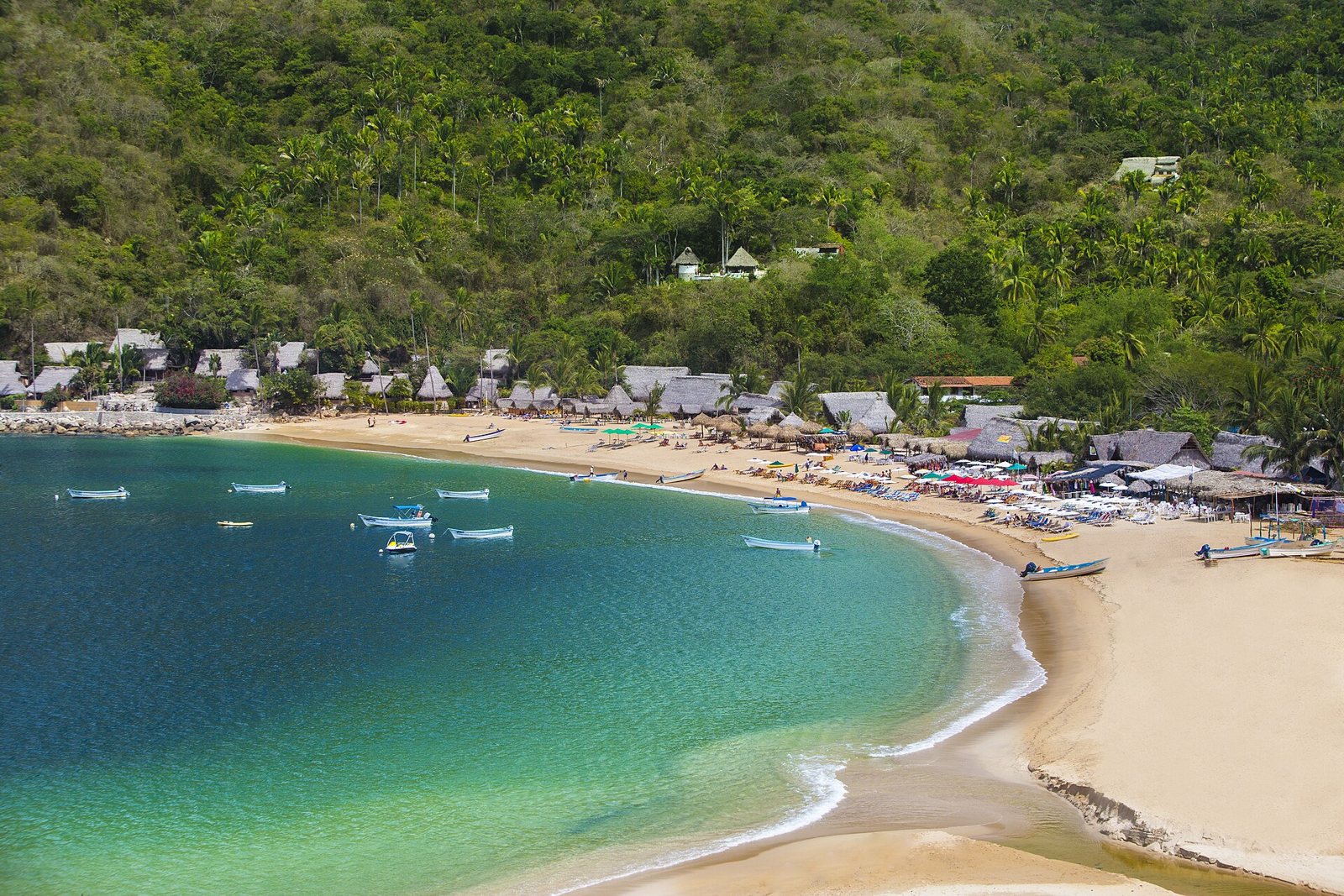 Yelapa beach, on the south shore of Banderas Bay.
Pescado embarazado vs. pescado zarandeado
Both are fish grilled over a fire with a chile marinade, so people mix them up. They're different dishes, though:
- How it's cooked. Pescado embarazado is skewered on sticks planted beside the fire. Pescado zarandeado is butterflied and grilled inside a zaranda, a hinged grill basket that gets flipped over the coals (the name comes from zarandear, "to shake").
- Which fish. Embarazado usually means mojarra or tilapia. Zarandeado is mostly made with snapper (pargo or huachinango) or snook (robalo).
- Where it's from. Embarazado is tied to Vallarta's beaches. Zarandeado traces back to Mexcaltitán, Nayarit.
- How it's eaten. Embarazado is a beach snack, eaten off the stick or with tortillas. Zarandeado is usually served whole and shared family-style with rice, tortillas and salsas.
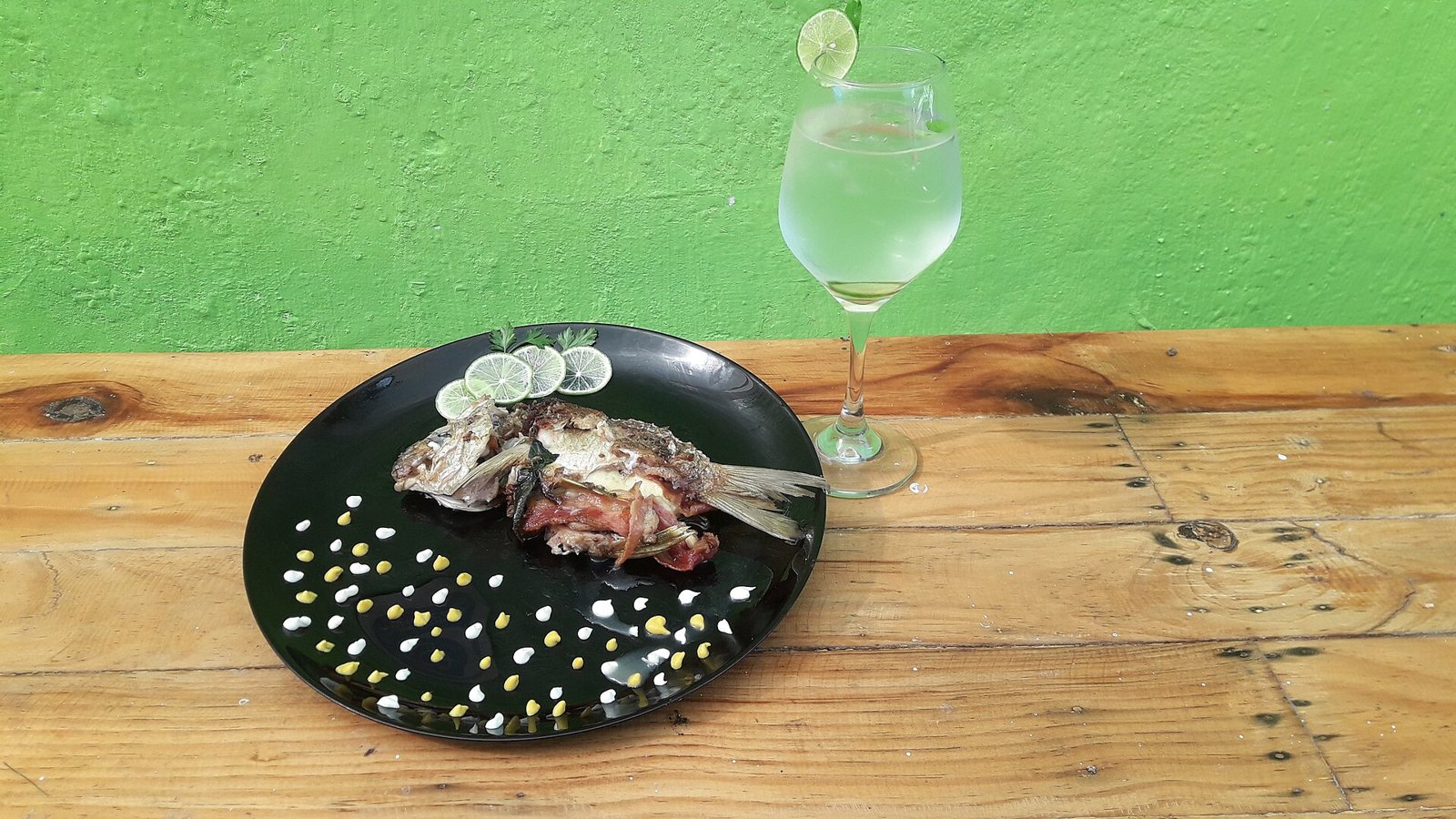 Pescado zarandeado served in Mazatlán, Sinaloa (not pescado embarazado; shown for comparison).
Cousins in Mexico and around the world
Grilling fish over a fire with a marinade is a tradition on many coastlines. A few relatives of fish on a stick:
- Pescado a la talla (Guerrero). A specialty of Barra Vieja, near Acapulco: butterflied red snapper brushed with a guajillo chile sauce and grilled over charcoal. According to México Desconocido it's a fairly recent creation, a little over half a century old, born from a fishing family that threaded its catch on rods to grill over embers.
- Tikin xic (Yucatán). Its name in Yucatec Maya means "dry fin." A firm white fish such as grouper or red snapper is marinated in achiote and sour orange, wrapped in banana leaf and cooked in an earth oven, or steamed in modern versions. Like pescado embarazado, achiote is the star.
- Espeto (Málaga, Spain). On the beaches of Málaga and Granada, sardines are threaded onto thin canes and grilled beside a wood fire on the sand, sometimes in old boats filled with sand.
How to make it at home (simple version)
Craving it after your trip? Here's a simple home version based on the ingredients used on the coast:
- Blend guajillo chiles (soaked and seeded) with garlic, achiote paste, a little butter, lime juice and salt.
- Clean a mojarra or tilapia, score the sides and rub the adobo in well.
- Thread it onto a long wooden skewer that's been soaked in water.
- Grill over medium heat, close to the coals but out of direct flame, turning until the flesh pulls easily off the bone.
Serve with lime, warm tortillas and salsa.
Practical guide: planning a fish-on-a-stick day
Suggested half-day itinerary
- Morning: head south on Highway 200, stopping at Mismaloya.
- Mid-morning: in Boca de Tomatlán, catch a water taxi to Quimixto or Yelapa.
- Midday: have fish by the water; with luck you'll see the sticks by the fire.
- Afternoon: head back, and always ask what time the last boat leaves.
Best time to go
Puerto Vallarta's rainy season runs from mid-June to mid-October, with most rain from July through September; August is the wettest month. February, March and April are the clearest. For a beach-and-boat day, the dry season is the most comfortable.
What to bring
- Cash in small bills.
- Sunscreen, a hat and water.
- Napkins: the adobo stains.
- A bag for your trash: don't leave sticks or scraps on the sand.
- Shoes that can get wet if you're boarding a panga.
Budget (general terms)
A stick of fish on the beach is one of the most affordable snacks on the bay; a water taxi to the South Shore and a waterfront meal raise the cost. Prices change with the season, so ask before ordering.
Explore Vallarta's food and culture: Vallarta Plus City Tour
Our tours don't stop at the beach for pescado embarazado, but if you'd like to dig into the port's food and culture, you can also join the Vallarta Plus City Tour. It runs every day and lasts about 7 hours. It includes:
- Guided walk through downtown Puerto Vallarta
- Visit to a traditional jewelry shop
- Free time for shopping
- Distillery tour and tequila tasting
- Lunch included at a regional-cuisine restaurant
If you'd rather choose your own lunch, the Vallarta City Tour follows a similar route with a tequila stop and a visit to a regional-cuisine restaurant (meal not included).
Check dates and book the Vallarta Plus City Tour →
Planning the rest of your trip? See our guides to things to do in Puerto Vallarta, the Malecón and Old Town and our Puerto Vallarta food guide.
Tips for enjoying it
- Get it fresh off the fire. It's best when it goes straight from the coals to your hands.
- Carry cash. It's the easiest way to pay beach vendors.
- Ask about the heat. The adobo is made with chiles, so if you're sensitive to spice, ask first.
- Watch for bones, especially with whole fish and with kids.
- Make sure it's hot and fully cooked, as with any fish or seafood. Travel-health authorities recommend eating food that's cooked and served hot, and washing your hands before you eat.
FAQ
Why is it called "pregnant fish"? It's a pun on pescado en vara asado, "fish roasted on a stick." Said quickly, it sounds like embarazado, "pregnant."
What kind of fish is used? Most often whole mojarra or tilapia, though fillets are also used. There's a shrimp version too: camarones embarazados.
How is it different from pescado zarandeado? Embarazado is grilled on sticks beside the fire; zarandeado is butterflied and grilled in a basket called a zaranda. Zarandeado also traces its origins to Mexcaltitán, Nayarit.
Where can I watch it being made? Guides recommend the South Shore fishing villages, such as Boca de Tomatlán, Yelapa and Quimixto. On Vallarta's beaches, vendors sell it ready to eat.
Is it very spicy? Usually not too much. Guajillo is a low-to-moderate heat chile, though every cook adjusts the adobo and some serve hot sauce on the side.
Who invented pescado embarazado? Nobody knows. Sources agree it began as the way fishermen grilled their catch on the beach, and today it's one of the dishes most associated with Puerto Vallarta.
When is the best time of year to try it on the beach? Beach vendors don't follow a set season, but the dry months (roughly mid-October to mid-June) are the most comfortable for a beach day or a boat ride. July through September is the rainiest stretch.
Do any of your tours include pescado embarazado? No. None of our tours stop at the beach for it. The Vallarta Plus City Tour includes lunch at a regional-cuisine restaurant, and the Vallarta City Tour visits one without a meal included.
Photos: Bernard DUPONT / CC BY-SA 2.0 via Wikimedia Commons · ZooFari / Public domain via Wikimedia Commons · Vaquemami / CC BY 4.0 via Wikimedia Commons · El Nuevo Doge / CC0 via Wikimedia Commons




