
Puerto Vallarta faces the Pacific, and you can taste it. Whether you're grabbing a ceviche tostada at a neighborhood marisquería or eating grilled fish with your toes in the sand, seafood is one of the best ways to get to know the city.
Below you'll find the story behind Vallarta's seafood tradition, where each signature dish comes from, what swims in the bay, and some of the best-known seafood restaurants in Puerto Vallarta and nearby, along with their backstories.
A Town That Grew Up Facing the Sea
Banderas Bay stretches about 100 km (62 miles) of coastline from Punta Mita to Cabo Corrientes, and it's considered one of the deepest bays in the world, dropping past 900 meters in places. Two rivers, the Ameca and the Tomatlán, empty into it.
The first Spanish expedition, led by Francisco Cortés de San Buenaventura, reached the area around 1524–1525, and over the following centuries the bay served as a safe harbor on the Manila galleon route. But the village of Las Peñas de Santa María de Guadalupe, the future Puerto Vallarta, wasn't founded for fish. It was founded for salt: on December 12, 1851, as a supply point for the silver mines up in the Sierra Madre.
Fishing took center stage in the 20th century. When the Montgomery Fruit Company, which grew bananas in the region, left Mexico after the land reform of 1935, the sea became the town's main source of income for several years. The big catch was shark: the meat and fins were shipped to Chinese restaurants in New York, and shark liver oil was used as a dietary supplement for soldiers during wartime.
You can still see that legacy on the map. Playa Camarones ("Shrimp Beach"), just north of downtown, is named for the shrimp fishermen who once landed their boats there to unload the day's catch. And the city's coat of arms, adopted on May 31, 1968, features a sailfish, a nod to tourism and to a fish that's plentiful in the bay. For the bigger picture, read our Puerto Vallarta history guide.
Timeline: Vallarta and the Sea
- 1524–1525: Francisco Cortés de San Buenaventura's expedition reaches the bay area.
- December 12, 1851: Las Peñas de Santa María de Guadalupe is founded to supply salt to the mines.
- 1935: Montgomery Fruit pulls out; fishing, especially for shark, becomes the town's new economy.
- 1956: the year the Club de Pesca de Puerto Vallarta cites as the start of its fishing expertise.
- May 31, 1968: the city adopts its coat of arms, sailfish included.
- June 1, 1970: the El Salado wharf opens, on the site of today's cruise terminal.
- November 11–14, 2026: the 70th Puerto Vallarta International Fishing Tournament.
What to Order: Puerto Vallarta's Signature Seafood
Aguachile
Raw shrimp "cooked" in lime juice with ground chiles, served with cucumber and red onion. It's made to order and eaten right away, so the shrimp stays firm and fresh. You'll see green versions (with serrano chile and cilantro) and red ones. If you're sensitive to heat, ask before you order.
Its origins are humbler than you'd guess. Aguachile was born in the mountains of Sinaloa, where it was exactly what the name says: "chile water," boiled water with chiltepín, a tiny and fiercely hot wild chile, sometimes with a bit of dried beef. When the recipe made its way down to the coast, shrimp replaced the meat and lime, salt and pepper joined in. It's now beloved enough that in January 2019 a team led by chef Miguel Taniyama made an aguachile in Sinaloa with two tons of shrimp, reported as the world's largest.
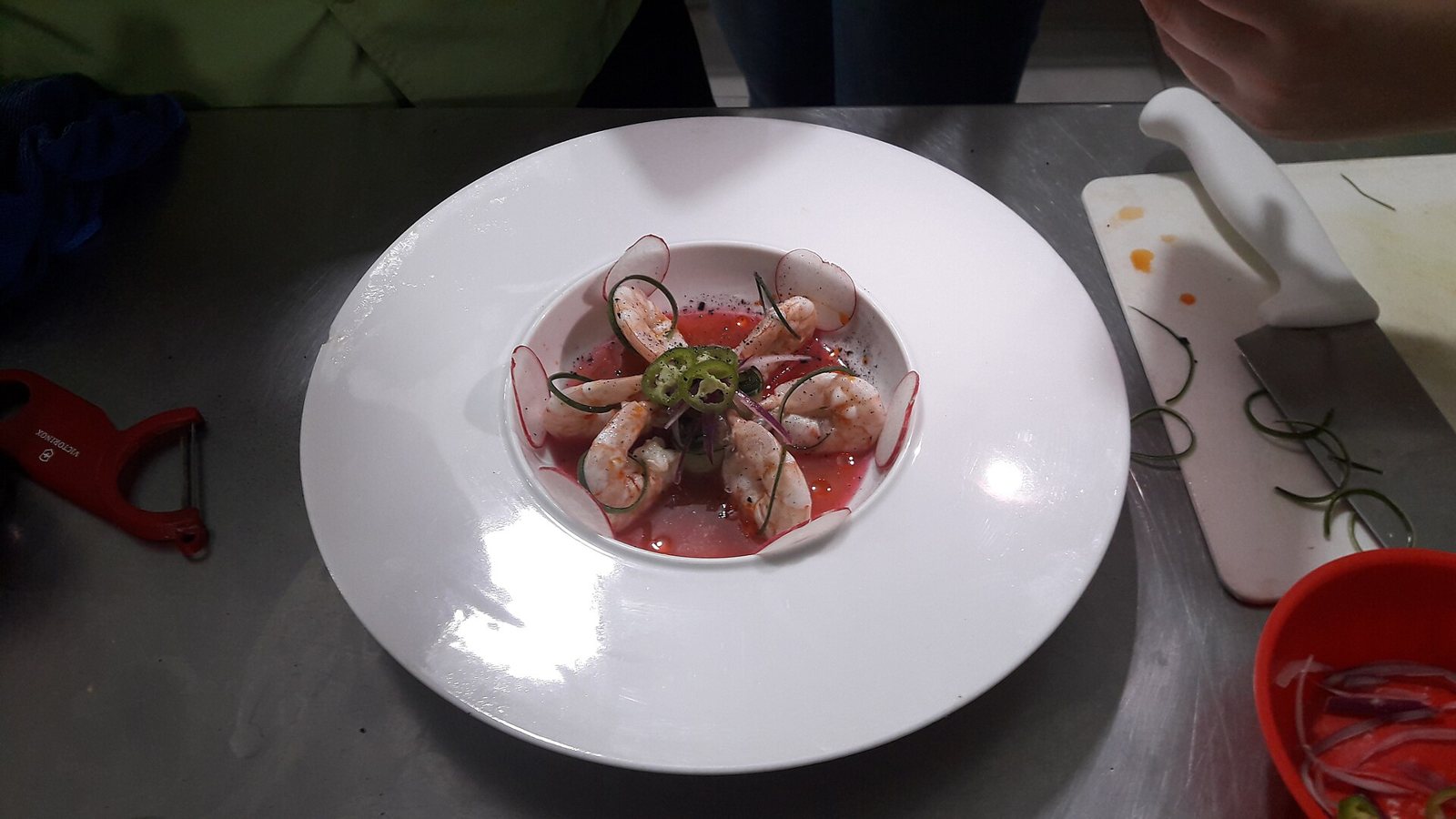 A contemporary take on shrimp aguachile (photo taken in Mazatlán, Sinaloa).
Vallarta-Style Ceviche
Ceviche here has its own style. The fish is chopped very fine or ground, cured in lime, then mixed with tomato, onion, cilantro and often shredded carrot. It's piled on a crispy tostada and finished with hot sauce and avocado.
Ceviche has deep roots on the coast of Peru, where pre-Hispanic cultures marinated raw fish in sour fruit juices; citrus brought by the Spanish gave it the form we know today. In 2023, UNESCO added Peruvian ceviche to its Intangible Cultural Heritage list. Mexico's coasts each made it their own: the Jalisco style is known for fish minced into very small bits, while in Sinaloa it's cut into small cubes a few millimeters across.
Smoked Marlin
Marlin is another true coastal flavor. It's smoked or stewed and shows up on tostadas, in tacos and quesadillas, and in the famous marlin burritas: a flour tortilla stuffed with marlin, cheese, lettuce, red onion and tomato, then crisped on the griddle. Many stands make the same burrita with shrimp, octopus or crab.
Marlin is also a star of sportfishing in the bay. The Puerto Vallarta International Fishing Tournament, run by the Club de Pesca de Puerto Vallarta, lists blue and black marlin and yellowfin tuna among its target species.
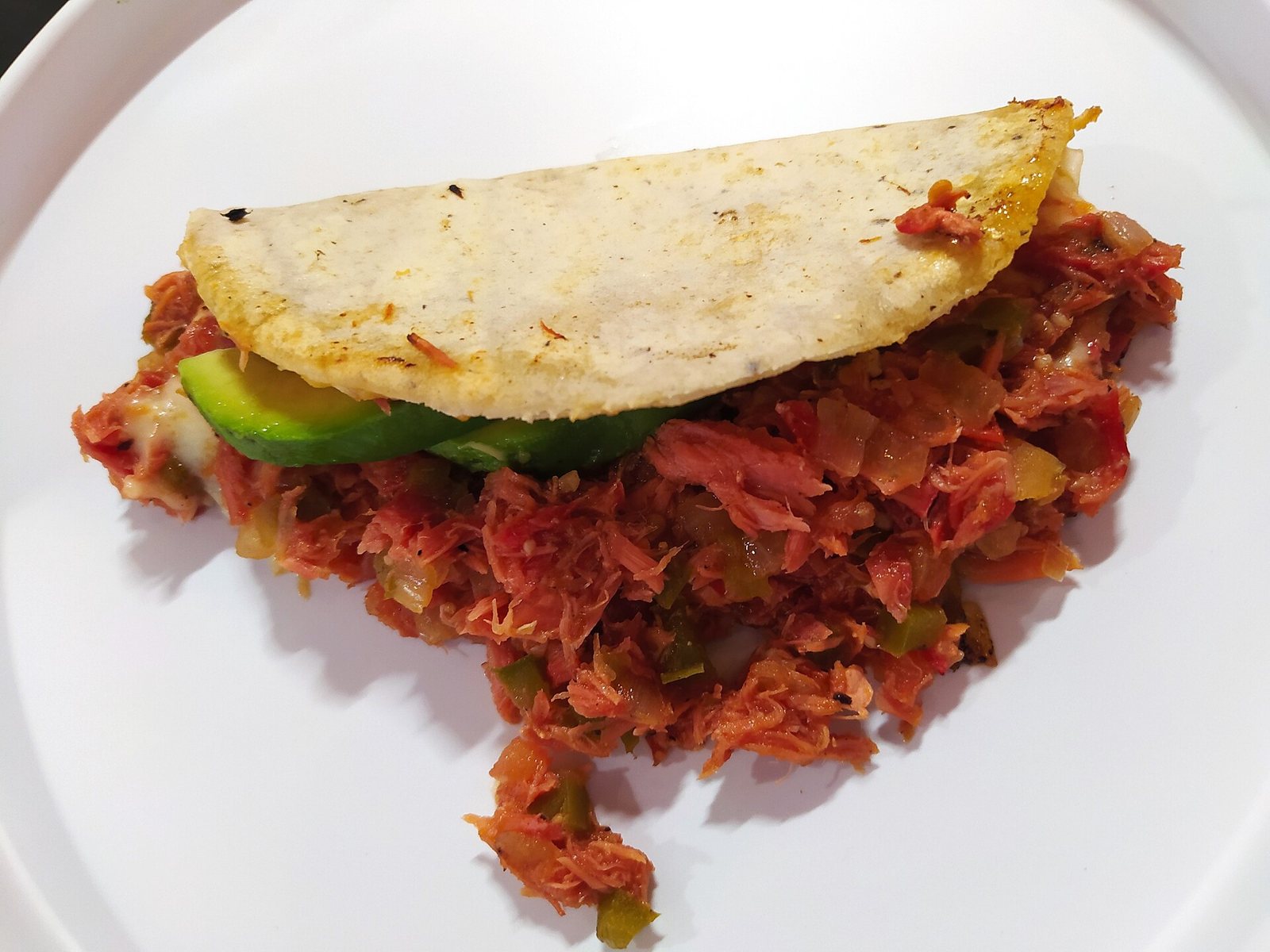 Marlin quesadilla (photo taken in Mexico City; marlin is just as popular on the Jalisco coast).
Pescado Zarandeado
A whole fish split open, brushed with a chile marinade and grilled over coals in a hinged basket. The dish comes from Nayarit, with tradition placing its birthplace on the island of Mexcaltitán, and its name comes from zarandear, "to shake," for the way the fish is flipped over the fire. One of the best-known places to try it is Boca de Tomates beach near the airport, where dozens of palapa restaurants line the sand. Learn more in our guide to pescado zarandeado.
"Pregnant" Fish and Shrimp
Don't worry, nobody's expecting. Pescado embarazado is a pun on en vara asado, "roasted on a stick." The fish (or skewered shrimp) is rubbed with adobo and grilled on a stake next to the fire, the way fishermen used to cook their catch right on the beach. Get the full story in our guide to pescado embarazado.
At almost any seafood spot you'll also find shrimp a la diabla (spicy) or al mojo de ajo (garlic), coconut shrimp, octopus a la mexicana and grilled red snapper.
What's in the Water: Species and Seasons
Red snapper (huachinango) is the fish for special occasions: slim and oval, it can reach about 95 cm (37 inches) and 8 kg (18 lb). Sportfishing is all about marlin, sailfish and yellowfin tuna. Water temperatures in the bay range from about 24 °C (75 °F) from January to March to about 30 °C (86 °F) from August to October.
If you're planning a trip around food, keep the weather in mind: the rainy season runs from mid-June to mid-October, and February through April are the clearest months. From roughly December to March, the bay also welcomes humpback whales.
The Best-Known Seafood Restaurants in Puerto Vallarta
El Dorado: Seafood on the Sand
El Dorado has been on Los Muertos Beach for more than six decades. According to the restaurant, the Wulff family opened it in 1959, and for years it was a hangout for the jet set and Hollywood actors who spent their afternoons on the sand with a beer or a margarita. Since 2016 it has been part of the same group as La Palapa. Today it's a seafood restaurant with tables on the sand, lounge chairs by day and a wide-open view of the bay; at night, dinner is served under the palapa, with lanterns on the sand, white linens and turquoise glassware.
What makes it special: fresh ceviche and an ice-cold beer right on one of the city's liveliest beaches. Seared tuna is one of its signature dishes.
Area: Romantic Zone, on Púlpito street at Los Muertos Beach.
Best for: a long beach lunch or a sunset dinner.
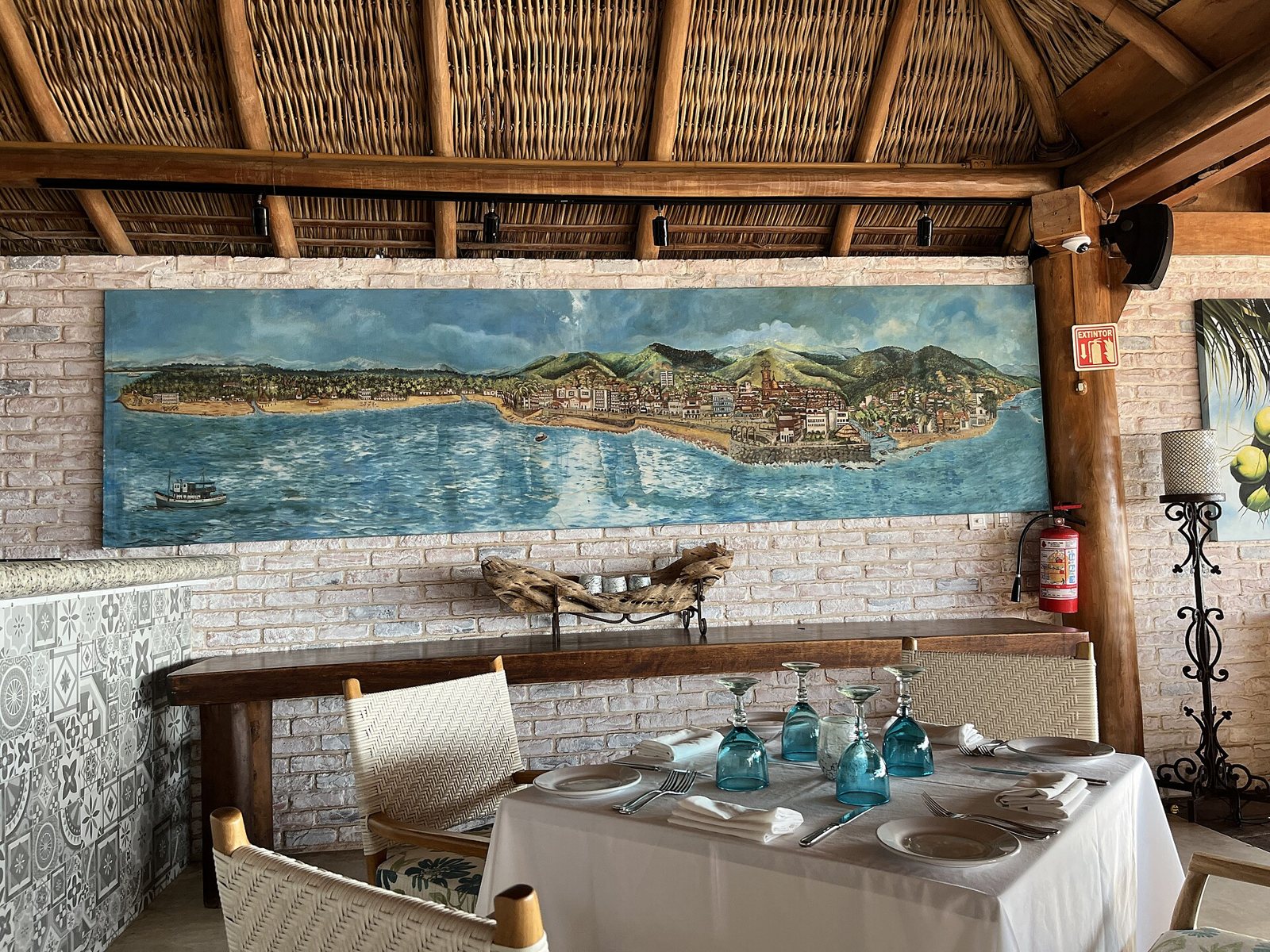 The palapa dining room at El Dorado on Los Muertos Beach, with a mural of the bay.
Mariscos 8 Tostadas: Tostada Heaven
8 Tostadas has shown up on lists of Vallarta's best seafood spots for years; the city's tourism board was already recommending it back in 2016. The menu is built around tostadas: house ceviche, marlin, marlin pâté ("Pepe's style," per the menu), and a seafood tostada you can top with shrimp, octopus, sea snail or scallop. There are also crispy breaded shrimp and fried fish chicharrón.
Area: Marina Vallarta.
Best for: sampling lots of seafood flavors in one meal and sharing.
Mariscos Tino's: A Local Favorite
Mariscos Tino's is a seafood restaurant much loved by locals, with branches in different parts of the city, including El Pitillal. Visit Puerto Vallarta, the city's tourism board, has recommended it as one of the top choices for seafood, and specifically for grilled fish without leaving town.
Area: El Pitillal and other neighborhoods.
Best for: eating like a local, with family or a big group.
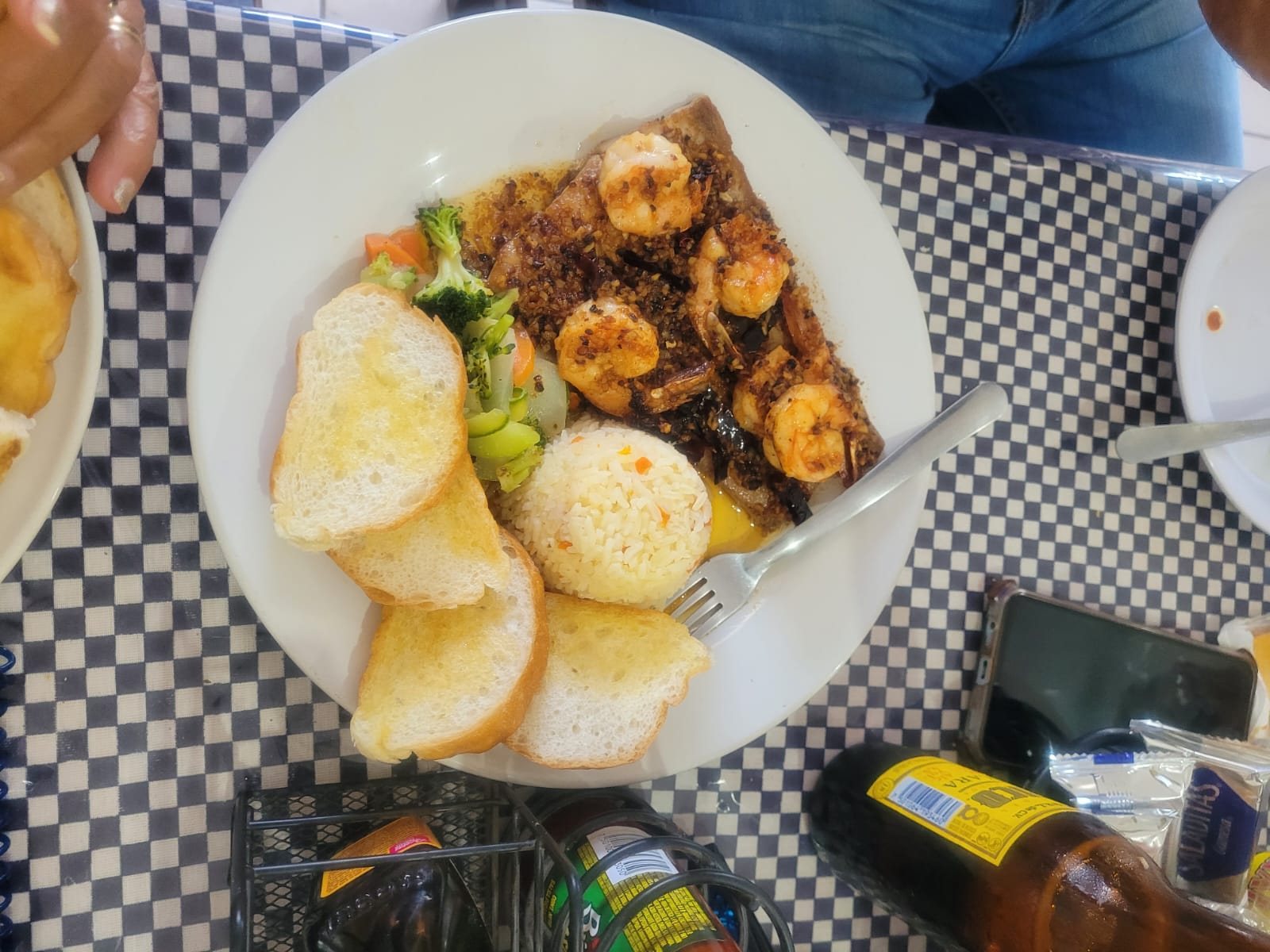 Camarones al ajillo at a seafood spot in El Pitillal, Puerto Vallarta.
La Langosta Feliz: Lobster and Crab Taquitos
This family-run restaurant opened on April 17, 2004. Its founder, Mr. Cueto, struck out on his own after more than 40 years working in hotels and restaurants, and the place has grown mostly by word of mouth, from diners, taxi drivers and hotel staff. Lobster prepared your way is the house specialty, and regulars come back for the crab taquitos, seafood soup, spicy seafood cazuela a la diabla and lobster-and-shrimp bisque. Trios and mariachis keep the afternoons lively.
Area: Lázaro Cárdenas neighborhood.
Best for: a celebration, or treating yourself to a proper lobster.
Joe Jack's Fish Shack: Baja-Style Tacos in the Romantic Zone
Right on Basilio Badillo street, Joe Jack's is a laid-back spot for ceviche, Baja-style fish or shrimp tacos and peel-and-eat shrimp. The wood-fired grill is the star: mahi-mahi, whole red snapper and garlic shrimp.
Area: Romantic Zone, Basilio Badillo street.
Best for: a casual dinner after exploring the Romantic Zone.
El Barracuda: Market-Style Seafood on Camarones Beach
El Barracuda opened in 2007 on Camarones Beach, the very beach named for Vallarta's shrimp fishermen. It calls itself a locals' restaurant serving estilo mercadito (market-style) seafood: tacos, fresh ceviches and aguachiles, with a motto that sums it up: color, flavor and heat. There are non-seafood options too. Next door, its bar El Solar is set up for sunset, with raicilla from El Tuito or a margarita. It now also has locations in Nuevo Vallarta and Punta Mita.
Area: Camarones Beach (5 de Diciembre neighborhood).
Best for: eating by the water and staying for sunset.
Tuna Blanca: Chef-Driven Seafood in Punta Mita
If your trip takes you up to the Riviera Nayarit, Tuna Blanca is the oceanfront restaurant of chef Thierry Blouet, founder of Café des Artistes, member of the Académie Culinaire de France and co-founder of the International Gourmet Festival. Tuna Blanca celebrated its 17th anniversary in March 2025. The focus is on fresh, catch-of-the-day seafood, and the dress code is casual-formal, with no beachwear. Plan your visit with our guide to things to do in Punta Mita.
Area: Punta de Mita, Nayarit.
Best for: a special dinner by the sea.
We recommend confirming hours and availability directly with each restaurant. For more waterfront tables, see our list of oceanfront restaurants in Puerto Vallarta.
A Seafood Itinerary: Half Day or Full Day
Half day in town. Stroll the Malecón toward the Romantic Zone, order a few ceviche tostadas and an aguachile to share, and finish at Los Muertos Beach with something off the grill facing the water.
Full day. Start the morning in market territory: the city's largest fish market is in the Lázaro Cárdenas neighborhood, and across from the cruise terminal, in Aramara, there's another fish and seafood market with stalls where you can eat (more in our Puerto Vallarta markets guide). Around lunchtime, take a taxi to Boca de Tomates for zarandeado under a palapa; don't swim there, since the surf near the river mouth is strong. Wrap up the day at Camarones Beach for sunset.
Budget. There's something for every budget, from very affordable stands and neighborhood marisquerías to beach clubs and chef-driven restaurants at the high end. For more snacks on the go, check our Puerto Vallarta street food guide.
Taste Vallarta's Cuisine on the Vallarta Plus City Tour
Want to try regional cooking with someone who can tell you the story of the city? Our Vallarta Plus City Tour runs every day and lasts about 7 hours. It includes:
- A guided walk through downtown Puerto Vallarta
- A stop at a traditional jewelry shop
- Free time for shopping
- A distillery tour and tequila tasting
- Lunch included at a regional-cuisine restaurant
The seafood spots in this guide aren't part of the tour; they're suggestions to enjoy on your own.
Check dates and book the Vallarta Plus City Tour →
Keep planning with our list of things to do in Puerto Vallarta and our Puerto Vallarta food guide.
Tips for Eating Seafood in Puerto Vallarta
- Order a few tostadas to share. It's the easiest way to compare ceviche, marlin and mixed seafood in one sitting.
- Ask about the heat. Aguachile and some house salsas can be very spicy.
- Bring cash for casual spots and beach palapas.
- Ask for the catch of the day. Many restaurants offer it and will cook it the way you like.
- Book ahead in high season for beachfront restaurants, especially December through April.
- Be smart about raw seafood. The U.S. CDC advises travelers to avoid raw fish and shellfish, including dishes "cooked" in lime like ceviche. If that worries you, go for cooked dishes such as zarandeado or garlic shrimp.
- Respect the beach. Pack out your trash and ask before photographing people at work.
Frequently Asked Questions
What seafood is Puerto Vallarta known for? Vallarta-style ceviche (finely ground fish with carrot), shrimp aguachile, smoked marlin on tostadas and in burritas, pescado zarandeado, and fish or shrimp grilled on a stick (embarazado).
Where can I eat seafood on the beach in Puerto Vallarta? El Dorado on Los Muertos Beach and El Barracuda on Camarones Beach are two well-known options with ocean views. For zarandeado on the sand, Boca de Tomates is a classic.
What's the difference between aguachile and ceviche? Aguachile is raw shrimp in lime and chile with cucumber and onion, served as soon as it's made. Vallarta-style ceviche uses finely chopped or ground fish mixed with tomato, onion, cilantro and carrot, served on a tostada.
Is it safe to eat ceviche and aguachile? Both are raw or lime-cured, and the CDC advises travelers to avoid them. If you'd rather not risk it, there are plenty of cooked seafood dishes to choose from.
When is the Puerto Vallarta fishing tournament? The 70th International Fishing Tournament is scheduled for November 11–14, 2026. Confirm dates and rules with the Club de Pesca de Puerto Vallarta.
When is the best time to eat seafood in Puerto Vallarta? Seafood is on the menu year-round. February through April are dry and clear, perfect for beach dining; from mid-June to mid-October it rains more, with the most rain from July to September.
Does the Vallarta Plus City Tour include seafood? It includes lunch at a regional-cuisine restaurant; our team can confirm the menu when you book.
Photos: Kelpgreen.D / CC BY-SA 4.0 via Wikimedia Commons · El Nuevo Doge / CC0 via Wikimedia Commons · Pequeño mar / CC BY-SA 4.0 via Wikimedia Commons · Another Believer / CC BY-SA 4.0 via Wikimedia Commons · Sailverz / CC BY 4.0 via Wikimedia Commons




