
Margaritas are great, but the Pacific coast of Mexico has its own drinks that most visitors never try. Walk around Puerto Vallarta on a hot afternoon and you may run into three of them: tuba, made from coconut palm sap; tejuino, a cold drink made from corn; and raicilla, the local agave spirit. Each one has a very different backstory. One crossed the Pacific on Spanish galleons, one comes from the ancient corn cooking of Indigenous Mexico, and one grew up in the old silver-mining towns a few hours from Vallarta.
Here is how each drink is made, where it comes from, why a Spanish sea captain complained about tuba to the King of Spain in 1619, and where you can try all three in Puerto Vallarta.
What Is Tuba? Mexico's Coconut Palm Drink
Tuba is the sap of the coconut palm (Cocos nucifera). To collect it, harvesters cut the palm's flower cluster just before it opens, and a sweet liquid drips from the cut into a hanging container. The people who do this work are called tuberos. According to researcher Paulina Machuca, who has studied the craft in both Colima and the Philippines, the cuts are made twice a day, morning and afternoon, and a single palm yields only about a liter and a half (roughly 1.5 quarts) over a full day.
Fresh tuba can be enjoyed right away, before it ferments. Left to sit for a few days, it turns into a fizzy, lightly alcoholic drink that has often been compared to pulque, the ancient agave drink of central Mexico, for its color, smell and texture.
Tuba Fresca and Tuba Compuesta
What you will usually find on the street is tuba fresca: served ice cold over ice and topped with peanuts or walnuts and sometimes diced fruit. In Colima and Jalisco it is sold two ways: pura, straight from the palm, or compuesta, blended with ingredients such as apple, hibiscus flower (jamaica), cucumber and ground peanuts or walnuts. Tuba compuesta is sold as a refreshing drink and, according to local tradition, as a home remedy too.
The tubero's classic container is the bule, a dried, hollowed-out gourd. On the Puerto Vallarta Malecón you will also see tuberos carrying wooden barrels and pouring tuba into plastic cups with diced apple and peanuts on top.
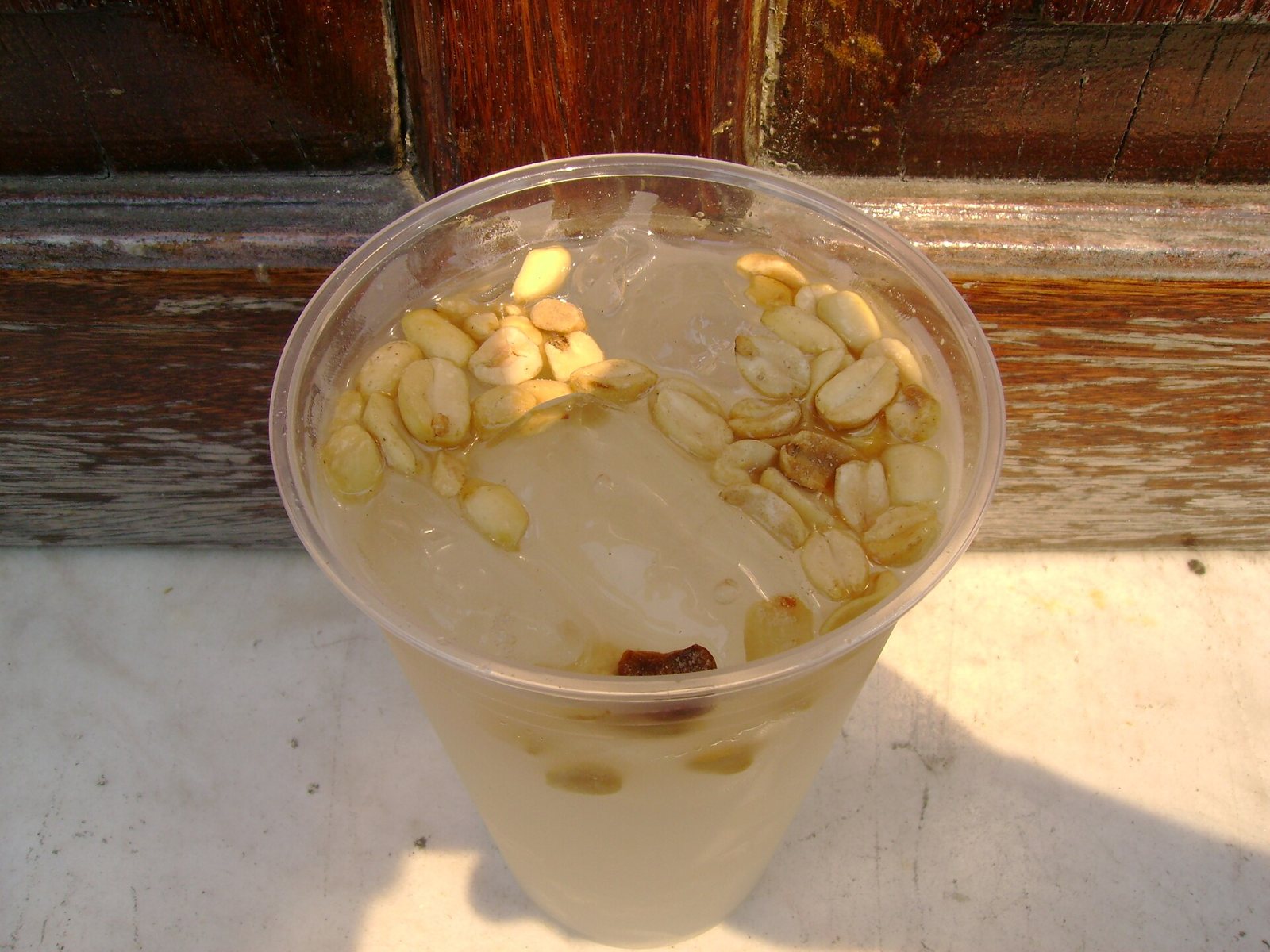 Tuba over ice with peanuts, photographed in Manzanillo, Colima.
Where Tuba Comes From: The Philippines Connection
Tuba feels deeply Mexican, but it actually comes from the Philippines. The word comes from the Visayan languages of the central Philippines, and the drink was made there long before Europeans arrived. It even played a part in ceremonies led by traditional priestesses known as babaylan. The first European to write about it was Antonio Pigafetta, chronicler of Magellan's expedition, in the early 1520s. He called it uraca and mistakenly believed it was a distilled spirit.
In the Philippines the technique is almost identical to Mexico's. Sap collectors there are called mananguetes in the Visayas and Mindanao. They climb the palms every morning, cut the flowers with a curved knife and collect the sap in bamboo tubes.
The Manila Galleons and the "Indios Chinos"
Tuba reached Mexico thanks to the Manila galleons. In 1565, navigator Andrés de Urdaneta found a reliable return route from the Philippines to New Spain (colonial Mexico). For roughly 250 years after that, Spanish ships crossed the Pacific between Manila and Acapulco, until the last galleon, the San Fernando, sailed from Acapulco in 1815 during Mexico's War of Independence. The trip from Manila to Acapulco took about three months; the return voyage took four to five.
By the early 1600s, many galleon crews were Filipino, and a lot of sailors chose to stay on land. One study cited by Machuca estimates that between 1565 and 1700 about 7,200 Asians arrived in New Spain, and about 5,000 of them stayed. Colonial records usually called them "indios chinos" ("Chinese Indians"), even though most came from the Philippines. They settled mainly in Mexico City, in Acapulco and along the coast between Colima and Zacatula, and many worked on cacao and coconut plantations. With them came, or spread, the coconut palm, the Manila mango and, of course, the art of tapping palms for tuba.
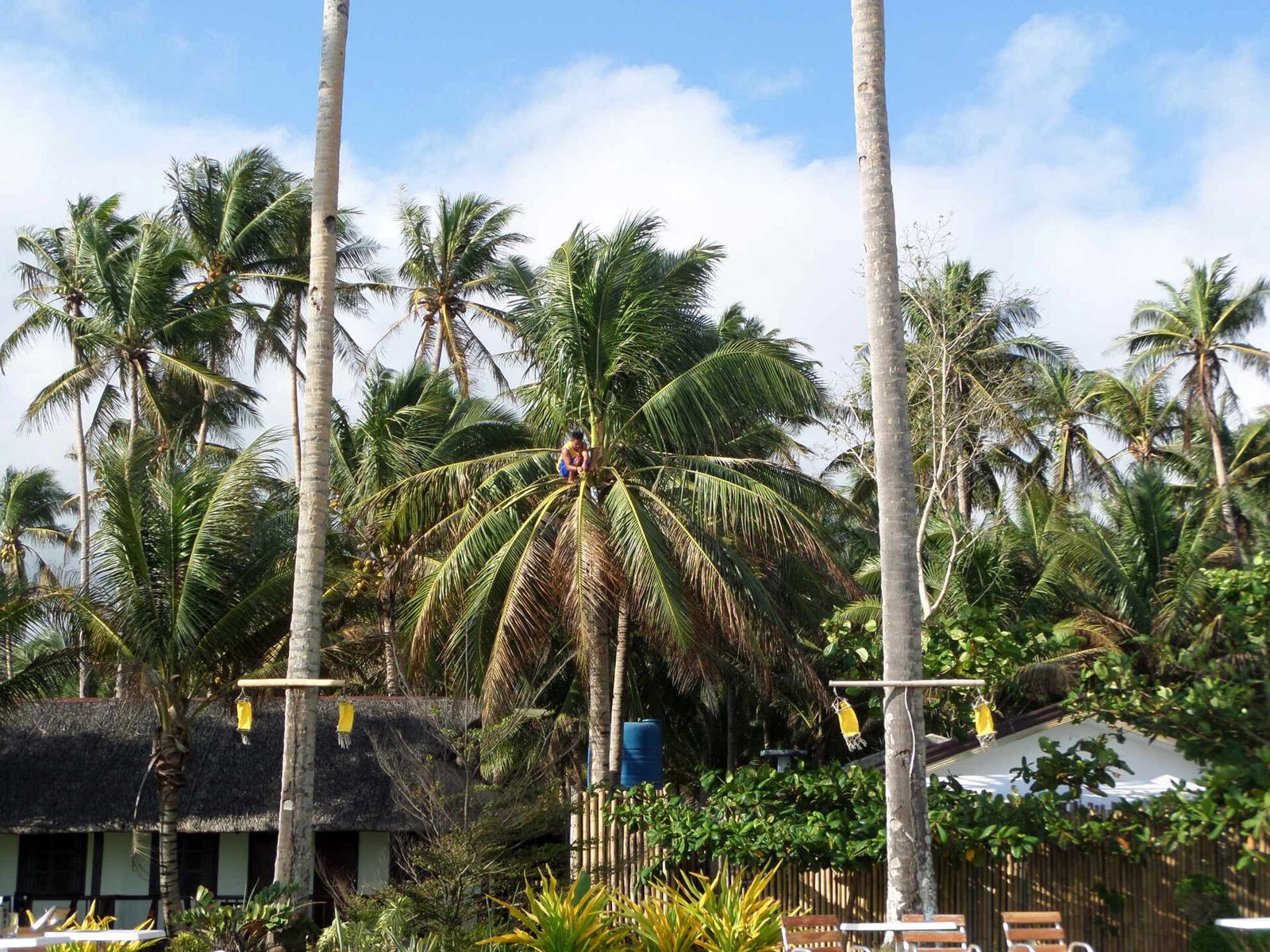 A tuba gatherer climbs a coconut palm in Southern Leyte, Philippines, where the tradition began.
Coconut Wine and the Complaint of 1619
Filipino settlers did not just bring tuba; they also knew how to distill it. The Spanish called the resulting palm spirit (known as lambanog in the Philippines) vino de cocos, or coconut wine. Production began in the second half of the 16th century in Nueva Galicia, the colonial region that is now Colima, Jalisco and Nayarit. It became so popular that it competed with the wines and brandies shipped over from Spain.
In 1619, Captain Sebastián de Piñeda wrote to King Philip III of Spain to complain: the Filipinos' palm liquor was as strong as brandy and was hurting the merchants who imported alcohol from Spain. He urged the Crown to destroy the palm groves and the stills. Colonial authorities eventually banned coconut wine and ordered plantations destroyed, and by the mid-1700s its production in Mexico had died out.
Historian Paulina Machuca wrote an entire book on the subject, El vino de cocos en la Nueva España (2018). Several researchers have also explored a fascinating hypothesis: that stills brought from the Philippines influenced the way agave was distilled in western Mexico. The debate is still open, but it helps explain why tuba and raicilla are more closely related than they seem.
Tuba Today: Colima, the "City of Palms"
Tuba took root so deeply that it is now part of the culture of Colima, Jalisco, Michoacán, Nayarit and Guerrero. In Colima, nicknamed the city of palms, tuba even has a monument in the Jardín Núñez plaza, along with its own songs and corridos (ballads). Many locals believe tuba is a pre-Hispanic drink, and some say the legendary King Colimán drank it. Machuca describes that idea as an "invented tradition," since the technique arrived with Filipino settlers. In 2013 she made a documentary, Hacer tuba en México y Filipinas (Making Tuba in Mexico and the Philippines), comparing the craft on both sides of the ocean.
Tuba in Mexico: A Timeline
- Before 1521: Tuba is already made and used in ceremonies in the Philippines.
- 1520s: Pigafetta records it during Magellan's expedition.
- 1565: Urdaneta opens the return route; the Manila galleon trade begins.
- Second half of the 16th century: Filipinos settle on the Colima coast; coconut wine production starts in Nueva Galicia.
- 1619: Captain Sebastián de Piñeda complains to King Philip III.
- Mid-1700s: Coconut wine production disappears; fresh tuba carries on.
- 1815: The last galleon, the San Fernando, leaves Acapulco.
- Today: Tuba is sold on streets and beaches in Colima, Jalisco, Michoacán, Nayarit and Guerrero.
What Is Tejuino? A Sweet and Sour Corn Drink
Tejuino is a chilled drink made from corn masa (the same dough used for tortillas) and piloncillo, an unrefined cane sugar. The masa is cooked with water until it becomes a very thick, porridge-like atole, left to ferment briefly and then chilled. Lactic acid bacteria and yeasts do the fermenting, which gives tejuino its tang and only a trace of alcohol. The result is a sweet-and-sour drink unlike anything else. There is a white tejuino and a dark tejuino, the latter made with piloncillo.
It is served with fresh lime juice and a pinch of salt, sometimes with chili powder, shaved ice or a scoop of lime sorbet (nieve de limón). In Guadalajara the sorbet is practically a must; in Puerto Vallarta you will find it both ways, so ask how they serve it. Tejuino is most typical of Jalisco, Colima and Nayarit, though it is also drunk in Sinaloa, Baja California Sur and elsewhere. It is usually sold from street carts in plastic cups or in plastic bags tied around a straw, and the vendors are called tejuineros.
An Ancient Name and Origin
Tejuino is considered a pre-Hispanic drink of western Mexico, although its exact origin is still debated. The name comes from Nahuatl, but sources disagree on its meaning: some translate it as "masa drink," while others link it to a word meaning "to beat," like a heartbeat. Popular sources say the Wixárika (Huichol) people used it in ceremonies to ask for rain; to learn more about their culture, see our Huichol art guide.
In some places tejuino is still a ritual drink. In Nochistlán, Zacatecas, it is the centerpiece of the San Sebastián festivities from January 17 to 20: every night it is poured from large clay jugs at the hosts' homes, following a recipe attributed to the ancient Caxcan people.
Tejuino vs. Tesgüino
Street tejuino ferments for only a short time, so its alcohol content is minimal. Tesgüino is a different story: it is a true corn beer. The corn is soaked and sprouted for several days, ground, boiled for hours and fermented with herbs in large clay pots called tesgüineras, which traditionally are never washed so that residue from earlier batches helps the next one ferment.
For the Rarámuri (Tarahumara) of the Chihuahua mountains, tesgüino is sacred. Anthropologist John Kennedy estimated that the average Rarámuri spends at least 100 days a year on activities connected to tesgüino. At community gatherings called tesgüinadas, people make important decisions and take on heavy collective work, and during Holy Week it is drunk in large amounts as part of the rituals.
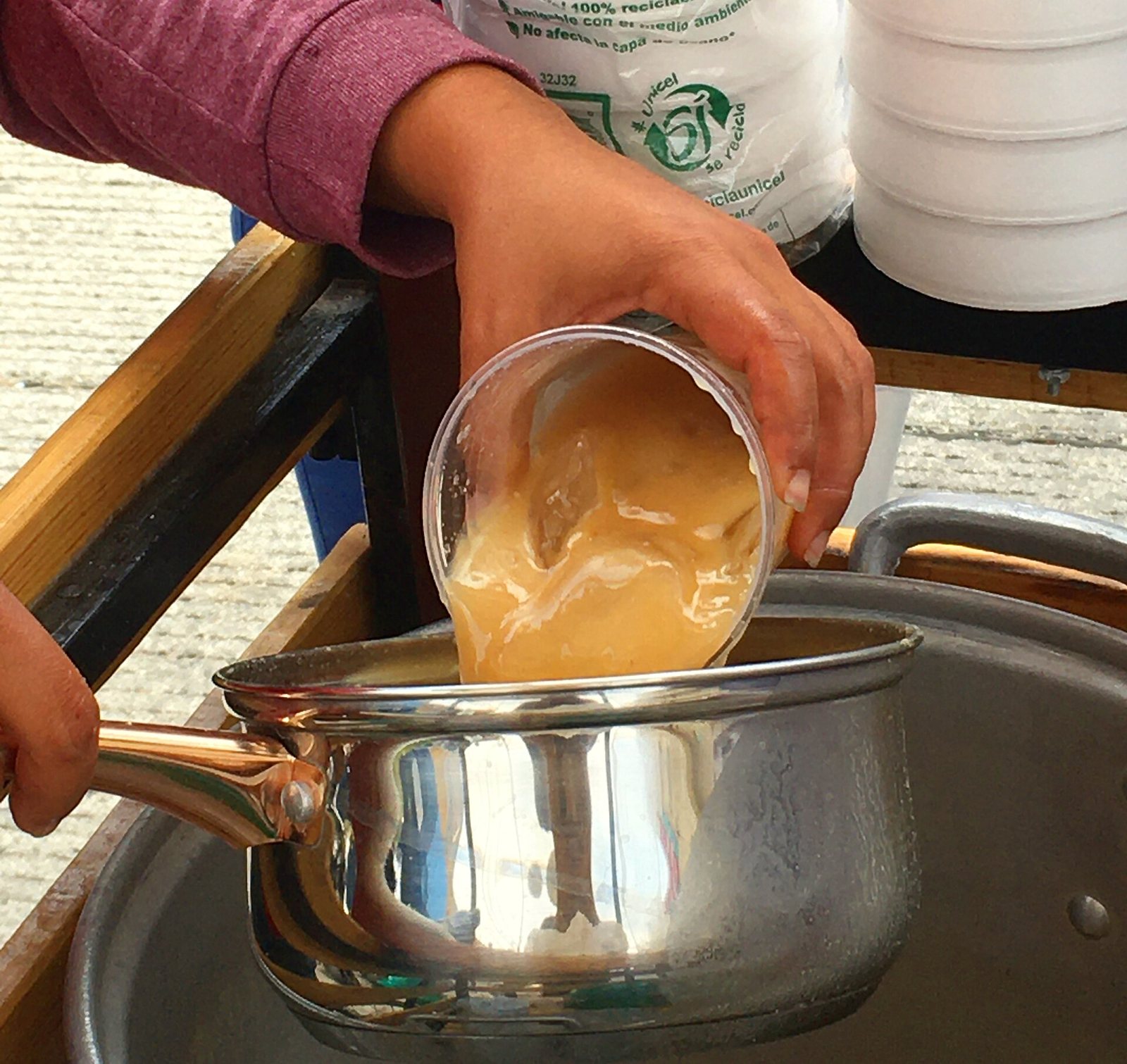 Tejuino being mixed with lime and salt at a street stand in Guadalajara, Jalisco.
Raicilla: The Local Agave Spirit
Tuba and tejuino are refreshers. Raicilla is something else entirely: a 100% agave spirit, a cousin of tequila and mezcal, with its own Denomination of Origin since 2019. The protected area covers 16 municipalities in Jalisco, including Puerto Vallarta, Cabo Corrientes and San Sebastián del Oeste, plus Bahía de Banderas in Nayarit. According to the official declaration, raicilla runs between 35% and 55% alcohol by volume, so it is meant to be sipped slowly.
Its history goes back centuries. In 1621, Domingo Lázaro de Arregui, who lived in Tepic, described a distilled "wine" made from agave on the coast of Nueva Galicia, clearer than water and stronger than brandy. According to Mexico's draft official standard for raicilla, the spirit grew up in the mining towns of the Sierra Madre, such as San Sebastián del Oeste, Mascota and Talpa. In the 17th and 18th centuries Spanish authorities tried to suppress it, just as they did coconut wine, because it competed with spirits from Spain, and from 1785 to 1792 a formal ban on making alcoholic beverages was in force.
What about the name? According to local oral tradition, it was called raicilla ("little root") so it could pass as a root-based remedy and avoid taxes, though sources do not even agree on the century. Researchers at the University of Guadalajara offer another explanation: the agave heart, sitting low on the ground, looks a lot like a root.
There are two main styles: mountain (sierra) raicilla, linked to Mascota and San Sebastián del Oeste, and coastal (costa) raicilla, especially famous around El Tuito in Cabo Corrientes. On the coast, some producers still use a simple wood-and-copper still that researchers connect to the Filipino design, yet another legacy of the Manila galleons. To learn more about agaves, family distilleries and how it is made, read our raicilla guide. You can also explore San Sebastián del Oeste, the mining town tied to its history.
Where to Try Tuba, Tejuino and Raicilla in Puerto Vallarta
- Tuba: look for tuberos on foot. Along the Malecón and downtown they carry wooden barrels or gourds and serve tuba in plastic cups with ice, apple and peanuts.
- Tejuino: look for tejuineros pushing carts around plazas, downtown streets and neighborhoods.
- Raicilla: many bars and regional restaurants offer it. Ask whether it is mountain (sierra) or coastal (costa) raicilla and which agave it is made from.
Street vendors move around and keep their own hours. To get your bearings, check out our guides to things to do in Puerto Vallarta, the Malecón and Old Town, Puerto Vallarta street food and Puerto Vallarta markets.
Suggested Half-Day: A Traditional Drinks Walk
- Mid-morning: Stroll the Malecón before the sun gets too strong and look for a tubero. Try fresh tuba with peanuts.
- Midday: Wander downtown and its plazas; it is a great time for an ice-cold tejuino with lime and salt. Pair it with some local dishes from our Puerto Vallarta food guide.
- Late afternoon: If you are of legal drinking age and not driving, finish with a raicilla at a regional restaurant, sipped slowly with water on the side.
- What to bring: Small bills and coins, a hat, sunscreen and a bottle of water.
Explore Downtown Vallarta with Riviera Tours & Transfers
Our tours do not include tastings of tuba, tejuino or raicilla, but if you would like to explore downtown with a guide, you can also join our Vallarta City Tour. It runs every day, lasts about 7 hours and is offered in English and Spanish. It includes:
- Guided walk through downtown Puerto Vallarta
- Visit to a traditional jewelry shop
- Free time for shopping
- A tequila stop
- Visit to a regional cuisine restaurant (meal not included)
Prefer lunch included? The Vallarta Plus City Tour adds a distillery visit, a tequila tasting and a meal at a regional cuisine restaurant.
See dates and book the Vallarta City Tour →
Tips for Trying Traditional Drinks Responsibly
- Ask whether it contains alcohol. Fresh tuba and street tejuino have little or none, but fermented tuba and raicilla do.
- Adults only. In Mexico it is illegal to sell or give alcohol to minors.
- Pace yourself and drink water. The coastal heat makes hydration extra important.
- Never drink and drive, especially after raicilla or fermented tuba.
- Carry small bills and coins. Street vendors rarely accept cards.
- Respect the craft. Ask before taking a photo of a tubero or tejuinero.
- Check current rules on drinking alcohol in public spaces and on the beach; they can change.
Frequently Asked Questions
Does tuba contain alcohol? The fresh tuba sold on the street has little or no alcohol because it is drunk soon after harvesting. If it is left to ferment for several days, it becomes alcoholic.
Is tuba really from the Philippines? Yes. The technique arrived on Mexico's Pacific coast with Filipinos who traveled on the Manila galleons in the 16th and 17th centuries.
What is the difference between tejuino and tesgüino? Tejuino ferments only briefly and has very little alcohol; tesgüino ferments longer and is an alcoholic corn beer used in ceremonies, especially by the Rarámuri.
Does tejuino come with sorbet? It depends on where you are. In Guadalajara it usually comes with lime sorbet; elsewhere it may be served with just lime, salt and ice. Ask the vendor.
Is raicilla the same as mezcal? It is an agave spirit from the same family, but it has had its own Denomination of Origin since 2019, covering specific agaves and municipalities in Jalisco and Bahía de Banderas.
Is it safe to drink from street vendors? Many visitors enjoy them without problems. If you have a sensitive stomach, choose busy stands and start with a small serving.
Does the tour include a tuba or raicilla tasting? No. The Vallarta City Tour includes a tequila stop, and the Vallarta Plus City Tour includes a tequila tasting. See full details here.
Photos: Jassonfoto / CC BY-SA 4.0 via Wikimedia Commons · Yaomautzin Ohtokani Olvera Lara / CC BY-SA 4.0 via Wikimedia Commons · GinaD / CC BY-SA 4.0 via Wikimedia Commons · Salvador alc / CC BY-SA 4.0 via Wikimedia Commons




