
Ask around Puerto Vallarta where to learn to surf and you'll keep hearing the same answer: Sayulita. This laid-back town on the Riviera Nayarit coast, named a Pueblo Mágico in 2015, grew up around its beach and a forgiving wave that has launched countless first rides. Behind the reputation is a coconut-and-fishing village that traveling surfers found more than half a century ago, and that went on to host a world championship. Here's that story, plus what the surf is actually like, where the swell comes from, what a lesson looks like and how to stay safe in the water.
A Short History of Sayulita Surf: From Coconut Village to Surf Town
Before the waves, Sayulita lived on coconuts and fishing. Its ejido (communal land grant) was formed in 1936, and for decades it was a quiet hamlet that took real effort to reach. That changed in 1965, when the Las Varas–Puerto Vallarta highway was built and tourism began trickling into the region. Surfers followed the road from the 1960s on; local guide Sayulita Life puts it simply: surfing helped put the town on the map in the late sixties. Nobody recorded the names of those first wave hunters.
Even in the 1990s the town was tiny. An American family who moved here for good in 1996 later recalled that there was no decent road to Puerto Vallarta and the beaches were nearly empty. With no surf school in town, they started renting boards and giving lessons; by their account, it was Sayulita's first surf school. One of their sons, Dylan Southworth, grew up on the town's wave and was named the Mexican Surfing Federation's 2013 Surfer of the Year.
Around 1999, a travel writer who learned to surf here described Sayulita as the classic, unspoiled surf town, with about a dozen people in the water. When she came back seven years later, she counted close to forty.
In May 2015, the International Surfing Association (ISA) brought its World StandUp Paddle and Paddleboard Championship to Sayulita: the first ISA World Championship ever held in Mexico, with 27 national teams and an opening parade through the village. The ISA called Sayulita the epicenter of Mexico's SUP community. That December, the town became a Pueblo Mágico. Youth championships followed, and in 2026 Sayulita hosts the third edition of the International Day of the Dead Surf Tournament.
Before Sayulita: How Surfing Reached Mexico
Mexican surfing was born up north. Its cradle is Ensenada, Baja California, where in the 1950s and '60s a group led by Ignacio "Nacho" Félix founded the Baja Surf Club. Boards were scarce: Mexico had no board builders, and the few around arrived strapped to the roofs of Californian tourists' cars. Ensenada won the bid to host the 1970 World Surfing Championships, but the government canceled it after the turmoil of 1968 and the event went to Australia; Mexico didn't return to a world championship until 1988. Meanwhile, Californians had been exploring Mazatlán and Acapulco since the late fifties, and by the sixties they were driving down the mainland coast in bigger numbers. Sayulita sits right on that southbound trail.
Sayulita Surf Timeline
- 1936: the ejido is formed; the village lives on coconuts and fishing.
- 1965: the Las Varas–Puerto Vallarta highway opens the area to tourism.
- 1960s: the first surfers arrive.
- 1996: an American family settles in and opens the town's first surf school.
- 2013: Sayulita-raised Dylan Southworth is named Surfer of the Year by the national federation.
- May 2015: the first ISA World Championship in Mexico (SUP and paddleboard).
- December 2015: Pueblo Mágico designation.
- August 2018: National Youth Surfing Championship, with about 150 competitors.
- Oct. 29–Nov. 1, 2026: third International Day of the Dead Surf Tournament.
What the Sayulita Surf Is Like
Sayulita packs several breaks into one small bay, and each suits a different level:
- The sandy beach break in front of town. This is the learning zone, in front of the fishing boats. The bottom is sand, the waves tend to be slow and fairly predictable, and wipeouts are soft, which gives you time to pop up.
- The right by the river mouth. Where the creek meets the ocean, the town's best-known wave peels over a mix of sand, rock and patches of reef. It's longer and faster, and on bigger swells it belongs to intermediate and advanced surfers.
- The left on the north end. According to the local guide, it works on bigger north swells, draws a smaller crowd than the right and is also for experienced surfers.
Surf guides classify the main break differently (point break vs. river-mouth break). If you're learning, stay in the sandy zone. One useful detail: the bay faces slightly north, so north swells are the ones that wrap in best.
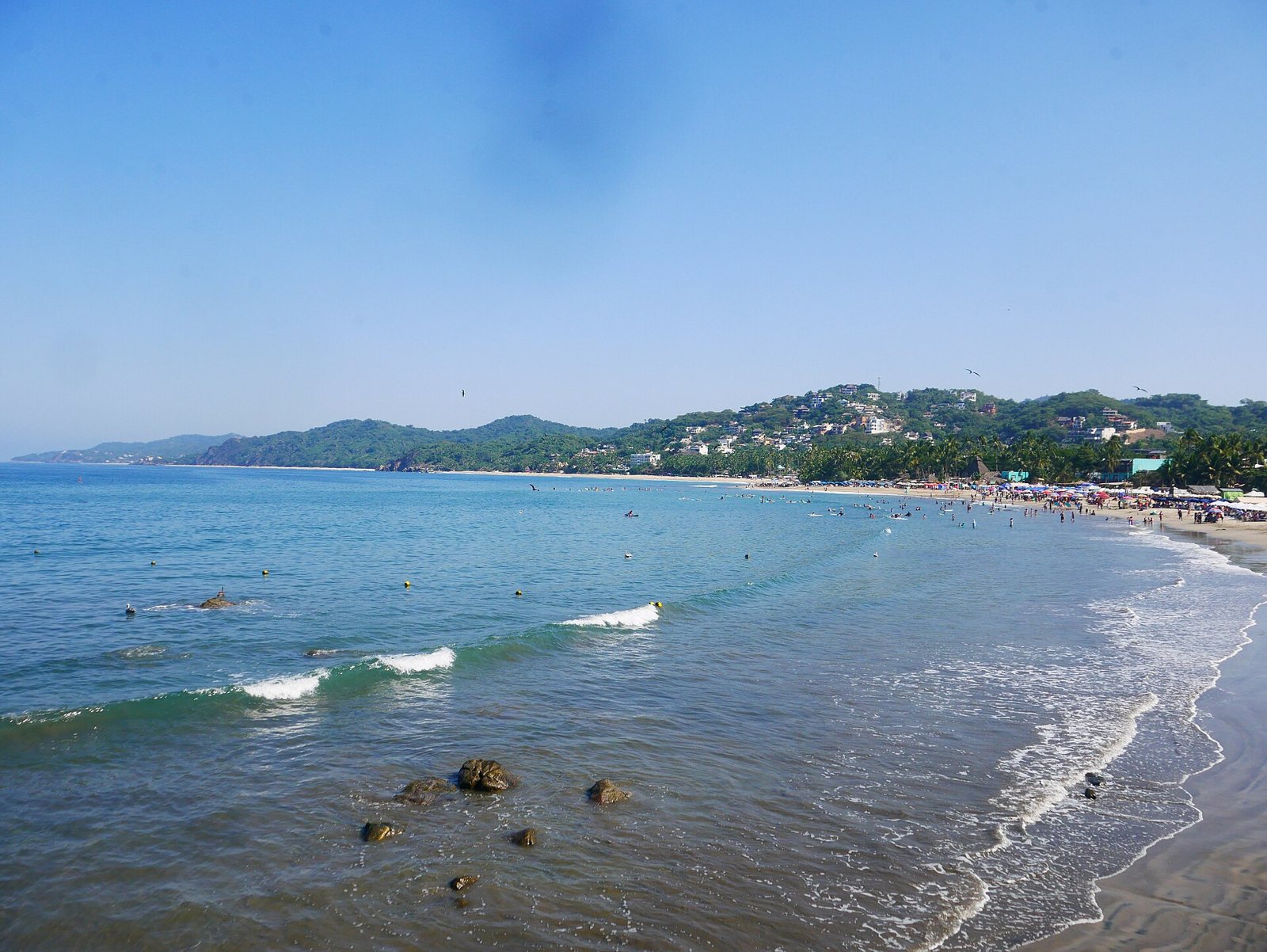 Gentle waves rolling into Sayulita bay.
Why Sayulita Is Great for Beginners
- Sandy bottom where lessons happen.
- Slow, mellow waves most of the time, perfect for longboards.
- Everything is walkable. Rent a board or book a lesson and you're in the water within minutes.
- Warm water most of the year, so a wetsuit usually isn't needed.
The catch: because it's so beginner-friendly, the inside lineup gets crowded, especially in high season and around holidays. That's why etiquette and awareness matter (more below).
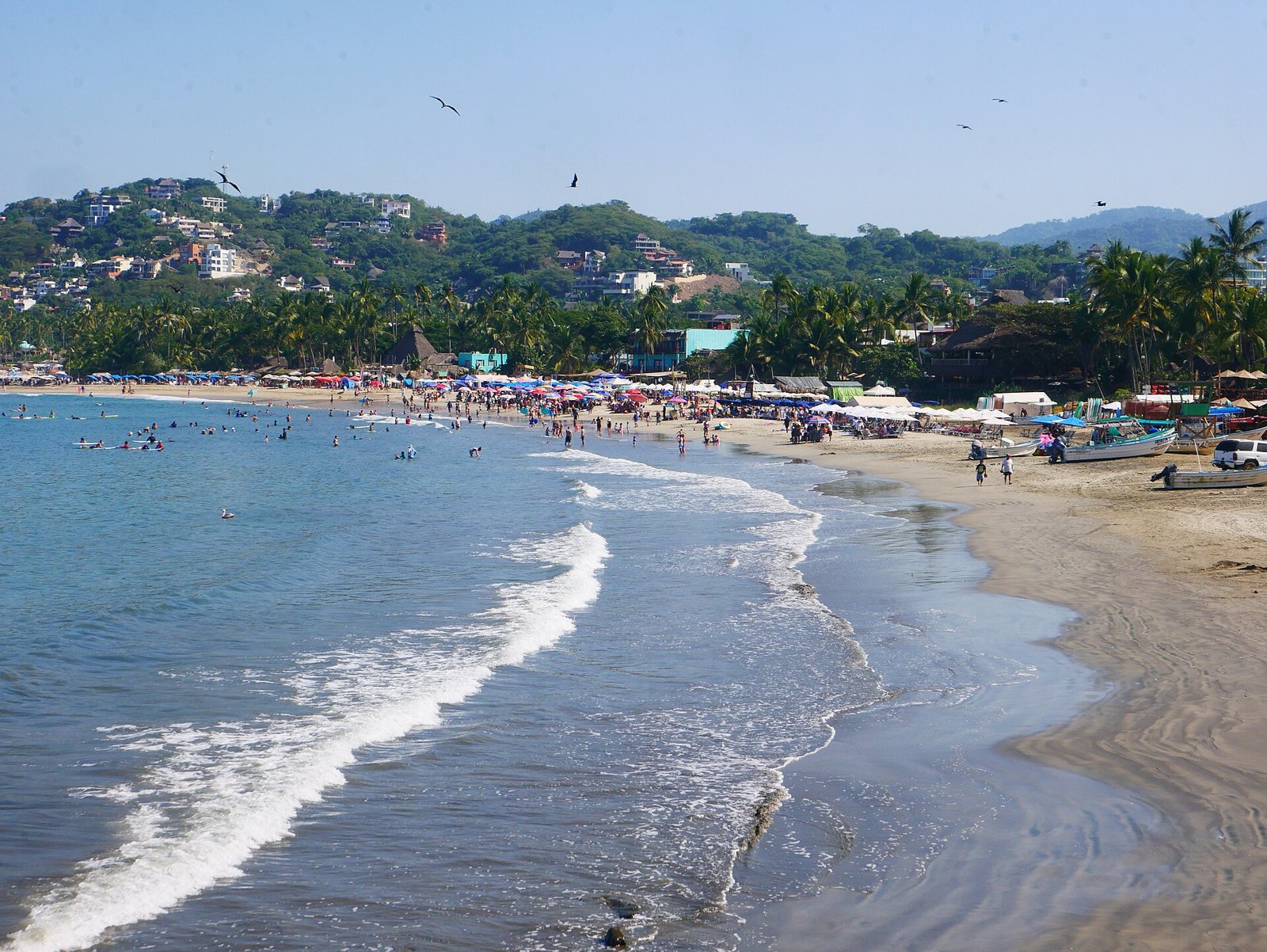 Whitewater on the shore of Sayulita main beach.
When to Surf Sayulita: Swell Seasons
You can surf Sayulita year-round, but the swell changes with the seasons:
- Winter (roughly November to March): mostly north and northwest swells. It's the busiest season and the time when the river-mouth right and the north-end left work best.
- Summer (roughly April/May to October): south and southwest swells arrive, boosted by hurricane season. Some days get big and fast, best left to experienced surfers, though calm stretches happen too.
Sources disagree on which season is "best" for beginners: some prefer winter, while the local guide says the bay's waves tend to be smaller and far less crowded in the rainy season. Our honest advice: check the surf forecast and ask on the beach the same day.
Where the Waves Come From: A Little Science
The waves you ride are rarely born off the beach. Wind from a distant storm pushes on the sea for hours or days; the stronger it blows and the more open water it crosses (the fetch), the more energy it builds. Once those waves leave the storm, they sort themselves into clean, even lines (swell) and can travel thousands of miles. Longer-period waves arrive first, which is why forecasts obsess over swell period.
An experiment in Mexico helped prove it. In 1957, oceanographers Walter Munk and Frank Snodgrass recorded waves from the seafloor off Guadalupe Island, Baja California, and traced them to Southern Hemisphere storms roughly 8,000 nautical miles away. That's the source of many summer swells along Mexico's Pacific coast: storms in the southern winter whose energy takes days to cross the ocean.
Add tropical cyclones to the mix. The Eastern Pacific hurricane season runs from May 15 to November 30, with activity peaking in September. A distant storm can send great waves; a close one brings heavy rain and dangerous seas. Follow the advisories of Mexico's National Weather Service (SMN).
Tides, Wind and Water Temperature
- Tides: two highs and two lows a day, with a range of roughly 3 feet. Locals generally consider mid-tide best; very high or very low tide tends to flatten the waves or make them close out.
- Wind: mornings are usually cleaner; afternoons bring more wind and bigger crowds.
- Water: using Puerto Vallarta as a reference, the sea sits around 75 °F (24 °C) from January to March and reaches about 86 °F (30 °C) from August to October. On cool winter mornings, some surfers wear a thin 1–2 mm suit.
Surf Lessons in Sayulita: What to Expect
Every school runs things a little differently, but a first lesson usually looks like this:
- Beach session (about 20–30 minutes). Paddling, popping up, how to fall and what to do if a current pulls you.
- Shallow-water practice. In waist-deep water, your instructor helps you catch whitewater and your first small waves.
- Real waves. The rest of the session is all about catching waves and trying to stand. Most standard lessons run about two hours.
A soft-top longboard (more stable) and a rash guard are often included, but confirm before you pay. Look for small groups, ask how many students each instructor takes and whether the staff is first-aid certified.
Renting a Surfboard in Sayulita
If you already know the basics, there are plenty of places in town that rent boards by the hour, day or week. A quick guide to picking one:
- Beginner: 8–9 ft foam longboard (soft-top).
- Progressing: funboard or mid-length.
- Intermediate/advanced: fiberglass longboard or shortboard, depending on the day's waves.
Make sure the leash is in good shape and ask about a deposit. Prices shift with the season, so compare before you commit.
Surf Lingo for Your First Lesson
- Lineup: the zone beyond the breaking waves where surfers wait their turn.
- Peak: where the wave starts to break.
- Set: a group of waves arriving together, followed by a lull.
- Whitewater: the broken, foamy part of the wave; where you learn.
- Pop-up: going from lying down to standing.
- Regular / goofy: left foot forward / right foot forward.
- Closeout: a wave that breaks all at once, with no face to ride.
- Offshore wind: blows from land to sea and grooms the waves.
- Duck dive: pushing the board under a wave; on a longboard you'll "turtle roll" instead.
Lineup Etiquette
Surfing has unwritten rules that keep everyone safe and friendly:
- Don't drop in. The surfer closest to the peak has priority. If someone is already riding the wave, it's theirs.
- Don't snake. Paddling around others to cut the line is a fast way to make enemies.
- Watch before you paddle out. Spend a few minutes seeing where the waves break and how the crowd moves.
- Share. When it's crowded, take fewer waves.
- Know the pecking order. Longboards usually sit on the outside and shortboards work the steeper inside section; dropping in on locals is especially frowned upon.
- Hold on to your board. In a packed lineup, a loose board can hurt someone.
Staying Safe in the Water
- Rip currents. They can form even on calm days and build quickly on bigger swells. If you get caught, don't fight it: stay calm and float, then once you feel the pull ease, swim sideways out of it and angle back to shore.
- Rocks and sea urchins. They're found around the river-mouth right and the north-end left. If you're new, steer clear.
- Water quality. Mexico's health regulator, Cofepris, has listed Playa Sayulita among beaches above its bacteria limit in some testing rounds (for example, Easter week 2025); check the latest results before you go. The local guide recommends staying out of the water for 48–72 hours after heavy rain opens the river mouth; the first rains, usually in June, bring the dirtiest water.
- Sun. Use reef-safe sunscreen and a rash guard; the sun hits harder on the water.
- Lightning. If there's lightning, get out of the water immediately.
Conditions and local advisories can change, so check the current guidance on the beach before paddling out.
Other Waves Near Sayulita
Once you've got the basics down, the nearby coast offers different waves:
- Punta Mita: its breaks face south and west, so they tend to work in spring and summer when Sayulita goes flat. El Anclote is a long, mellow wave for learning. See our guide to things to do in Punta Mita.
- San Pancho: an open beach with punchier waves over rock and reef, for intermediate and advanced surfers, with strong currents. Read about San Pancho beach.
- Carricitos and Malpaso: remote beaches with no services; never surf them alone.
For more of the coast, see our guide to Riviera Nayarit beach towns.
A Sample Surf Day in Sayulita
If you're going on your own:
- Early: cleaner water and fewer people; watch the peak before paddling out.
- Mid-morning: a two-hour lesson or a board rental.
- Midday: shade, lunch in town and a stroll around the plaza.
- Afternoon: a short session or a walk to Playa de los Muertos, then sunset.
What to bring: rash guard, reef-safe sunscreen, water, a towel, cash and a dry bag for your phone.
Budget: group lessons cost less than private ones, day rentals beat hourly rates if you'll paddle out more than once, and everything goes up in high season. Compare before you book.
Surf Culture and Town Life
Surfing shares the town with living traditions: in late February, around Mexico's Flag Day, the town festival brings a parade, music and a rodeo; in December, Guadalupe processions fill the plaza. From December to March the region welcomes humpback whales, and several Nayarit beaches protect sea turtle nests. Say hello in the lineup, pack out your trash and give the fishermen and their boats room: Sayulita is a town where people live, not just a destination.
Surf Sayulita on Our Sayulita & San Pancho Tour
Our Sayulita and San Pancho tour runs Tuesday, Thursday and Saturday. It's a full-day tour in English and Spanish, with groups of up to 17 people. It includes round-trip transportation, a certified guide, a tasting of traditional Mexican sweets, a stop at San Pancho's plaza and beach, a guided walk through downtown Sayulita, free time in Sayulita and bottled water.
Want to catch your first wave while you're there? Surf lessons are optional and cost extra, but tour guests get 50% off. Food is not included.
See dates and book the Sayulita & San Pancho tour →
Planning the rest of your day? Read our guide to things to do in Sayulita, browse the best Sayulita beaches, check out San Pancho beach or see what to eat in Sayulita. Torn on where to stay? Read Sayulita vs. Puerto Vallarta.
Tips for Your First Surf Day
- Go early. Mornings are usually less crowded and less windy.
- Hydrate and eat something light before your lesson.
- Bring cash for rentals and small purchases.
- Be patient. Standing up on the first try isn't the norm; laughing and paddling back out is.
FAQ
Is Sayulita good for beginner surfers? Yes. The sandy beach break in front of town has slow waves and is where surf schools teach. The river-mouth right and the north-end left are for experienced surfers.
When is the best time to surf in Sayulita? There are waves year-round. Winter brings mostly north swells, which suit the bay best; summer brings south swells. Check the forecast and the day's conditions.
Do I need a wetsuit in Sayulita? Usually not; the water is warm most of the year. A rash guard protects you from the sun and board rash.
How long is a surf lesson? About two hours: beach theory, shallow-water practice and real waves.
What time of day is best? Early: the water is usually cleaner and less crowded. Mid-tide tends to work best.
How long have people surfed in Sayulita? Since the 1960s, after the 1965 highway opened up the area. In 2015 the town hosted the first ISA World Championship in Mexico.
Are surf lessons included in the tour? They're not included. They're optional and cost extra, with 50% off for guests on our Sayulita and San Pancho tour.
Photos: Gustavoarroyofotos / CC BY-SA 4.0 via Wikimedia Commons · Luisalvaz / CC BY-SA 4.0 via Wikimedia Commons · Luisalvaz / CC BY-SA 4.0 via Wikimedia Commons




