
Most visitors to Nuevo Vallarta stay at an all-inclusive, and it's tempting never to leave. But a short cab ride from the hotel strip you'll find long-running seafood houses, a beloved breakfast spot and some great Asian food. Here are five Nuevo Vallarta restaurants worth a night (or morning) off the resort plan, with what makes each one special, who it suits best and the story behind the food on your plate.
New to the area? Start with our Nuevo Vallarta guide.
A Little History Before You Eat
Nuevo Vallarta has no old downtown because it's a planned resort area, but the land it sits on has a long story. The municipality it belongs to, Bahía de Banderas ("Bay of Flags"), keeps a tale in its name that the local government itself tells: in 1525 a Spanish expedition led by Francisco Cortés de San Buenaventura, a relative of Hernán Cortés, reached the valley, and according to tradition the local people greeted them with small banners of colored feathers. That, the story goes, is how the "Valley of Flags" got its name.
For most of the next four centuries this was farm and fishing country. The big turning point came in the early 1970s. A federal decree in November 1970 created the Bahía de Banderas Trust (Fideicomiso Bahía de Banderas), which expropriated more than 5,000 hectares (about 12,000 acres) from farming cooperatives, or ejidos, including Bucerías, Jarretaderas, La Cruz de Huanacaxtle, Higuera Blanca and Sayulita, to kick-start tourism. By the mid-1970s the highway from Tepic to Puerto Vallarta was paved, and on that land grew what you see today: a strip of resorts, canal-front homes with private docks and golf courses just north of the Ameca River. The Ameca rises in the La Primavera forest near Guadalajara, runs roughly 230 km (about 140 miles) and, in its final stretch, forms the border between Jalisco and Nayarit.
Nuevo Vallarta and Bahía de Banderas Timeline
- 1525: Francisco Cortés de San Buenaventura's expedition; by tradition, the birth of the name "Valle de Banderas."
- 1600s: tobacco is grown in the valley.
- 1700s: the bay shelters ships sailing to San Blas and Acapulco.
- 1937: the Valle de Banderas ejido receives its land grant.
- November 1970: decree creating the Bahía de Banderas Trust.
- Mid-1970s: the Tepic–Puerto Vallarta highway is paved.
- December 1989: decree creating the municipality of Bahía de Banderas.
- 2010: Bahía de Banderas switches to Central Time to match Puerto Vallarta (confirmed in Mexico's 2022 Time Zones Law).
- 2022: Nuevo Vallarta officially goes back to its earlier name, Nuevo Nayarit, though almost everyone still calls it Nuevo Vallarta.
What to Eat on the Nayarit Coast
Before you pick a restaurant, it helps to know what "local" means here. This coast cooks from the sea.
- Pescado zarandeado. Nayarit's signature dish. Sources trace it to the island of Mexcaltitán and to the Totorame people, who lived in what is now northern Nayarit and southern Sinaloa when the Spanish arrived. A whole fish is butterflied, brushed with an adobo and grilled in a hinged basket that cooks "zarandear" (shake and flip) over the coals. Mangrove wood was the traditional fuel; today cooks use charcoal and metal grills, since mangroves are protected by law. Get the full story in our pescado zarandeado guide.
- Aguachile. The name literally means "chile water." It began on the Sinaloa coast as something very simple: boiled water with chiltepín, a tiny round chile, ground in a molcajete. Over time raw shrimp "cooked" in lime juice joined the party, with cucumber and red onion. In Nayarit the green version, made with serrano chiles, is everywhere.
- Fish on a stick (pescado embarado). Fish is skewered on wooden stakes and roasted upright beside the fire. It's listed among the traditional dishes of Bahía de Banderas, along with lobster and the local "almeja reina" clam. Read our guide to fish on a stick.
- Tuba. A drink made from coconut palm sap. It reached Mexico's Pacific coast from the Philippines aboard the Manila Galleons, which linked Asia and New Spain from 1565 to 1815. More in our guide to tuba and tejuino.
Where the Best Restaurants in Nuevo Vallarta Are
Nuevo Vallarta is a planned resort area, so there's no old downtown. Independent restaurants are spread along three main corridors:
- Paseo de los Cocoteros, the boulevard that runs through the hotel zone. This is where you'll find Paradise Plaza, a shopping center with shops, galleries and places to grab a meal or a snack. The boulevard has a bike lane, and you can walk the beach all the way to Bucerías.
- The two access boulevards from Highway 200, Boulevard Nuevo Vallarta and Boulevard de Nayarit, where many of the more local spots are.
- The marina, which has been welcoming boats for more than 40 years and has spots for a meal or a drink by the water.
Good to know: Nuevo Vallarta is in the state of Nayarit, but it runs on Central Time, the same as Puerto Vallarta, so dinner reservations and tour times line up with no clock math.
Seafood Restaurants in Nuevo Vallarta
You're on the Nayarit coast, so seafood comes first. To compare with what's served across the river, see our Puerto Vallarta seafood guide.
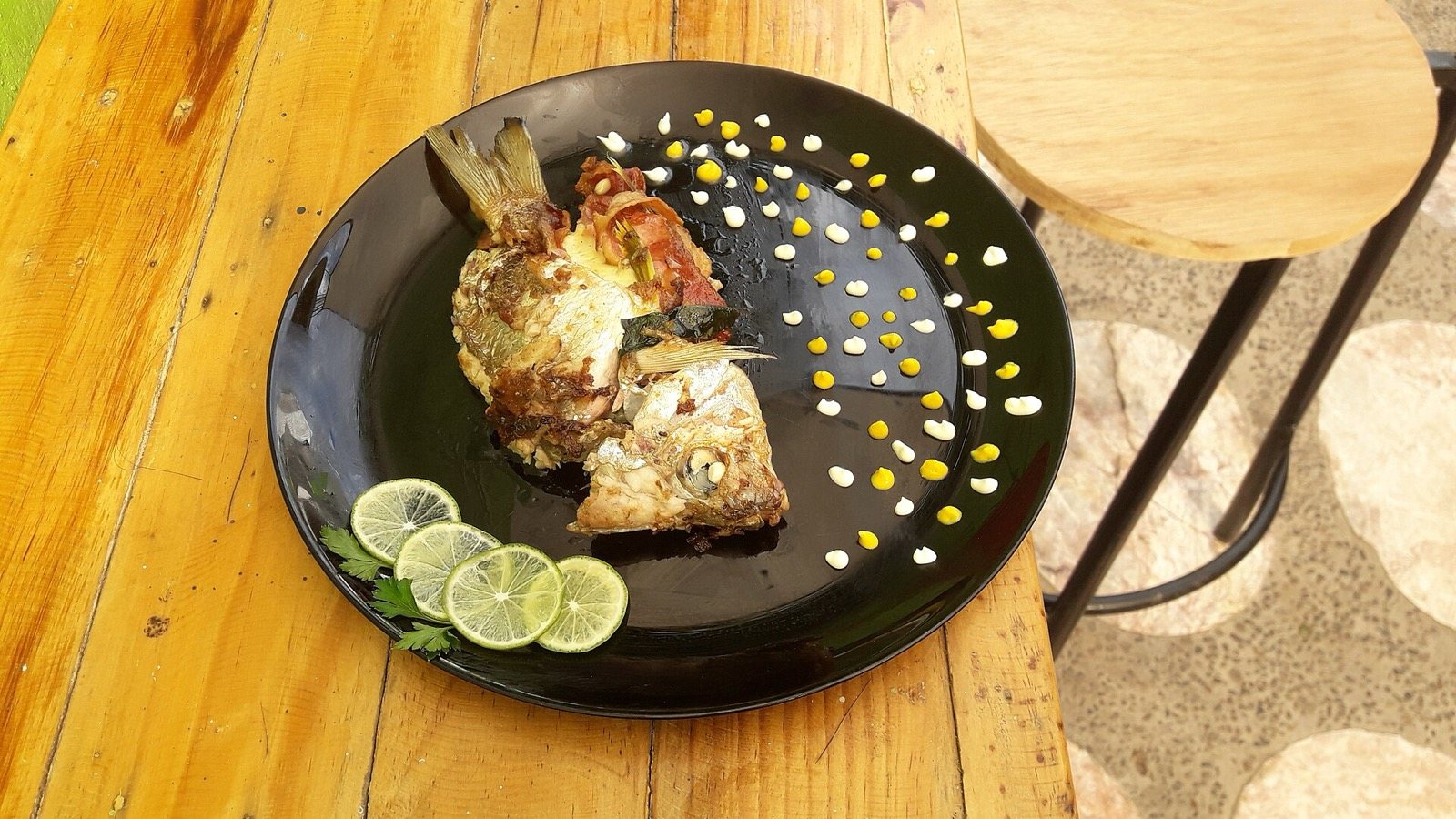 Pescado zarandeado, one of the most-ordered dishes at local seafood restaurants.
El Coleguita: a Vallarta seafood tradition
El Coleguita traces its roots to 1989, when it started in downtown Puerto Vallarta with a seafood soup called "Levantamuertos" (roughly, "wake the dead"), a name that tells you it was meant to put you back on your feet. Over the years that start grew into a small group with two locations: one in Marina Vallarta, facing one of the docks, and another in Nuevo Vallarta.
What makes it special: the welcome. Guests are greeted with a cup of shrimp broth and a shot of tequila, and meals wrap up with fried plantains and a complimentary coffee liqueur. Menu standouts include the Premium Shrimp ("mummy" shrimp served over mashed potatoes), the "Coleguita" shrimp-and-steak combo with a little shrimp cocktail, a lobster special with shrimp and mahi-mahi, and a seafood pasta in Alfredo sauce with shrimp, octopus, clams and mussels.
Area: Boulevard Nuevo Vallarta, across from the local technological university (UTBB).
Best for: families and groups who want generous seafood platters in a lively, beachy, relaxed setting; there's a kids' menu and a private room for gatherings of up to 60 people.
Tino's La Laguna: seafood by the lagoon
Just outside Nuevo Vallarta, in the neighboring town of Jarretaderas, Tino's La Laguna is a Mexican-style seafood restaurant with outdoor tables and lagoon views. Jarretaderas is one of the farming communities whose land went to the 1970s tourism trust, so eating here is a small window into the everyday life that surrounds the resorts.
What makes it special: a rustic, colorful dining room, live music and a Pacific-coast menu where pescado zarandeado, the dish born farther north in Mexcaltitán, is the star. Diners also often mention the coconut-mango shrimp and the garlic fish fillet. There are vegetarian options, too.
Area: Boulevard de Nayarit in Jarretaderas, minutes from the Nuevo Vallarta hotel zone.
Best for: a long, relaxed weekend lunch; there's a playground out front for kids.
Breakfast in Nuevo Vallarta
Fredy's Tucán: a Vallarta breakfast favorite
Fredy's Tucán is a well-known breakfast name around the bay, with locations on Basilio Badillo street in Puerto Vallarta's Romantic Zone and in the Fluvial neighborhood, plus one in Nuevo Vallarta (its "Nuevo Nayarit" branch, named after the area's official name). Local 2026 dining guides call it a brunch favorite in Vallarta.
What makes it special: breakfast is the main event, backed by an in-house bakery, a long coffee menu and a kids' menu. Regulars tend to order chilaquiles, omelets, pancakes and waffles.
The story on your plate: chilaquiles are a classic of Mexican home cooking, born as a way to use up yesterday's tortillas. The name comes from Nahuatl words tied to "chile water" and edible greens. One of the most-cited early printed recipes appears in El cocinero español, published in California by Encarnación Pinedo in 1898, which includes a Guadalajara-style version and one with dried shrimp.
Area: Boulevard Nuevo Vallarta Norte.
Best for: fueling up before the beach or a tour; it's a morning-to-early-afternoon spot. Hungry for more? See our guide to the best breakfast in Puerto Vallarta.
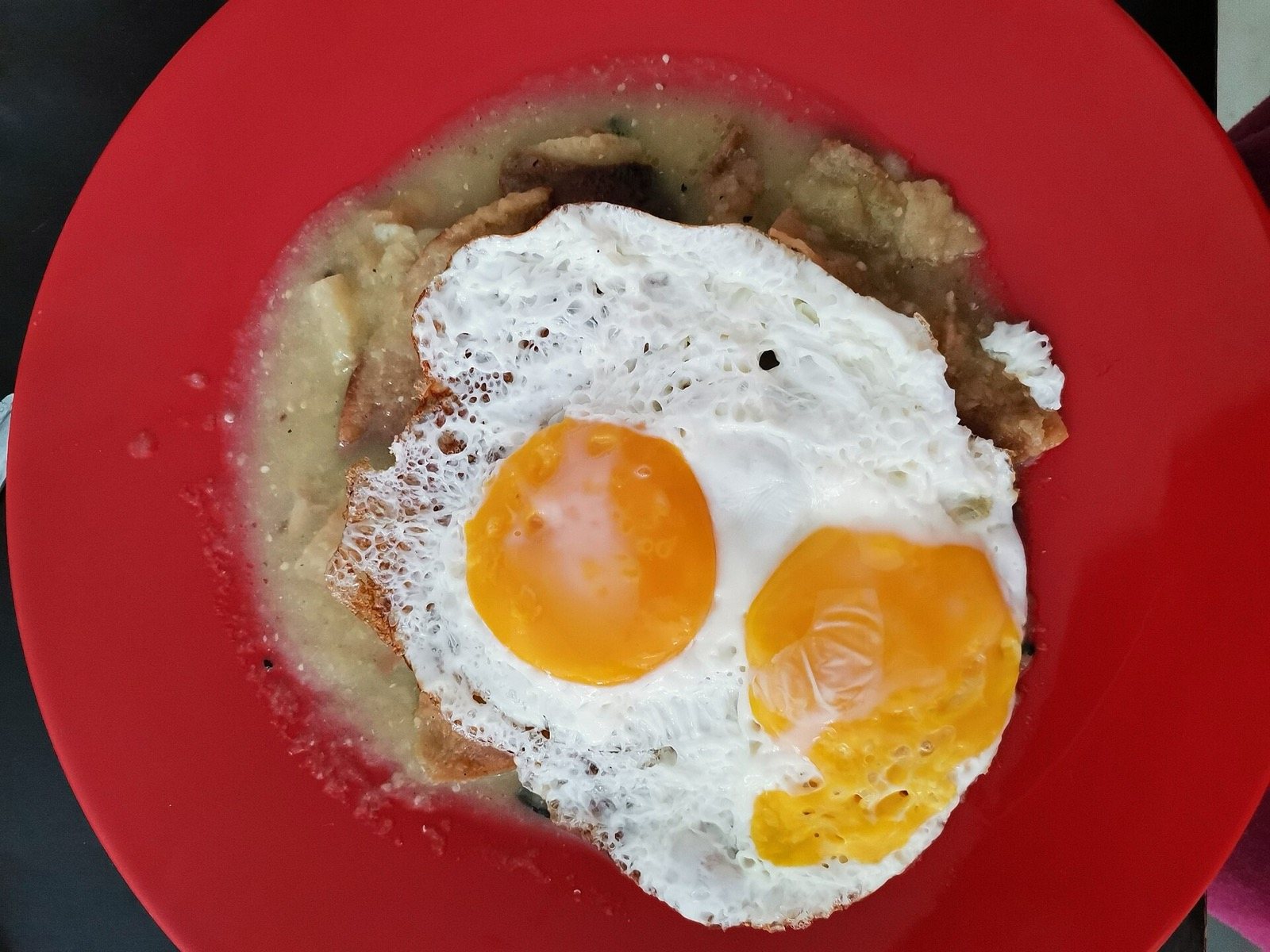 Green chilaquiles with fried eggs, a classic Mexican breakfast.
Asian Restaurants in Nuevo Vallarta
Somaru Korean Grill House: Korean barbecue
Somaru brings Korean barbecue to Nuevo Vallarta; its other location is in Guadalajara.
The backstory: Korean grilled meat goes way back. The oldest known record is maekjeok, from the Goguryeo period (37 BCE–668 CE), and under the Joseon dynasty grilled beef was a favorite of the royal family. Korea's ties to Mexico are older than you might think, too: in 1905 more than a thousand Korean workers landed at Salina Cruz, Oaxaca, and continued by train to the henequen (sisal) plantations of Yucatán. Today there are Korean communities in Mexico City, Guadalajara, Zapopan and Monterrey, among other cities.
What makes it special: the all-you-can-eat Korean grill (dine-in only), with cuts like short rib, flank or picanha, brisket (chadolbagi), pork belly (samgyeopsal), shrimp and bulgogi marinated in gochujang, Korea's red chile paste. It comes with banchan, the shared side dishes that fill the middle of the table: kimchi, lettuce leaves for wrapping, rice, japchae noodles, pajeon scallion pancakes and mandu dumplings. Wrapping a bite of meat in lettuce with sauce is the traditional way to eat it, called ssam. À la carte, there's bibimbap (including a vegan version), kimbap and seafood ramyeon. Soju and Korean green-plum (maesil) tea are on the drinks list.
Area: Paseo de los Cocoteros, in the Flamingos area.
Best for: groups and families looking for something different; there's a kids' grill option.
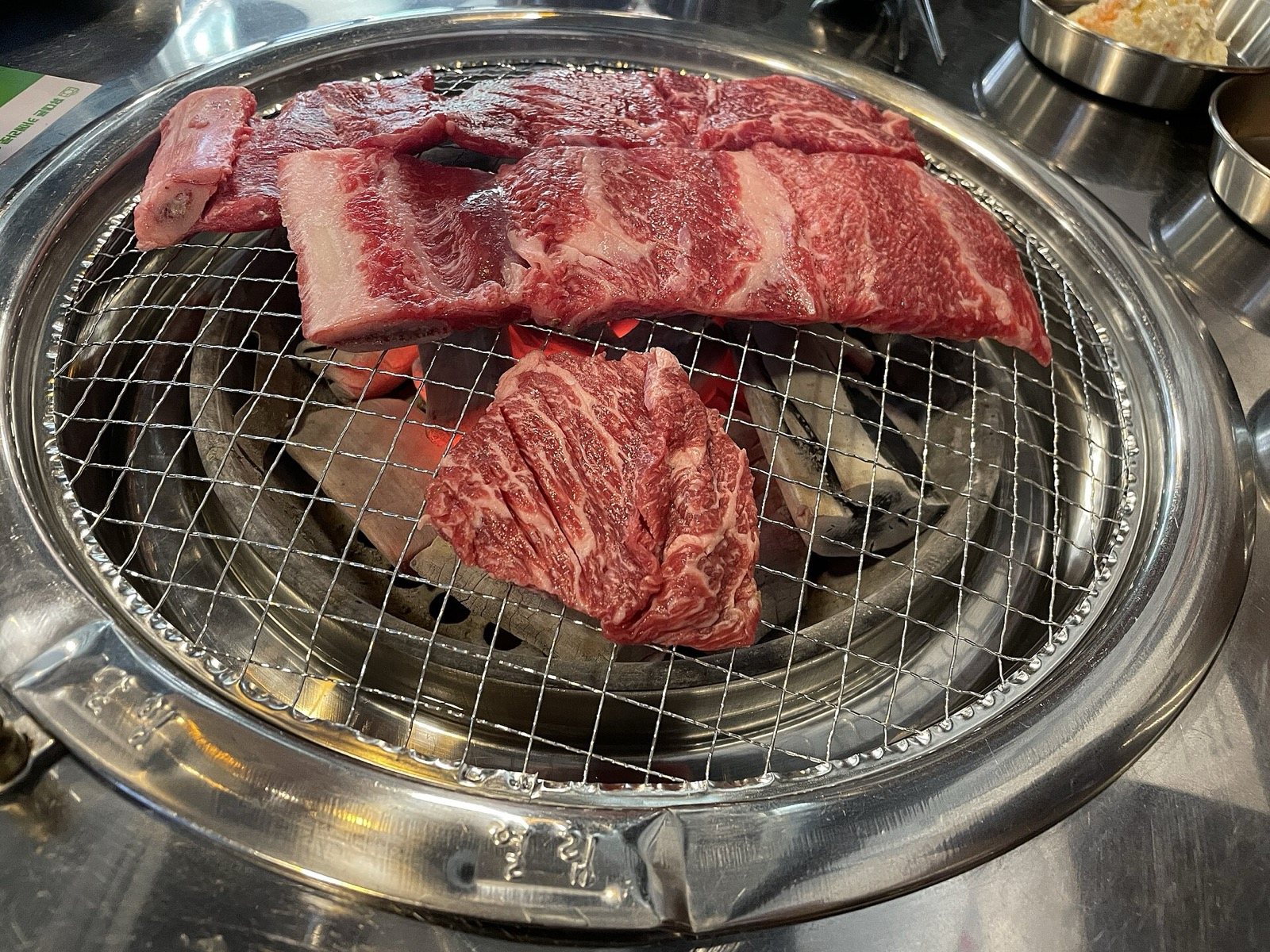 Korean-style barbecue (illustrative photo).
Nicksan Nuevo Vallarta: sushi and Japanese food
On Paseo de los Cocoteros, Nicksan Nuevo Vallarta serves Japanese food and sushi in a relaxed setting with outdoor seating.
The backstory: sushi began in Southeast Asia as a way to preserve fish in fermented rice. In Japan's Edo period, cooks switched to vinegared rice, and around 1824 chef Hanaya Yohei popularized nigiri, hand-pressed rice topped with fish, in Edo (today's Tokyo). Inside-out rolls, with rice on the outside, caught on much later, after the California roll appeared in North America in the late 1970s. Mexico has its own link to Japan: in 1897 the first Japanese immigrant colony in Latin America settled in Chiapas, with permission from President Porfirio Díaz.
What makes it special: diners frequently mention the spicy tuna roll, dynamite scallops, tuna sashimi and gyoza. Vegetarian options are available.
Area: Paseo de los Cocoteros, in the hotel zone.
Best for: an easy dinner close to your hotel.
We recommend confirming hours and availability directly with each restaurant.
A Sample Day of Eating Off the Resort
Half day: an early breakfast on Boulevard Nuevo Vallarta Norte, back to the beach, then a walk out to the marina lighthouse before sunset.
Full day: local breakfast; a morning on the sand or a beach walk toward Bucerías; a long seafood lunch (aguachile to start, a zarandeado to share); an afternoon siesta; and Korean or Japanese for dinner on Paseo de los Cocoteros.
Staying a week? Save one evening to cross into Puerto Vallarta and explore the Romantic Zone or Marina Vallarta.
Best Time to Go and Weather
The climate is warm and semi-humid. Rain falls mostly from June through September, and the dry season runs roughly November through May, the best time for outdoor patios; in summer, have an indoor plan B. The official Pacific hurricane season runs May 15 to November 30, so check the forecast in summer and fall. Winter brings humpback whales to the bay (see our whale watching guide), and summer into fall is sea turtle season.
Taste Vallarta With Riviera Tours & Transfers
If you're staying in Nuevo Vallarta and want to try regional cooking while you explore Puerto Vallarta, our Vallarta Plus City Tour runs every day and lasts about 7 hours. It includes:
- A guided walk through downtown Puerto Vallarta
- A visit to a traditional jewelry shop
- Free time for shopping
- A distillery tour and tequila tasting
- Lunch included at a regional cuisine restaurant
The restaurants in this article aren't part of the tour; they're ideas for meals on your own. There's also the Vallarta City Tour, without lunch. Before booking, ask us about the meeting point or pickup if you're staying in Nuevo Vallarta.
Check dates and book the Vallarta Plus City Tour →
Planning the rest of your trip? See our things to do in Puerto Vallarta and our roundup of Nuevo Vallarta resorts.
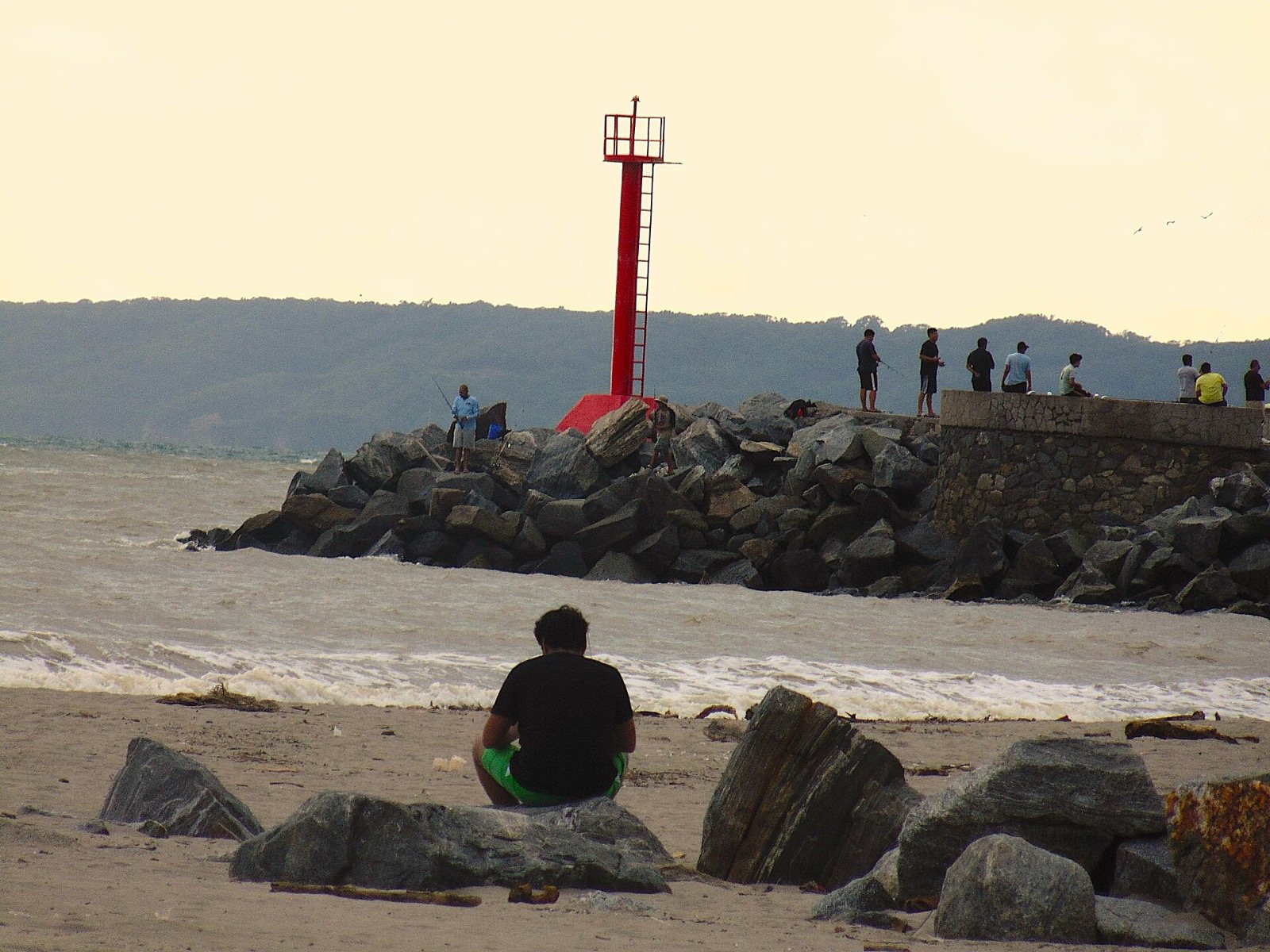 The Nuevo Vallarta marina lighthouse, a nice stroll before or after a meal.
Tips for Eating Out in Nuevo Vallarta
- Take a taxi or drive. The boulevards are long, and restaurants are farther apart than they look on a map.
- Book ahead for groups, especially in high season and on weekends.
- Go early for breakfast spots, which usually close by mid-afternoon.
- Bring some cash for tips and smaller purchases; some restaurant branches around the bay are cash only.
- Ask about the heat before ordering aguachile or salsas; they can be very spicy.
- Budget: local breakfast spots and seafood houses tend to be easy on the wallet, and all-you-can-eat grills charge per person. Check the menu before you go.
FAQ
Is it worth leaving my all-inclusive to eat out? Yes, at least once or twice. It's the easiest way to taste local seafood and Mexican cooking beyond the buffet.
Where can I get seafood in Nuevo Vallarta? El Coleguita on Boulevard Nuevo Vallarta, and Tino's La Laguna by the lagoon in neighboring Jarretaderas.
Where should I have breakfast in Nuevo Vallarta? Fredy's Tucán on Boulevard Nuevo Vallarta Norte is one of the best-known breakfast spots around the bay.
Is Nuevo Vallarta on the same time as Puerto Vallarta? Yes. The municipality of Bahía de Banderas, which includes Nuevo Vallarta, uses Central Time like Puerto Vallarta.
What local dish should I try? Pescado zarandeado, Nayarit's signature grilled fish, and aguachile. For a traditional drink, look for tuba, which came to this coast with the Manila Galleons.
Are Nuevo Vallarta and Nuevo Nayarit the same place? Yes. In 2022 the area officially went back to the name Nuevo Nayarit, but nearly everyone still calls it Nuevo Vallarta.
Are there vegetarian options? Yes. Tino's La Laguna and Nicksan list vegetarian options, and Somaru serves a vegan bibimbap.
Photos: Pequeño mar / CC BY-SA 4.0 via Wikimedia Commons · El Nuevo Doge / CC0 via Wikimedia Commons · Wotancito / CC BY-SA 4.0 via Wikimedia Commons · Jo Hanshin / CC0 via Wikimedia Commons · Ferfive / CC BY 4.0 via Wikimedia Commons




