
If your resort confirmation says "Nuevo Vallarta," you might assume you're staying in a neighborhood of Puerto Vallarta. You're not. Nuevo Vallarta sits just across the Ameca River in a different state, Nayarit. Here's what it is, where the name of the bay comes from, how it relates to Puerto Vallarta and the airport, the truth about the time zone, the best time to visit, and the best things to do in Nuevo Vallarta and nearby.
What Is Nuevo Vallarta?
Nuevo Vallarta is a planned resort and residential community in the municipality of Bahía de Banderas, Nayarit. It didn't grow out of an old village. In the early 1970s, Mexico's federal government expropriated coastal farmland and set up a public trust, the Fideicomiso Bahía de Banderas, to develop tourism on the bay, while the highway between Tepic and Puerto Vallarta was being paved.
Today you'll find a long strip of beachfront resorts, condos, canal-front homes with private docks and a marina. The main hotel-zone boulevard, Paseo de los Cocoteros, has a bike path running down its median.
Good to know: in 2022 the Nayarit state government officially renamed the area Nuevo Nayarit to make it clear it belongs to Nayarit, not Jalisco. Most people, and plenty of signs, still say Nuevo Vallarta. If you see either name, it's the same place.
Nuevo Vallarta History: From Tintoque to Resort Town
The resorts are new, but the land underneath them has a long story. Knowing a bit of it changes how you see the place.
Before the Spanish: the chiefdom of Tintoque
Before the Conquest, the valley behind today's beaches was home to Nahua-speaking peoples organized in small chiefdoms. One of them, Tintoque (also written Tintoc), had its center where the town of Valle de Banderas, the municipal seat, stands today. Archaeologists in the area have found burials in large clay pots, shaft tombs and a set of 18 small carved stone figures in the town of San Vicente.
1525: how the Bay of Flags got its name
In 1525, an expedition led by Francisco Cortés de San Buenaventura, a relative of Hernán Cortés, reached this coast. According to the account the municipality itself tells, the people of Tintoque came out to greet him carrying small banners made of colorful feathers, which mixed with the flags the Spanish were flying. The Spanish called the place Valle de Banderas, the "Valley of Flags," and over time the whole bay became Bahía de Banderas. Treat it as a traditional account passed down by local sources rather than an eyewitness record, but it's the story behind the name on every map of the bay.
From tobacco to tourism
For centuries the area was governed from Compostela, and well into the 20th century it looked more toward Jalisco than toward its own state capital. That changed in the 1970s. The trust was created by decree in November 1970, and its land included more than 5,000 hectares (about 12,700 acres) expropriated from communal farms (ejidos) such as Bucerías, Las Jarretaderas, La Cruz de Huanacaxtle, Higuera Blanca and Sayulita. In 1972 the ejido members formed a union to defend their interests. Out of that project came the development we now call Nuevo Vallarta.
Nuevo Vallarta timeline
- 1525: Francisco Cortés de San Buenaventura's expedition arrives; the name Valle de Banderas is born.
- 1600s: landowners grow tobacco in the valleys.
- 1700s: the bay serves as a shelter for ships sailing to San Blas and Acapulco.
- 1937: the Valle de Banderas ejido receives its land grant.
- November 1970: decree creating the Fideicomiso Bahía de Banderas.
- Mid-1970s: the Tepic–Puerto Vallarta federal highway is paved.
- December 1989: the municipality of Bahía de Banderas is created, split off from Compostela.
- 2010: Bahía de Banderas switches to Central Time to match Puerto Vallarta.
- 2022: Nuevo Vallarta is officially renamed Nuevo Nayarit.
Bahía de Banderas now has nearly 188,000 residents (2020 census), and most of them live outside the resort zone, in towns such as San Vicente, San José del Valle, Mezcales and Bucerías.
Where Is Nuevo Vallarta? The Ameca River, the Airport and Puerto Vallarta
The lower Ameca River forms the border between the states of Jalisco and Nayarit. South of the river are Puerto Vallarta's international airport (PVR) and the city itself. North of it is Nuevo Vallarta, which is also the southern gateway to the Riviera Nayarit coast.
The Ameca has quite a journey behind it. It rises in the La Primavera forest just outside Guadalajara, runs roughly 230 km (about 140 miles) through Jalisco, picks up the Mascota River among others, and empties into the bay. The water you cross on the way from the airport started its trip just outside Guadalajara.
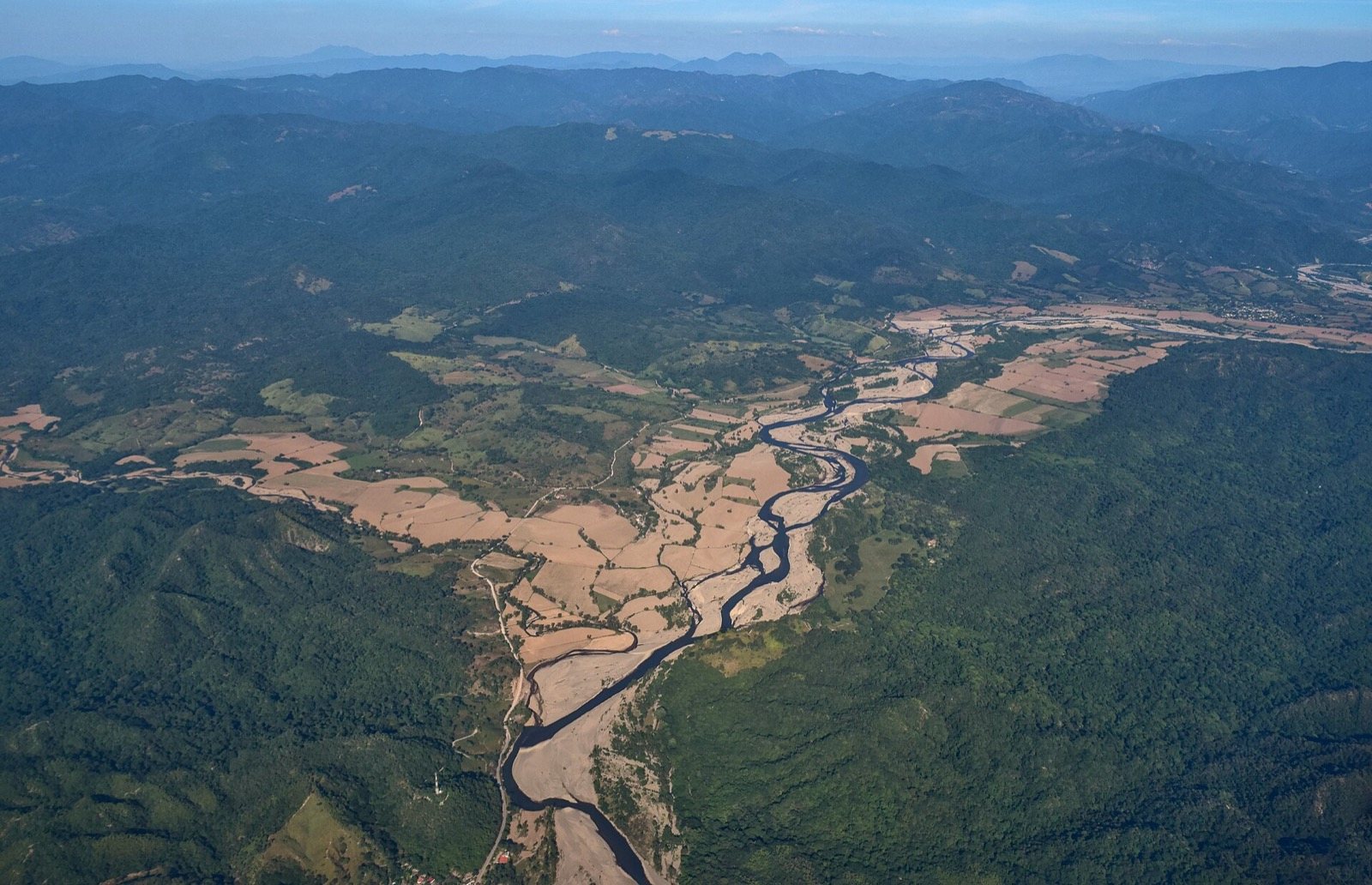 The Ameca River from the air, winding through the hills and valleys on its way to the bay.
- Airport to Nuevo Vallarta: roughly 15 to 20 minutes by car, depending on traffic.
- Nuevo Vallarta to downtown Puerto Vallarta: about 25 to 45 minutes, depending on the time of day and where you start.
Nuevo Vallarta Time Zone: Same Clock as Puerto Vallarta
This is one of the most common questions, and it matters for flights, dinner reservations and tour pickups. Nuevo Vallarta is on the same time as Puerto Vallarta.
Mexico's 2022 Time Zones Law places Nayarit in the Pacific Zone, except for the municipality of Bahía de Banderas, which follows Central Time, just like Jalisco. That municipality includes Nuevo Vallarta, Bucerías, La Cruz de Huanacaxtle, Punta de Mita, Sayulita and San Pancho. The area has matched Puerto Vallarta's clock since 2010.
The clock does change if you travel farther north in Nayarit, outside Bahía de Banderas (Tepic or San Blas, for example). Those areas are on Pacific Time, one hour behind. If your plans include them, double-check every time.
Nuevo Vallarta Weather and the Best Time to Visit
The climate is warm and semi-humid. According to the municipal profile, average annual temperatures run from about 23 to 28 °C (73 to 82 °F), and most days of the year are sunny.
- Dry season (roughly November to May): clear skies and lower humidity. This is high season, so book ahead.
- Rainy season (roughly June to September or October): hot and humid, with showers that tend to arrive in the afternoon, and a very green landscape. It's also sea turtle nesting season.
- Hurricanes: the official Eastern Pacific season runs from May 15 to November 30. That doesn't mean storms every week, but if you travel in those months, check Mexico's National Weather Service (SMN) advisories before you go.
- Winter: humpback whale season on the bay (more below).
Nuevo Vallarta Beaches
Nuevo Vallarta's beach is a long, open stretch of light sand facing the bay, and you can walk it all the way to Bucerías. It's a great spot for long sunrise or sunset walks.
A few things to keep in mind:
- It's open ocean. Waves and currents vary by season. Look for warning flags when they're posted and stay out if the surf is rough.
- Sea turtles. This is one of the busiest nesting beaches on the bay for olive ridley turtles. Nesting starts in late June, and hatchlings emerge about 45 days later. A turtle camp linked to Mexico's protected-areas agency (CONANP) operates in the area and sometimes holds public hatchling releases. If you see a nest or a turtle, don't touch it or shine lights on it: sea turtles are protected by Mexican law. Check current dates and rules with the camp before you go. For more, see our guide to sea turtles in Riviera Nayarit.
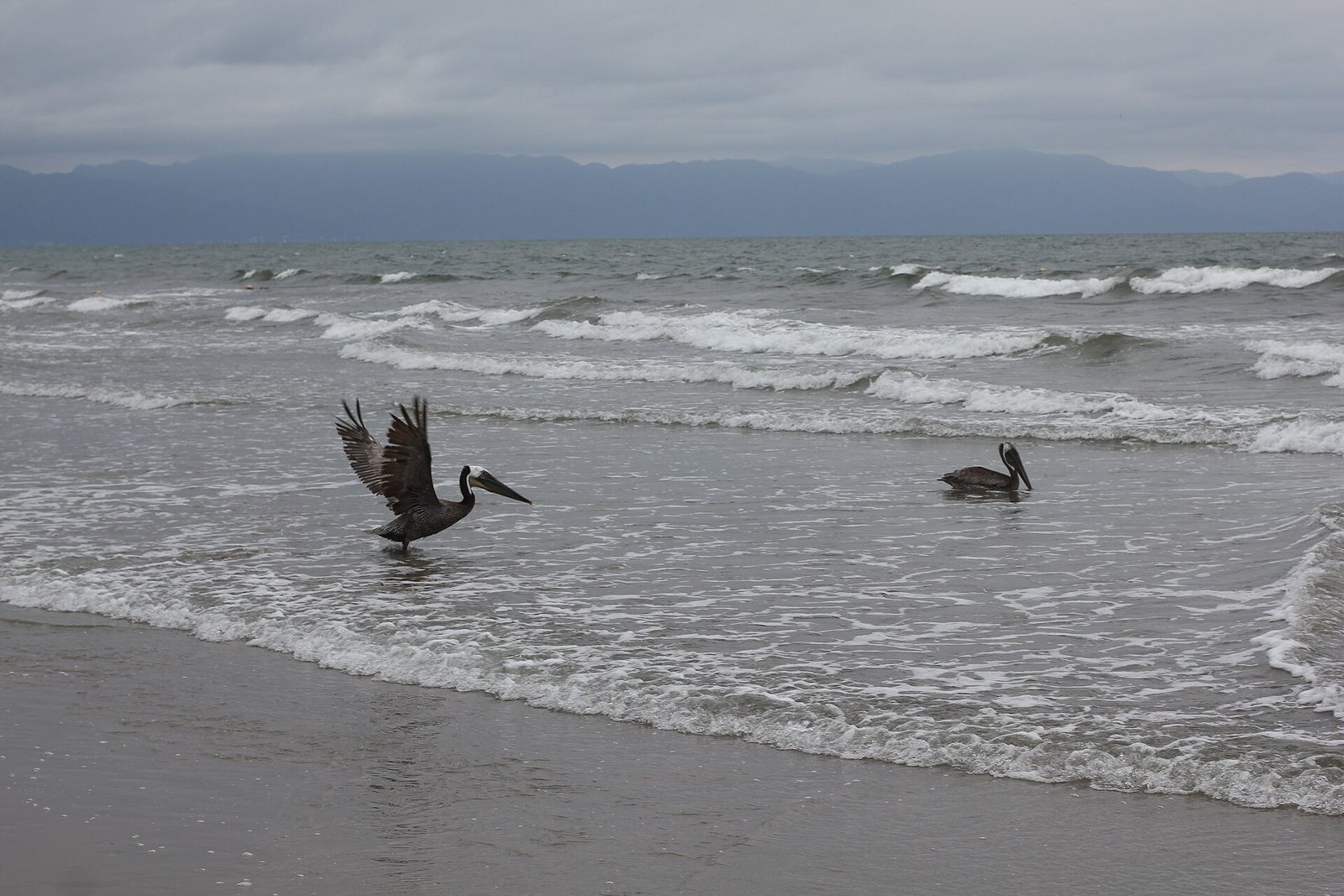 Pelicans feeding at the shoreline, a common afternoon sight in Nuevo Vallarta.
Wildlife in Nuevo Vallarta: Mangroves, Crocodiles and Whales
Nuevo Vallarta is surrounded by water: the Ameca River to the south, the bay in front and mangrove estuaries nearby.
- Mangroves and estuaries. Palms, wild fig trees and mangroves dominate the municipality's coastline. One nearby estuary, El Quelele, is a lagoon with roughly 140 hectares (about 350 acres) of red, black and white mangrove, known among birdwatchers.
- Crocodiles. The American crocodile (Crocodylus acutus) is native here and protected. University of Guadalajara researchers estimate that 250 to 300 of them may live between the Ameca River and El Quelele lagoon. In the rainy season, when rivers run high, they sometimes travel through the sea and show up near river mouths. Stay away from river and estuary banks, never feed them, and if you see one on the beach, alert local Civil Protection.
- Humpback whales. Every winter they come to the bay to mate and give birth. For the 2025–2026 season, Mexico's environment ministry (Semarnat) set the official whale-watching period from December 8 to March 23 and declared a 2 km-wide coastal strip from Punta de Mita to the mouth of the Ameca River, right in front of Nuevo Vallarta, a restricted zone because of mothers with calves. If you go out to see them, use authorized operators only. Our whale watching guide has the details. Dates and zones are set each season, so confirm them before you go.
Things to Do in Nuevo Vallarta
- Walk or bike the Paseo de los Cocoteros bike path, or follow the beach north to Bucerías.
- Stroll the marina and the canals, especially around sunset.
- Play golf: there are several courses in the area.
- Catch a turtle release in season (summer and fall) if the dates line up.
- Go birding at dawn along the shore and near the estuaries; pelicans are part of the daily scenery.
- Use it as a base. Nuevo Vallarta is well placed for exploring the towns on the north side of the bay, as well as Puerto Vallarta. Still choosing where to stay or eat? See our guides to Nuevo Vallarta resorts and Nuevo Vallarta restaurants.
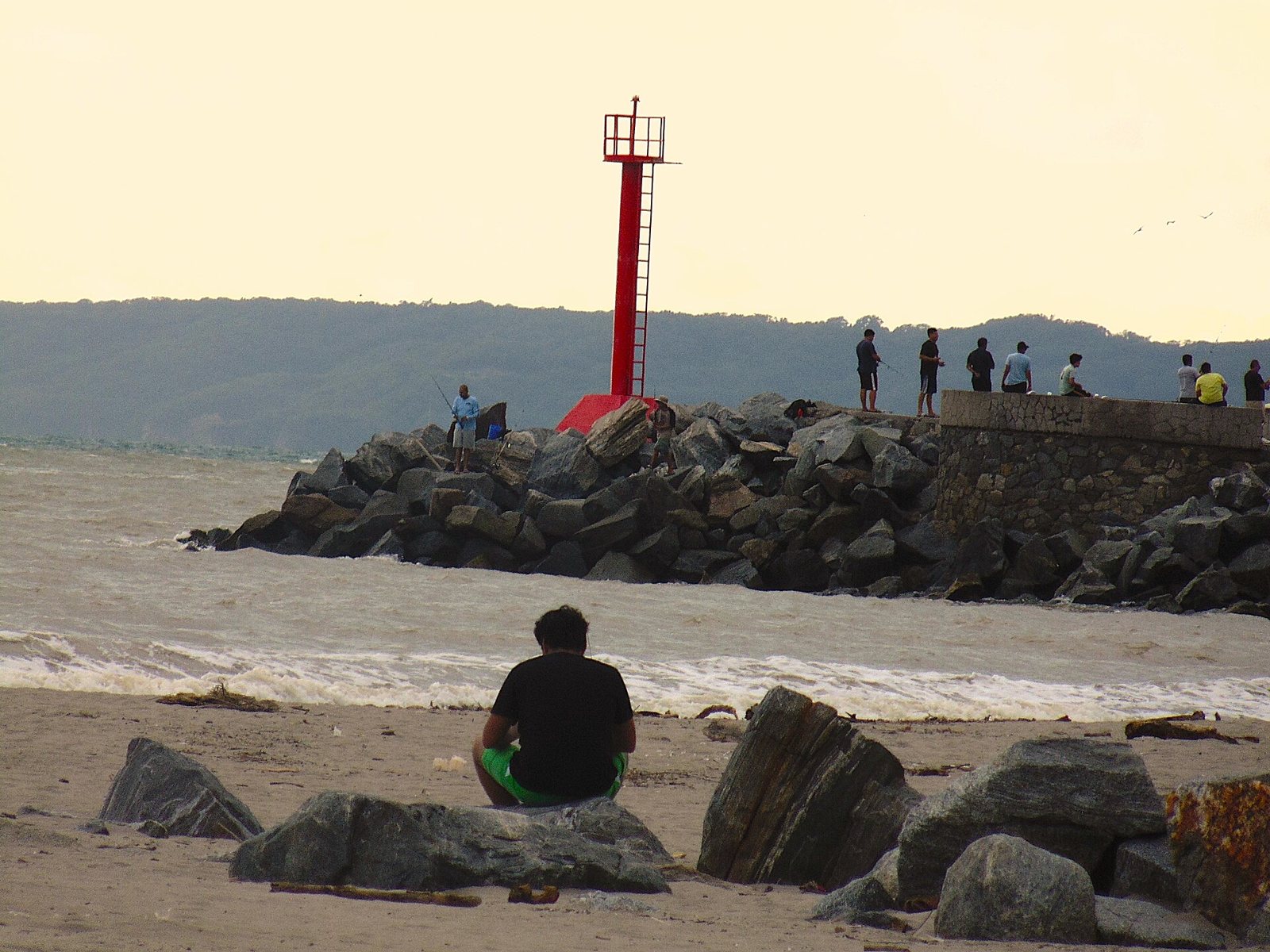 The Nuevo Vallarta marina lighthouse, a popular spot for shore fishing.
Local Culture and Food Around Nuevo Vallarta
The towns a few minutes from the resort zone are where Bahía de Banderas keeps its traditions. A few local festivals:
- January 24, Bucerías: feast of the Virgen de la Paz, with a procession at sea.
- January 24 to February 2, Valle de Banderas: feast of Nuestra Señora del Rosario de Tintoque, with daily processions. The name still carries the old chiefdom's.
- March 10 to 19, San José del Valle: feast of Saint Joseph.
- May 15 to 24, San Juan de Abajo: the "May festivities," considered the municipality's biggest fair.
Dates can shift from year to year, so check before planning around one.
At the table, the municipal profile highlights soporrondongo, a small fried tamale of fresh-corn dough eaten at harvest time; fish and shrimp "embarazados," grilled on a stick next to the fire (the story is in our post on pescado embarazado); lobster; and the scarce "almeja reina" clam. Nayarit is also the home of pescado zarandeado. To drink, look for coastal classics like tuba and tejuino.
A fun fact about the neighbors: the name Bucerías is usually translated as "place of divers," after the divers who once worked its waters.
Nuevo Vallarta vs Puerto Vallarta: Which Is Right for You?
| Nuevo Vallarta | Puerto Vallarta | |
|---|---|---|
| State | Nayarit | Jalisco |
| Vibe | Planned resort and residential area, quiet | City with a historic center, Malecón and nightlife |
| Beach | Long, open and flat | Several beaches, many urban or in coves to the south |
| Time zone | Central | Central (same time) |
Want rest, a long beach and a laid-back pace? Nuevo Vallarta is a great fit. Want cobblestone streets, galleries and the Malecón? Plan at least one day in Puerto Vallarta. Start with our guide to things to do in Puerto Vallarta, our Malecón and Old Town guide and, for history fans, the history of Puerto Vallarta.
Day Trips from Nuevo Vallarta: Bucerías, Sayulita and San Pancho
- Bucerías: the next town to the north, close enough to reach on foot along the beach. It has a relaxed, small-town feel with a plaza and streets for wandering.
- Sayulita: about 30 km (19 miles) up Federal Highway 200, roughly 30 to 45 minutes by car. A colorful surf town, named one of Mexico's Pueblos Mágicos in 2015. See our guide to things to do in Sayulita.
- San Pancho (San Francisco): a few minutes past Sayulita on the same highway, and quieter. Read our San Pancho guide.
- Punta de Mita: at the northern tip of the bay. More in things to do in Punta Mita.
- The whole coast: compare them all in our guide to Riviera Nayarit beach towns.
Sample Itineraries from Nuevo Vallarta
- Half day: an early beach walk, a bike ride along Paseo de los Cocoteros and sunset by the marina lighthouse.
- A day on the north bay: walk the beach to Bucerías, explore its plaza and, in season, ask about a turtle release.
- A small-town day: Sayulita and San Pancho, by car or on a tour.
- A Vallarta day: cross the Ameca and spend the day downtown and on the Malecón.
Riviera Tours & Transfers Tours for Exploring the Area
If you're staying in Nuevo Vallarta and want to see Sayulita and San Pancho without driving, our Sayulita and San Pancho tour runs Tuesday, Thursday and Saturday. It's a full-day tour in English and Spanish, with a maximum of 17 guests. It includes:
- Round-trip transportation
- Certified tour guide
- Tasting of traditional Mexican sweets
- Visit to San Pancho's plaza and beach
- Guided walk through downtown Sayulita, plus free time
- Bottled water
Lunch is not included. Optional surf lessons are available for an extra cost, with a 50% discount for tour guests.
Prefer to explore Puerto Vallarta? The Vallarta City Tour runs daily (about 7 hours) with a guided walk downtown, a tequila stop and time for shopping. The Vallarta Plus City Tour adds a distillery tour, tequila tasting and lunch.
Important: before booking, ask us about the meeting point or pickup if you're staying in Nuevo Vallarta.
See dates and book the Sayulita and San Pancho tour →
Tips for Your Stay
- Plan on Central Time: same as Puerto Vallarta and the airport.
- Allow for traffic when heading downtown; the drive can take anywhere from 25 to 45 minutes.
- Bring sunscreen and water: the beach is open with little natural shade.
- Give turtle nests space if you see marked areas in the sand.
- What to pack: a hat, insect repellent (especially in the rainy season and near estuaries), sandals and some cash in pesos for the small towns.
- Be a good guest: ask before photographing people, and if you come across a religious festival, watch respectfully.
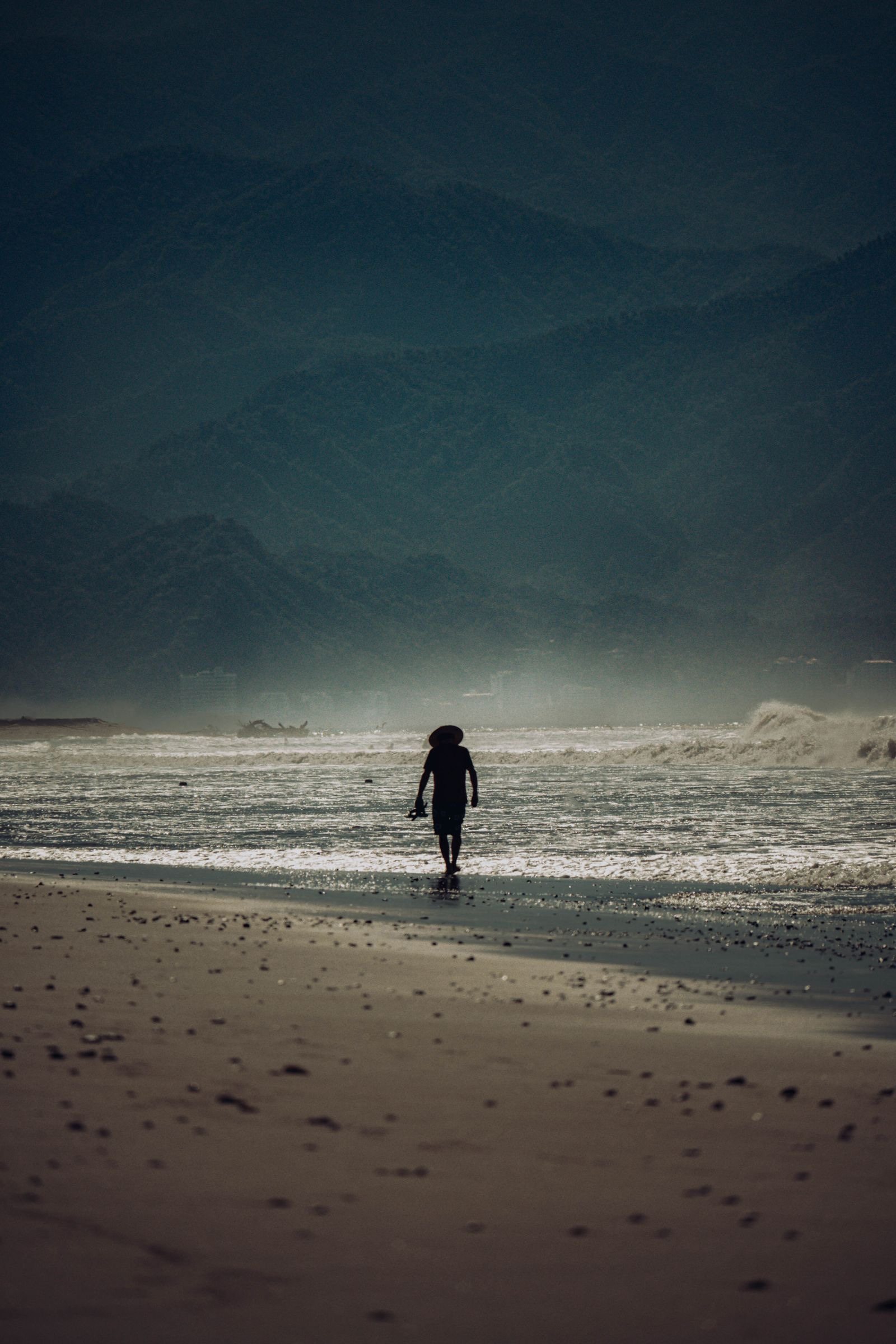 A walk on the beach in Nuevo Vallarta.
FAQ
Is Nuevo Vallarta in Jalisco or Nayarit? Nayarit. It's in the municipality of Bahía de Banderas, just north of the Ameca River, which separates the two states.
Is there a time difference between Nuevo Vallarta and Puerto Vallarta? No. Bahía de Banderas follows Central Time, like Jalisco. The time does change if you go to other parts of Nayarit, such as Tepic.
Are Nuevo Vallarta and Nuevo Nayarit the same place? Yes. The state officially renamed it Nuevo Nayarit in 2022, but both names are still in use.
How far is Sayulita from Nuevo Vallarta? About 30 km (19 miles), roughly 30 to 45 minutes by car. You can also go with our Sayulita and San Pancho tour.
Why is it called the Bay of Flags (Bahía de Banderas)? According to the traditional account kept by the municipality, when Francisco Cortés de San Buenaventura's expedition arrived in 1525, the people of Tintoque greeted it with colorful feather banners. The Spanish named the valley Valle de Banderas, and the bay later took the same name.
What is the best time to visit Nuevo Vallarta? For dry weather, November to May. For whales, December to March. For sea turtles, summer and fall, which is also the rainy season.
Are there crocodiles in Nuevo Vallarta? Yes. The American crocodile, a native and protected species, lives in the Ameca River and nearby estuaries. Keep away from river and estuary banks and never feed them.
Can you see whales from Nuevo Vallarta? Yes, humpbacks visit the bay in winter. To see them up close, go only with operators authorized by Semarnat, who follow each season's restricted zones.
Photos: Ferfive / CC BY 4.0 via Wikimedia Commons · Sofía Guzmán / CC BY-SA 4.0 via Wikimedia Commons · Ferfive / CC BY 4.0 via Wikimedia Commons · Luis Delgado / Pexels License via Pexels · The Cosmonaut / CC BY-SA 2.5 CA via Wikimedia Commons




